


Bariatric Surgery Requirements in Malaysia strictly dictate that a patient must have a Body Mass Index (BMI) of≥ 37.5 kg/m², or a BMI of ≥ 32.5 kg/m² paired with at least one serious obesity-related comorbidity such as Type 2 diabetes or severe sleep apnea. Mandated by the Ministry of Health (MOH) and the Malaysian Endocrine and Metabolic Society (MEMS), candidates must also fall within the acceptable age bracket of 18 to 65 years, demonstrate a history of failed medical weight loss attempts, and clear rigorous pre-operative psychological and physical evaluations.
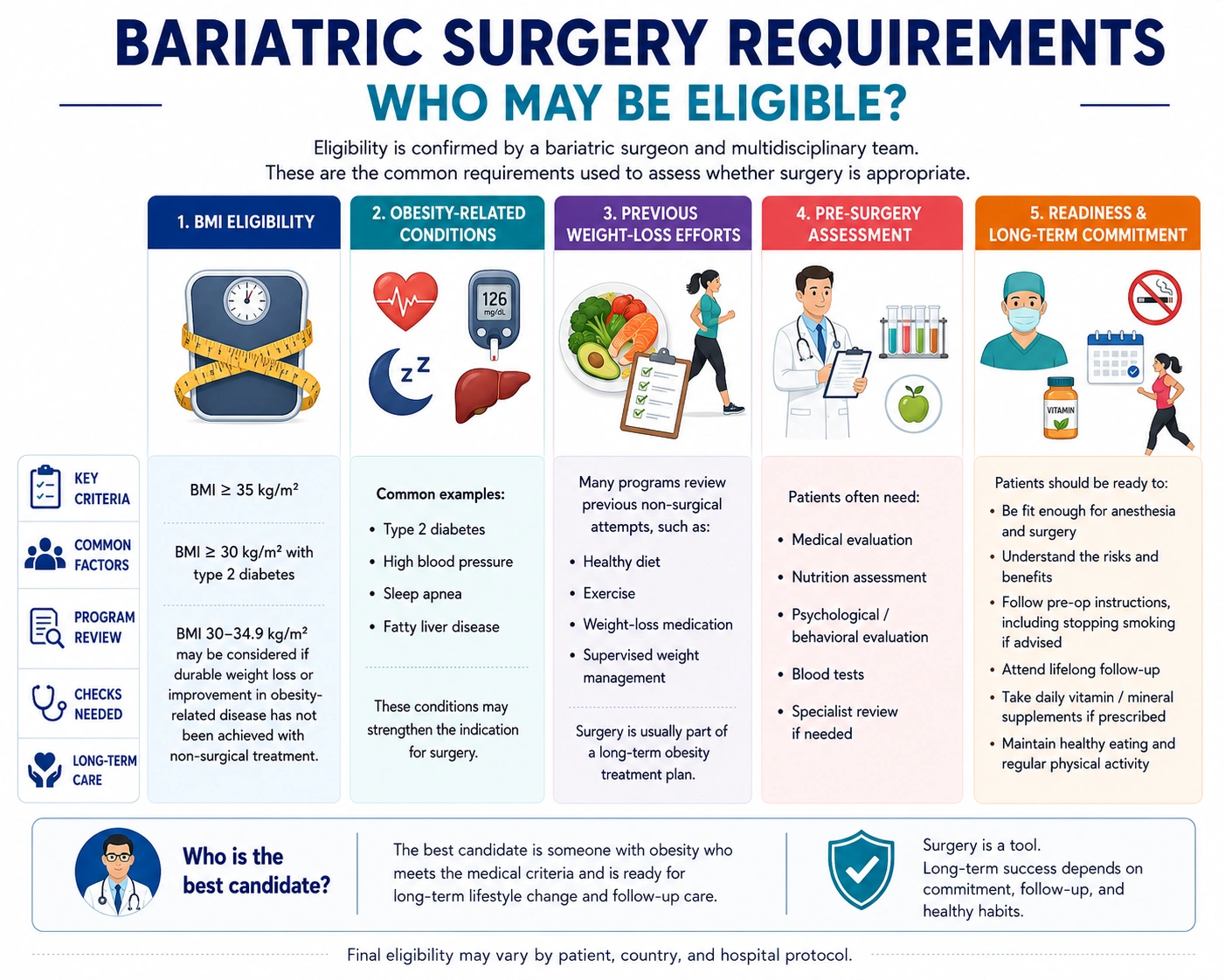
Medical Requirements for Bariatric Surgery in Malaysia
The physical parameters for surgical eligibility are heavily dependent on how excess body weight impacts your internal organ functions and overall metabolic longevity.
BMI Criteria for Bariatric Surgery: 32.5, 37.5, and Above
In Malaysia, clinical practice guidelines utilize an adjusted Body Mass Index (BMI) scale specifically tailored for Asian populations. Because individuals of Asian descent carry a higher percentage of visceral body fat and experience elevated risks of cardiovascular complications at lower weights compared to Caucasians, the eligibility cut-offs are lowered:
BMI $\ge$ 37.5 $\text{kg/m}^2$ (Class III Obesity): You qualify for surgery based on weight criteria alone, regardless of whether you have diagnosed secondary illnesses.
BMI 32.5 to 37.4 $\text{kg/m}^2$ (Class II Obesity): You are eligible if your weight is directly accompanied by at least one severe, life-altering comorbidity that can be resolved or managed via massive weight reduction.
BMI < 32.5 $\text{kg/m}^2$: Routine bariatric surgery is strictly not recommended or offered under public and private healthcare protocols for lower weight brackets.
Obesity-Related Health Conditions That Qualify You
If your BMI falls within the 32.5 to 37.4 range, you must be formally diagnosed with one or more of the following conditions to fulfill the bariatric surgery requirements:
Type 2 Diabetes Mellitus: Poorly controlled blood sugar or high insulin resistance.
Severe Obstructive Sleep Apnea (OSA): Proven via a sleep study, requiring the use of a CPAP machine at night.
Uncontrolled Hypertension: High blood pressure that remains unstable despite taking multiple prescription medications.
Dyslipidemia: Severe cholesterol imbalances increasing artery blockage risks.
Non-Alcoholic Fatty Liver Disease (NAFLD): Advanced hepatic fat accumulation or early-stage steatohepatitis.
Debilitating Joint Disease: Severe osteoarthritis in the knees or hips exacerbated by weight-bearing stress.
Required Medical Tests Before Bariatric Surgery Approval
Before a surgeon clears you for the operating theater, you must undergo a comprehensive, multi-specialty diagnostic workup to ensure your body can safely handle general anesthesia and surgical manipulation:
Full Blood Panel: Evaluating HbA1c (average blood sugar), lipid profiles, kidney function, and liver enzyme baselines.
Nutritional Screen: Checking for existing vitamin deficiencies (Vitamin D, B12, Iron, and Folate) which must be corrected before operating.
Cardiac Clearance: An Electrocardiogram (ECG) and an Echocardiogram to ensure your heart structure is stable.
Chest X-Ray & Lung Function Test: Essential to verify respiratory capacity, especially for patients with severe sleep apnea.
OGDS (Gastroscopy): An endoscopic camera inspection of your stomach lining to rule out severe ulcers, large hiatal hernias, or an active H. pylori bacterial infection.
Non-Medical Eligibility Criteria for Bariatric Surgery
Beyond physical health markers, your behavioral readiness, cognitive maturity, and historical attempts at natural weight loss play an equal role in final surgical approval.
Age Limit for Bariatric Surgery in Malaysia
The standard consensus age group for adult bariatric interventions in Malaysia is between 18 and 65 years old.
Adolescents (Under 18): Handled on an exceptional basis. They must show advanced physiological bone maturity and require extensive evaluation by a specialized pediatric multidisciplinary panel.
Geriatric Patients (Over 65): Approved case-by-case based on their physiological fitness, heart health, and frailty index rather than chronological age alone.
Failed Weight Loss Attempts: Documentation Needed
Bariatric surgery is reserved exclusively for individuals who have failed supervised medical therapy. You must show evidence that you have genuinely tried to lose weight via non-surgical means but were unable to sustain the loss.
Clinical teams look for a history of participation in structured lifestyle interventions, dietitian-guided calorie deficits, physical therapy regimens, or approved anti-obesity medical therapies (such as GLP-1 receptor agonists or Orlistat) for at least 3 to 6 months prior to surgical consideration.
Psychological Evaluation and Lifestyle Commitment Rules
A mandatory psychological or behavioral assessment is conducted by a clinical psychologist or psychiatrist before surgery. This evaluation checks for:
The absence of untreated active major depression, psychosis, or severe eating disorders like Bulimia Nervosa.
A clear cognitive understanding that the surgery is only a tool, not a passive cure.
An explicit, signed commitment to adhere to a mandatory lifelong supplementation program (multivitamins, iron, calcium) and strict post-op dietary progression rules.
Who Is Not Eligible for Bariatric Surgery in Malaysia
Certain absolute and relative contraindications will cause a bariatric team to formally deny or indefinitely postpone your surgical request due to safety concerns.
Medical Conditions That Disqualify You from Surgery
Advanced Liver Cirrhosis: Portal hypertension or severe, uncompensated liver failure.
Active Malignancy: Ongoing cancer treatments or advanced terminal illnesses.
Severe Coagulopathy: Uncontrollable blood bleeding disorders that make surgery highly dangerous.
Pregnancy: Active pregnancy or plans to conceive within the immediate 12 to 18 months post-surgery. Rapid weight loss during this phase poses severe malnutritional risks to a developing fetus.
Lifestyle and Substance Use Factors That Affect Eligibility
Active Substance Abuse: Uncontrolled alcohol dependency or illicit drug addiction.
Nicotine Use: Active smoking or vaping. Nicotine constricts blood vessels, dramatically increasing the risk of life-threatening staple-line leaks and marginal ulcers. Patients must completely stop nicotine use at least 4 to 6 weeks before surgery.
Inability to Comply: Psychological non-compliance or a lack of a solid household support system to assist with critical post-operative recovery phases.
How to Check Your Bariatric Surgery Eligibility in Malaysia
Navigating the hospital screening pathway requires an organized approach across multidisciplinary medical sectors.
Step-by-Step Eligibility Assessment at Malaysian Hospitals
[1. Initial Consultation with Bariatric Surgeon] ➔ [2. Multidisciplinary Referrals: Dietitian, Cardiologist, Endocrinologist] ➔ [3. Pre-Op Diagnostic Workup & Gastroscopy] ➔ [4. Psychological/Behavioral Screening] ➔ [5. Final Multidisciplinary Team (MDT) Board Approval]
This structural review pathway, typically managed by dedicated bariatric units in premier Malaysian healthcare institutions, guarantees that every patient undergoing surgery meets the highest international safety thresholds.
Documents to Bring for Bariatric Surgery Consultation
To expedite your initial hospital evaluation, prepare a file containing the following items:
Historical Medical Reports: Any previous discharge summaries, specialist letters, or laboratory blood tests from the past 12 months.
Current Medication List: A complete list of all prescription drugs, over-the-counter pills, and traditional supplements you take daily.
Dietary Records: Any logbooks, mobile application tracking metrics, or weight loss program receipts showing your historical efforts to reduce weight under medical or professional supervision.
Insurance Policy / Corporate Coverage Documents: To check if your plan allows for diagnostic claims or potential corporate case review coverage based on strict clinical necessity.