




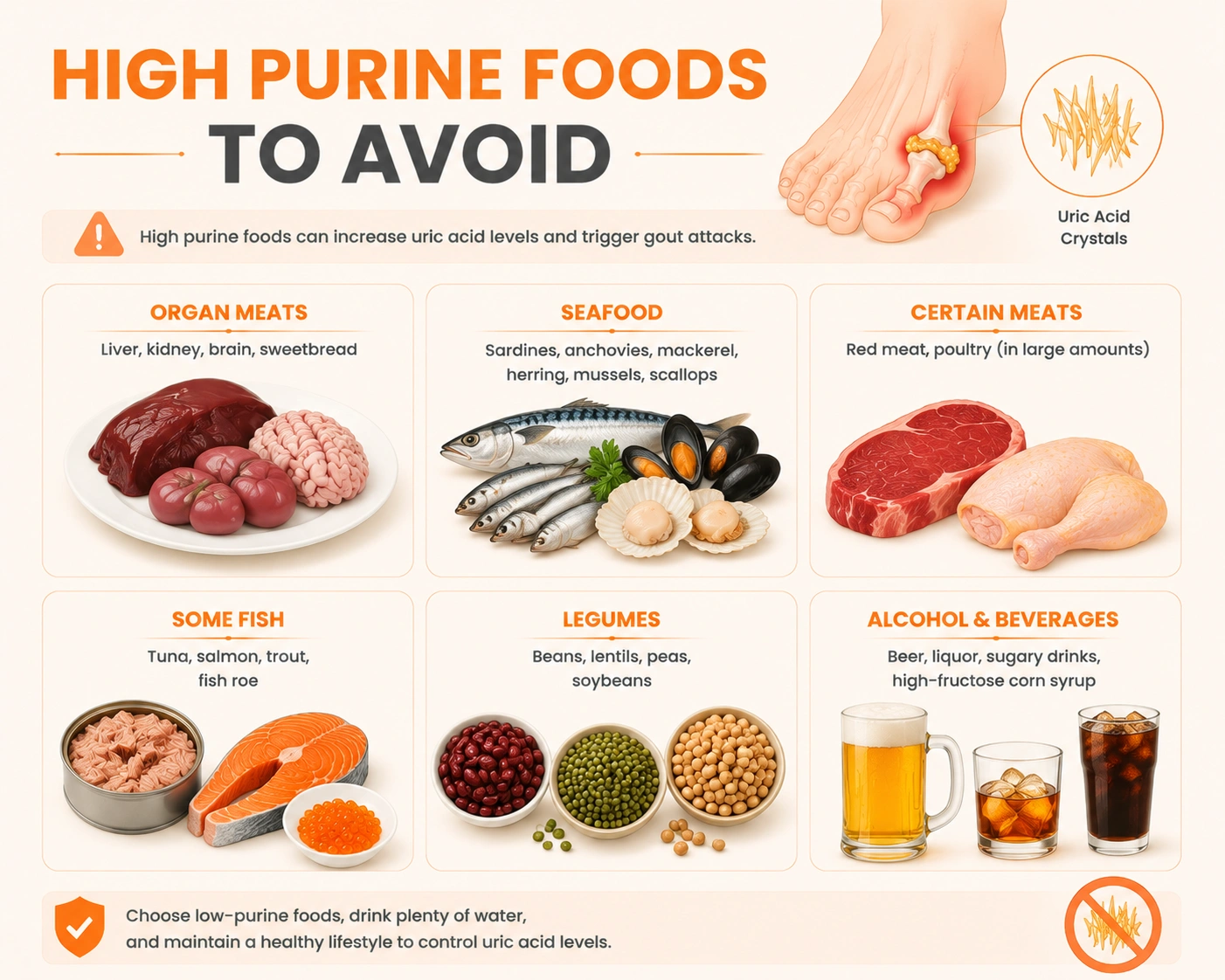
What Are Purines & Why They Matter for Gout
Purines are natural chemical compounds found in the cells of our bodies and in the foods we eat. When your body digests food, it breaks down these purines into a waste product called uric acid. Under normal conditions, your kidneys filter uric acid out of your blood and excrete it through your urine.
However, if you consume too many high-purine foods, or if your kidneys cannot keep up with the filtration, uric acid builds up in your bloodstream. This excess acid can crystallize into sharp, needle-like structures that lodge in your joints—most commonly the big toe—triggering a painful inflammatory reaction known as a gout attack.
Purine Levels Classification: High vs Moderate vs Low
Medical and dietary guidelines classify the purine content in food based on milligrams (mg) of purines per 100 grams (g) of the food item:
High Purine (>200mg / 100g): Strictly avoid. These foods trigger rapid spikes in uric acid production.
Moderate Purine (100mg – 200mg / 100g): Limit intake. Can be consumed occasionally in strictly controlled, small portions.
Low Purine (<100mg / 100g): Safe to eat. These foods form the foundational core of an anti-gout diet.
High Purine Foods to Avoid (>200mg/100g)
If you suffer from hyperuricemia or gout, eliminate these high-purine items from your grocery list to prevent severe joint inflammation:
Organ Meats
Liver, kidneys, brain, sweetbreads, heart, and giblets. Organ meats contain some of the highest concentrations of purine compounds found in nature.
Game Meats
Venison (deer meat), rabbit, wild boar, goose, and duck. These lean, dark meats possess dense cellular structures rich in purines.
Seafood & Certain Fish
Anchovies, sardines, mackerel, herring, mussels, scallops, trout, tuna, and cod roe. While healthy for heart function, their purine density makes them high-risk options for gout patients.
Meat Extracts
Commercial gravies, bouillon cubes, concentrated meat broths, consommé, and chicken stock powders. The prolonged boiling process used to create these extracts concentrates the soluble purines into a highly potent liquid form.
Other Hidden Triggers
Baker’s yeast, brewer’s yeast, nutritional yeast, beer, and other grain-based alcoholic drinks. Yeast is packed with purine-rich genetic material that drastically raises blood uric acid levels.
Moderate Purine Foods to Limit (100-200mg/100g)
Foods in this category can be included in a balanced diet but must be strictly portion-controlled:
Red Meats & Select Poultry
Pork, Beef, Lamb, and Duck: Restrict your intake to a maximum of 4 to 6 ounces (113 to 170 grams) per day. Choose lean cuts and avoid eating them daily.
Chicken and Turkey: Always remove the skin before cooking, as the skin contains higher concentrations of purines and fats that slow down uric acid excretion.
Select Seafood
Crab, Lobster, Prawns, Oysters, Salmon, and Canned Tuna: Limit seafood meals to no more than twice a week, keeping portion sizes small.
Legumes
Dried Beans, Lentils, Chickpeas, and Soybeans: Limit to 1 cup of cooked legumes per day. They are an excellent alternative to red meat protein, but still contain moderate purine levels.
Specific Vegetables
Asparagus, Spinach, Mushrooms, Cauliflower, and Green Peas: Limit consumption to ½ cup per day. The purines in these vegetables do not affect gout risks as severely as animal purines, but moderation is recommended.
Whole Oats & Bran
Oatmeal: Limit to ⅔ cup of cooked oats per day.
Wheat Germ: Restrict to ¼ cup per day to avoid overloading your daily purine threshold.
Low Purine Foods Safe to Eat (<100mg/100g)
These foods do not significantly impact uric acid production and can be consumed freely as part of a healthy, balanced lifestyle:
Eggs: An excellent, purine-free source of high-quality animal protein.
Nuts & Seeds: Walnuts, almonds, flaxseeds, and peanut butter (rich in healthy fats).
Low-Fat Dairy: Skim milk, low-fat yogurt, and cottage cheese. The proteins in dairy actually assist the kidneys in excreting uric acid.
Fresh Fruits: All fruits are safe, especially cherries, oranges, strawberries, and apples, which are packed with vitamin C and antioxidants.
Refined & Whole Grains: White rice, pasta, bread, corn, and quinoa.
Most Vegetables: Tomatoes, cucumbers, carrots, broccoli, cabbage, and bell peppers.
High Purine Foods Common in Malaysia
The traditional Malaysian diet is rich in umami flavors, which often stem from ingredients that are exceptionally high in purines. Gout patients in Malaysia must look out for these everyday culinary staples:
Ikan Bilis (Dried Anchovies): Used everywhere from Nasi Lemak sambal to daily soup stocks. It has one of the highest purine profiles of any food item.
Belacan (Shrimp Paste): A fermented condiment used in Sambal Belacan, Kangkung Belacan, and various curries.
Sardin (Canned Sardines): A quick meal staple that can trigger acute gout flare-ups due to its high purine density.
Kerang (Cockles): Commonly added to Char Kway Teow and Laksa.
Hati & Pedal (Chicken/Beef Liver and Gizzard): Frequently featured in Ayam Goreng Kunyit or local stir-fries.
Otak-Otak: Made from minced fish paste wrapped in banana leaves, often using mackerel or other high-purine fish varieties.
Kiub Pati Ayam/Daging (Bouillon Cubes): Routinely dissolved into home-cooked soups, gravies, and fried rice.
Purine Content Table (mg/100g) for Common Foods
| Food Item | Purine Content (mg per 100g) | Risk Classification |
| Dried Anchovies (Ikan Bilis) | 411 mg | Extremely High |
| Sardines (Canned) | 345 mg | High |
| Mussels | 292 mg | High |
| Beef/Chicken Liver | 286 mg | High |
| Beef Steak / Mutton | 110 mg – 130 mg | Moderate |
| Chicken Breast (Skinless) | 115 mg | Moderate |
| Lentils / Tofu | 70 mg – 80 mg | Low |
| Beer | 13 mg (High impact due to alcohol) | High Risk |
| Whole Egg | 0 mg | Completely Safe |
Does Cooking Method Affect Purine Levels?
Yes, how you prepare your food changes its purine concentration. Purines are water-soluble chemical compounds.
Boiling (Best Method): Boiling meats and vegetables causes a significant amount of the purines to leach out of the food and dissolve into the cooking water. Action Step: If you boil meat, discard the broth completely; do not consume the soup.
Grilling, Roasting, and Frying (Concentrates Purines): These dry-heat cooking methods cause water to evaporate from the meat, which concentrates the remaining purine compounds inside the tissue, making them more likely to trigger a gout flare-up.
Plant Purines vs Animal Purines: Which Is Worse?
Clinical Fact: Animal purines carry a significantly higher risk for gout attacks than plant purines.
Large-scale epidemiological studies have proven that consuming purine-rich plants (such as beans, lentils, spinach, and mushrooms) does not increase your risk of developing gout or triggering an acute attack. This is because plant fibers and other co-existing nutrients alter how your body absorbs and processes plant-based purines. Gout patients are encouraged to safely substitute a portion of their animal proteins with plant-based options like tofu and lentils.
How Much Purine Per Day for Gout Patients?
Daily Allowance: A standard healthy diet contains about 600mg to 1,000mg of purines daily. However, diagnosed gout patients should restrict their total purine intake to under 400mg per day.
Per-Meal Selection: When planning a meal that includes meat or moderate-purine items, ensure the chosen ingredient stays below 100mg per 100g in total serving portion size.
Alcohol & Purines: Why Beer Is Worst
Alcohol negatively impacts gout in two ways: its metabolism in the liver produces lactic acid, which physically blocks the kidneys from excreting uric acid, and the alcohol itself triggers purine breakdown in your body.
Among all alcoholic drinks, beer is the absolute worst choice for gout. Beyond the alcohol content, beer is brewed using high amounts of brewer’s yeast and grains, making it a direct source of highly absorbable liquid purines.
Sample Low-Purine Meal Plan
A balanced, nutritious daily menu that keeps your total purine intake well below the 400mg safety limit:
When to See a Doctor About High Purine Diet
You should schedule a consultation with a primary care physician or a rheumatologist if you experience any of the following situations:
You suffer from frequent, unmanageable gout attacks (more than once or twice a year) despite adjusting your diet.
You have been diagnosed with kidney stones or experience severe pain in your lower back and side.
Your routine lab work reveals a serum uric acid level persistently higher than 7.0 mg/dL for men or 6.0 mg/dL for women, even if you do not yet show visible symptoms of a joint flare-up.