

What Is Endoscopic Thoracic Sympathectomy (ETS)?
Endoscopic Thoracic Sympathectomy (ETS) is a minimally invasive surgical procedure used to treat severe primary focal hyperhidrosis. Surgeons disrupt specific nerve signals to stop excessive sweating. In Malaysia, this is a standard gold-level treatment for patients who fail to respond to topical antiperspirants or oral medications.
BSM Centre offers specialized Endoscopic Thoracic Sympathectomy Treatment in Kuala Lumpur. Their expert surgeons provide permanent relief for hyperhidrosis using advanced, minimally invasive techniques for optimal patient recovery.
Understanding the ETS Procedure: How It Works
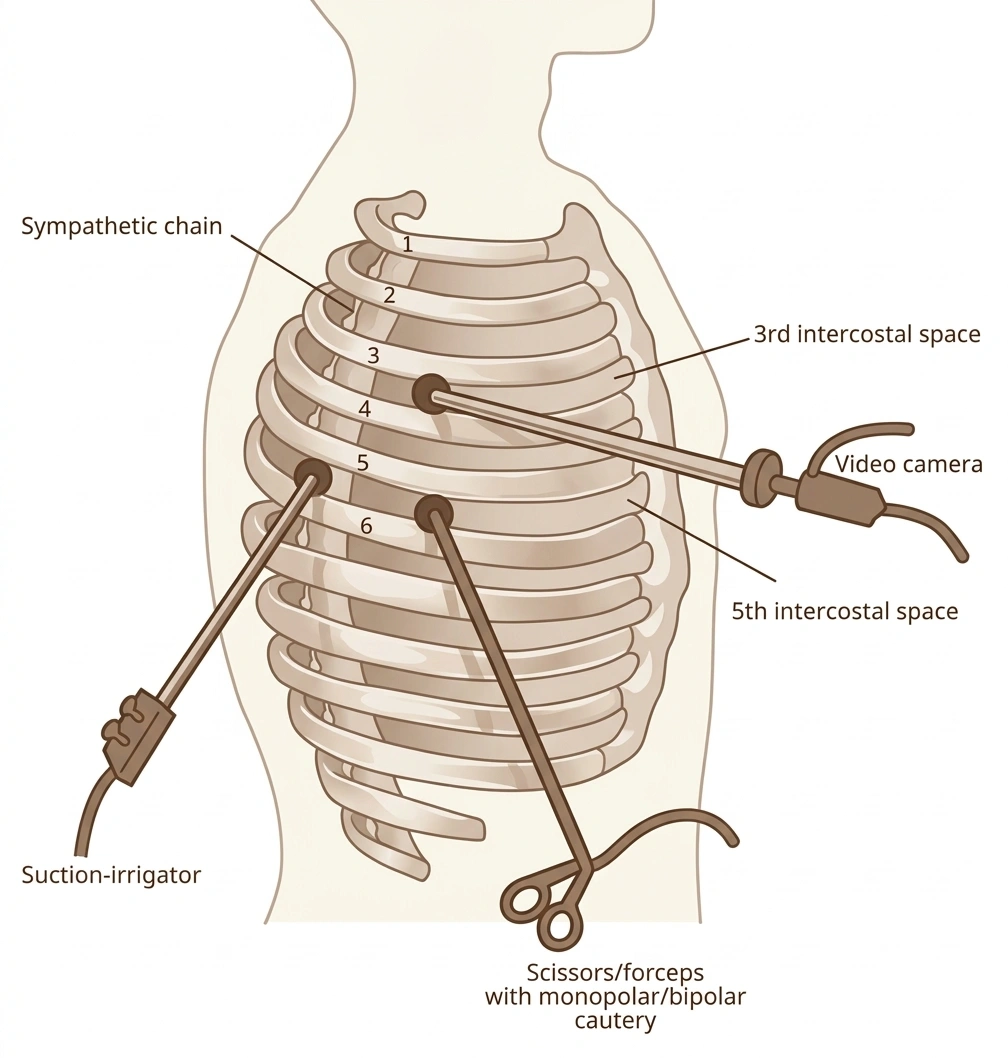
The surgeon makes tiny incisions under the armpit to insert a camera and specialized tools. By cutting, clipping, or cauterizing the sympathetic nerve chain, the “fight or flight” signals to sweat glands are permanently interrupted. This precision ensures that only the targeted areas, like the palms, stop producing moisture.
The Sympathetic Nervous System and Its Role in Excessive Sweating
The sympathetic nervous system regulates involuntary body functions. In hyperhidrosis patients, these nerves are overactive, sending constant “sweat” signals regardless of temperature. ETS physically disconnects these overstimulated pathways, providing immediate relief from the dripping hands or facial flushing that characterizes the condition.
Who Is a Suitable Candidate for ETS Surgery?
Ideal candidates are those with localized sweating in the hands (palmar), face, or underarms (axillary). Per Malaysian clinical guidelines, surgery is usually reserved for those with a Hyperhidrosis Disease Severity Scale (HDSS) score of 3 or 4, where sweating frequently interferes with daily activities.
Conditions Treated with Endoscopic Thoracic Sympathectomy
Primary Hyperhidrosis: Excessive Sweating of Palms, Armpits, and Face
ETS is most effective for palmar hyperhidrosis, showing nearly 98% success rates. It also addresses axillary (armpit) and craniofacial sweating. While many Malaysians struggle with humidity, primary hyperhidrosis is a distinct medical condition where sweating occurs independently of the tropical heat or physical exertion.
Severe Facial Blushing
Chronic, uncontrollable facial blushing (idiopathic craniofacial erythema) can be socially debilitating. ETS targets the T2 ganglion, which controls the dilation of facial blood vessels. By interrupting these signals, the sudden, intense reddening of the face is significantly reduced, helping patients regain their social confidence.
When ETS Is Considered for Other Conditions
Though less common, ETS may be used to treat Raynaud’s Disease, where cold or stress causes extreme vasoconstriction in the fingers. It is also occasionally explored for certain cardiac arrhythmias or complex regional pain syndromes when conservative management fails to provide the patient with adequate relief.
Endoscopic Thoracic Sympathectomy Procedure in Malaysia
Pre-Surgery Evaluation and Consultation
In Malaysia, a cardiothoracic surgeon usually conducts the initial assessment. This includes a physical exam and a review of your medical history to rule out secondary hyperhidrosis caused by thyroid issues or infections. Chest X-rays are typically performed to ensure the lungs are healthy for anesthesia.
Surgical Technique: Video-Assisted Thoracoscopic Surgery (VATS)
The modern standard is Video-Assisted Thoracoscopic Surgery (VATS). Under general anesthesia, the surgeon collapses one lung temporarily to visualize the nerve chain. Using high-definition monitors, they precisely target the nerve. This keyhole approach minimizes scarring, with incisions often being less than 10mm in length.
T2, T3, or T4 Sympathectomy: Choosing the Right Level
The “level” refers to which rib space the nerve is interrupted. T2 is typically for facial sweating/blushing, T3 for the palms, and T4 for the armpits. In Malaysia, many surgeons prefer T4 sympathectomy for palms to reduce the risk of severe compensatory sweating while maintaining high efficacy.
Recovery, Results, and Risks of ETS Surgery
Recovery Timeline: What to Expect After Surgery
Most patients in Malaysian private hospitals are discharged within 24 hours. You may feel minor chest soreness or “gas pain” in the shoulders. Most individuals return to light office work within 3 to 5 days, though heavy lifting should be avoided for at least two weeks.
Success Rates for Hyperhidrosis Treatment
The success rate for sweaty palms is exceptionally high, often exceeding 95%. Patients usually wake up from anesthesia with “bone-dry” hands. For axillary sweating, the success rate is slightly lower, around 70-80%, which is why surgeons discuss specific expectations during the pre-surgical consultation.
Compensatory Sweating: The Most Common Side Effect
Compensatory sweating (CS) is the most frequent side effect, where the body compensates for lack of palm sweat by sweating more on the back, tummy, or legs. According to International Society of Sympathetic Surgery data, while many experience mild CS, only a small percentage find it bothersome.
Rare Complications and How to Minimize Risks
Rare risks include Horner’s Syndrome (droopy eyelid), pneumothorax (air around the lung), or bradycardia. Choosing a surgeon experienced in the “clipping” technique rather than cutting may offer a slight safety margin, as clips can sometimes be removed if side effects are unbearable shortly after surgery.
Choosing an ETS Surgeon in Malaysia
Cardiothoracic Surgeon Qualifications and Credentials
Ensure your surgeon is registered with the National Specialist Register (NSR) of Malaysia. Look for a specialist in Cardiothoracic Surgery rather than general surgery, as they have extensive experience navigating the chest cavity. This expertise is vital for minimizing complications and ensuring the correct nerve level is treated.
Questions to Ask During Your ETS Consultation
How many ETS procedures have you performed this year?
Do you use the cutting or clipping method?
What is your specific rate of severe compensatory sweating among patients?
Will you be treating the T3 or T4 level for my condition?
What are the post-operative emergency protocols?
Cost of Endoscopic Thoracic Sympathectomy in Malaysia
ETS Surgery Price Range in Private Hospitals
In Malaysia, the cost for bilateral ETS in private facilities typically ranges from RM 15,000 to RM 25,000. Prices vary based on the hospital’s location (e.g., Kuala Lumpur vs. Penang), the length of stay, and whether the procedure is performed as a day-care case or overnight.
What Is Included in the Surgical Package
Most “all-in” packages cover the surgeon’s fee, anesthesiologist, operating theater charges, and basic ward stay. It usually excludes pre-op consultations, specialized imaging, and take-home medications. Always request a detailed financial counseling session to understand the breakdown of estimated costs before committing to the surgery.
Frequently Asked Questions About Endoscopic Thoracic Sympathectomy
Is ETS Surgery Reversible?
While nerve clipping is marketed as reversible, the success of reversing the procedure is very low. Once the nerve is damaged or scarred, restoring original function is difficult. Patients should approach ETS as a permanent life-altering decision rather than a temporary fix for sweating.
Can ETS Be Performed on Both Sides at Once?
Yes, most surgeons in Malaysia perform bilateral ETS (both sides) in a single session. This prevents the need for two separate anesthetic events and recovery periods. Since the procedure is minimally invasive, the body generally tolerates treating both nerve chains during the same surgery quite well.
How Long Do ETS Results Last?
The results of a successful sympathectomy are permanent. Once the nerve pathway is disrupted, it does not regenerate. Unlike Botox injections which require maintenance every 6 months, ETS provides a lifelong solution for hyperhidrosis, making it a cost-effective long-term option for many sufferers.
Book Your ETS Consultation with a Specialist in Malaysia Today
Don’t let hyperhidrosis control your social life or career any longer. If you’re ready to explore a permanent solution, contact a certified specialist today.