
In Malaysia, over 30,000 endoscopy procedures are performed annually in both public and private hospitals, reflecting the growing demand for early detection of gastrointestinal diseases such as ulcers, polyps, and cancer.
What Is Endoscopy?
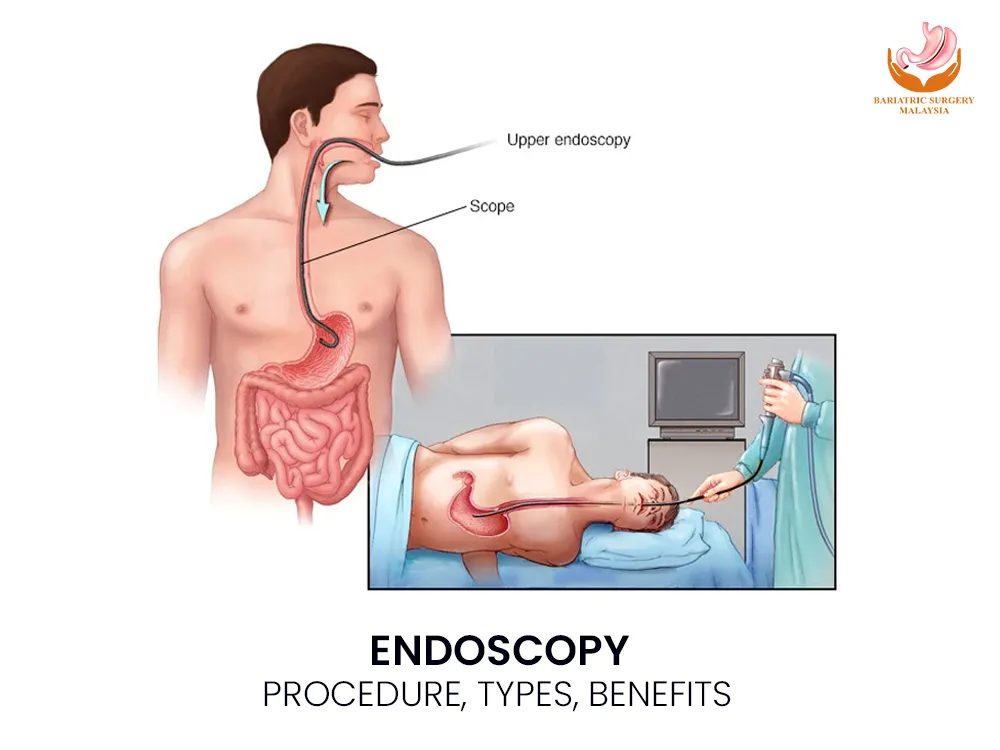
Endoscopy is a minimally invasive medical procedure that enables doctors to see inside the body without making large incisions. Using a flexible tube called an endoscope, equipped with a light and camera, doctors can examine internal organs in real time.
It is used for both diagnostic purposes (to identify the cause of symptoms) and therapeutic purposes (to remove polyps, stop bleeding, or collect tissue samples for biopsy).
Types of Endoscopy by Area Examined
1. Gastroscopy (Upper Endoscopy)
Examines the esophagus, stomach, and duodenum. Commonly used to detect acid reflux, ulcers, and stomach pain.
2. Colonoscopy
Examines the colon and rectum. It is the gold standard for detecting polyps, colorectal cancer, and chronic bowel issues.
3. Sigmoidoscopy
A shorter version of colonoscopy that focuses on the rectum and sigmoid colon.
4. Endoscopic Ultrasound (EUS)
Combines endoscopy with ultrasound imaging to assess nearby organs such as the pancreas and lymph nodes.
5. Capsule Endoscopy
Involves swallowing a tiny capsule camera that takes thousands of images of the small intestine.
6. Bronchoscopy
Used to examine the lungs and airways, especially in cases of persistent cough or lung disease.
7. ERCP (Endoscopic Retrograde Cholangiopancreatography)
Evaluates the bile ducts and pancreatic ducts, often used to treat gallstones or blockages.
In Malaysia, the most common endoscopies are gastroscopy and colonoscopy due to the high prevalence of digestive issues and colorectal cancer.
Endoscopy Procedure: Step by Step
Step 1: Preparation
Patients fast for 6–12 hours before the procedure.
For colonoscopy, a bowel-cleansing solution is prescribed.
Step 2: Sedation & Monitoring
Mild sedation or anesthesia is administered through an IV line.
Vital signs (heart rate, oxygen levels) are continuously monitored.
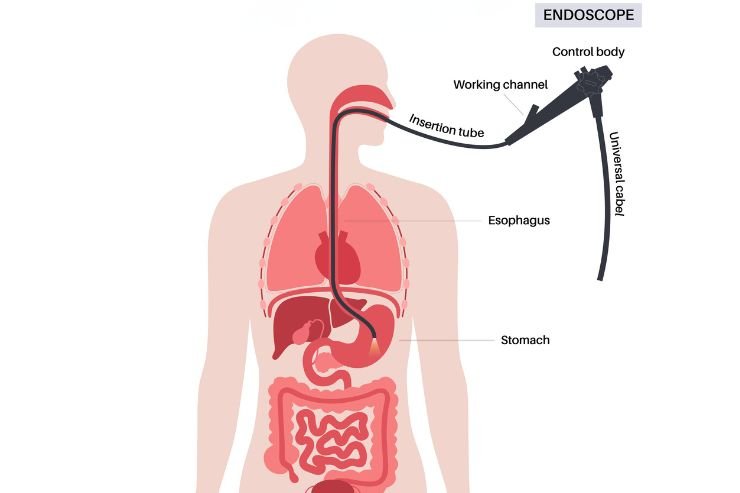
Step 3: Insertion of Endoscope
For gastroscopy, the tube is passed through the mouth into the stomach.
For colonoscopy, it is inserted through the rectum into the colon.
Step 4: Examination & Biopsy
The doctor visually inspects the digestive tract.
Tissue samples (biopsy) may be taken for analysis.
Polyps or small growths can be removed immediately.
Step 5: Recovery
Patients rest for 30–60 minutes post-procedure.
Temporary side effects may include mild bloating or sore throat.
Most individuals resume normal activities within 24 hours.
Types of Endoscopy in Malaysia & Their Uses
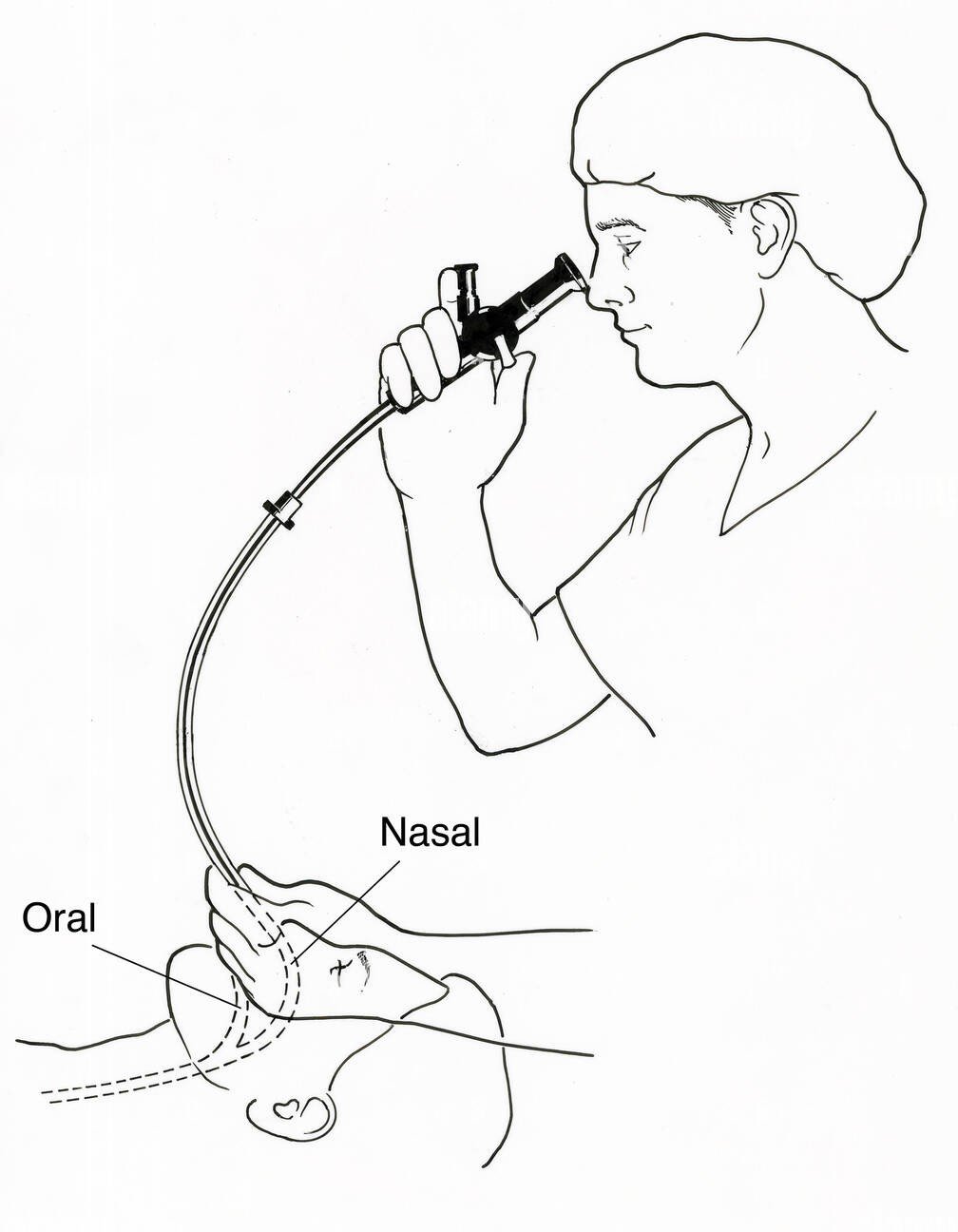
Gastroscopy (Upper Endoscopy)
Used to diagnose acid reflux (GERD), gastritis, peptic ulcers, stomach bleeding, and H. pylori infection.
Can also detect early stomach cancer, which is more common in Asia.
Colonoscopy
The gold standard for colorectal cancer screening.
Detects and removes polyps before they turn cancerous.
Recommended for individuals aged 50 and above, or earlier if there is a family history.
Sigmoidoscopy
A shorter, quicker test than colonoscopy.
Often used for patients with rectal bleeding or chronic constipation.
Other Specialized Endoscopies
EUS (Endoscopic Ultrasound): Helps stage cancer and assess pancreas or bile duct conditions.
ERCP: Removes gallstones or places stents in bile ducts.
Capsule Endoscopy: Ideal for investigating unexplained bleeding in the small intestine.
Applications of Endoscopy
Diagnostic Applications
Detecting ulcers, gastritis, celiac disease, or inflammatory bowel disease (IBD).
Identifying polyps, tumors, or early-stage cancer.
Investigating chronic abdominal pain, anemia, or GI bleeding.
Therapeutic Applications
Removing polyps or small tumors.
Stopping gastrointestinal bleeding using clips or cauterization.
Dilating narrowed esophageal passages (strictures).
Collecting biopsies for further diagnosis.
Benefits of Endoscopy
Minimally invasive: Avoids large surgical incisions.
Highly accurate: Allows real-time visualization of the digestive tract.
Quick recovery: Patients can usually go home the same day.
Dual-purpose: Diagnoses and treats in a single session.
Cancer prevention: Regular colonoscopy reduces colorectal cancer risk by up to 70% by detecting and removing polyps early.
Risks & Safety
Endoscopy is considered very safe, especially in MOH-certified hospitals and private clinics. Risks are rare but may include:
Mild bloating, cramps, or sore throat (common but temporary).
Bleeding (less than 1%).
Perforation of the intestine or stomach (<0.1%).
With proper preparation and experienced doctors, the benefits far outweigh the risks.
Cost of Endoscopy in Malaysia
The cost of endoscopy varies depending on the type, hospital, and whether it is done in a government or private facility.
Gastroscopy: RM 800 – RM 2,000
Colonoscopy: RM 1,500 – RM 3,000
Sigmoidoscopy: RM 600 – RM 1,200
Capsule Endoscopy: RM 3,000 – RM 5,000
Government hospitals may be more affordable, but waiting times are longer. Private hospitals in Kuala Lumpur, Penang, and Johor Bahru provide faster access, often with advanced equipment.
Preparation
To ensure accurate results, patients should:
Fast for 6–12 hours before the procedure.
Follow bowel cleansing instructions for colonoscopy.
Inform the doctor about allergies, medications, or chronic conditions.
Arrange for someone to drive them home if sedated.
What to Expect After Endoscopy Procedure
Rest for the remainder of the day.
Avoid heavy meals immediately; start with light food.
Do not drive or operate machinery for 24 hours if sedated.
Contact a doctor if you experience severe pain, persistent bleeding, or fever.
Conclusion:
Endoscopy is a safe, effective, and essential tool in modern healthcare. It plays a key role in diagnosing digestive conditions, detecting cancer early, and even treating problems in one procedure.
With colorectal cancer on the rise in Malaysia, colonoscopy is strongly recommended for those aged 50 and above, or younger if at high risk. The ability to detect and remove polyps early makes it one of the most powerful cancer prevention tools available today.
If you experience persistent gastric pain, unexplained weight loss, or rectal bleeding, speak to an MOH-certified gastroenterologist about whether endoscopy is right for you.
FAQs About Endoscopy in Malaysia
1. Is endoscopy painful?
No. Sedation ensures minimal discomfort. Some patients may feel mild bloating or throat irritation, which usually resolves quickly.
2. How long does recovery take?
Most patients return to normal activities within 24 hours.
3. Are there risks?
Complications are very rare. The risk of serious issues such as perforation is less than 0.1%.
4. How often should I get a colonoscopy?
Every 5–10 years after age 50, or earlier if you have a family history of colorectal cancer.
5. How much does endoscopy cost in Malaysia?
Costs range from RM 800 to RM 3,000, depending on the type and facility.