


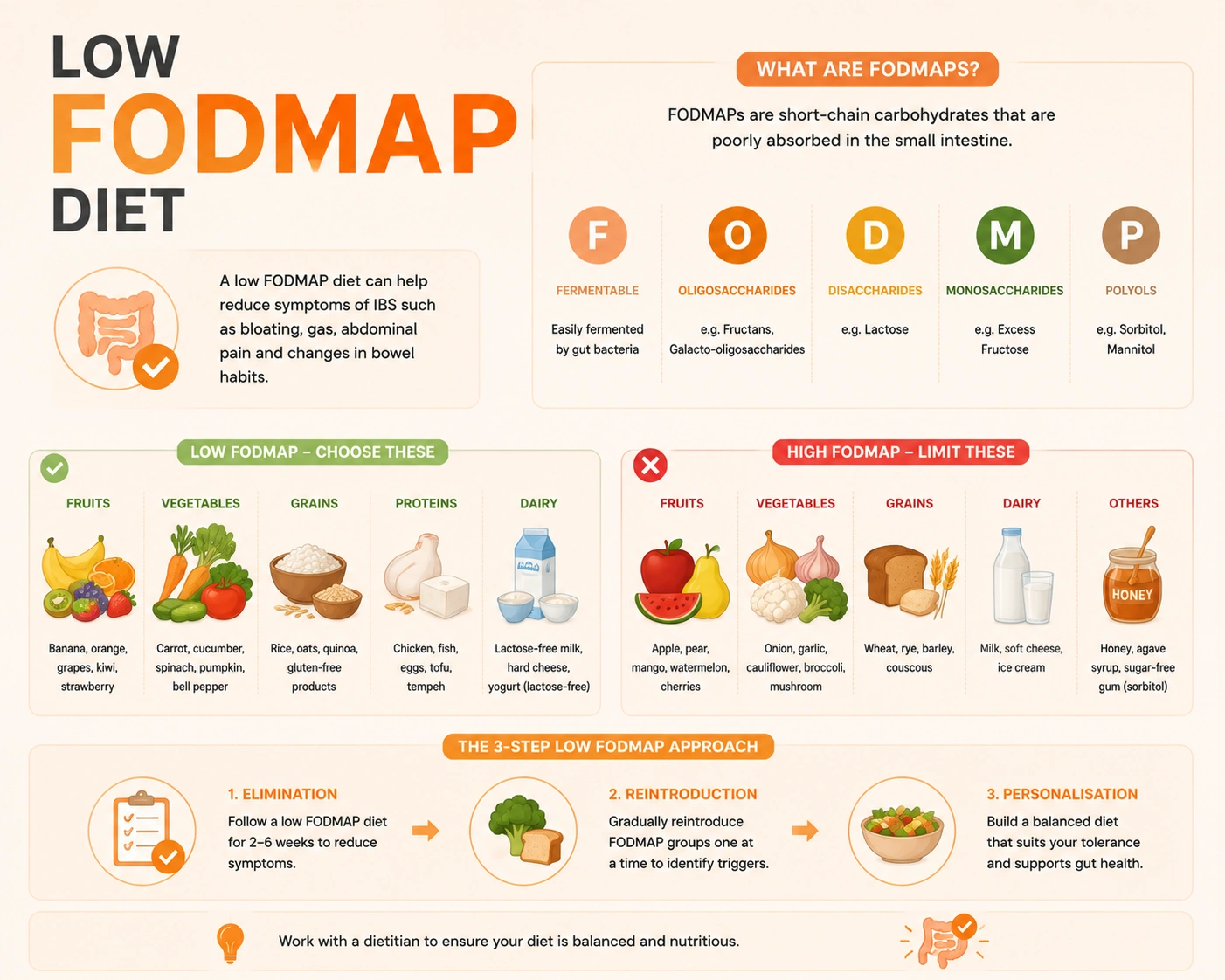
If you have IBS, constant bloating, or unpredictable stomach pain after meals, the Low FODMAP Diet is the most evidence-based food approach to calm your gut. Developed by Monash University, it is now widely used by gastroenterologists and dietitians across Malaysia. This guide is built specifically for Malaysians, complete with local food swaps, prices, and practical eating-out tips.
What Is the Low FODMAP Diet & Who Needs It?
FODMAP stands for a group of short-chain carbohydrates that are poorly absorbed in the small intestine:
Fermentable (Easily broken down by gut bacteria)
Oligosaccharides (e.g., fructans in onions/wheat, GOS in legumes)
Disaccharides (e.g., lactose in dairy)
Monosaccharides (e.g., excess fructose in certain fruits/honey)
And
Polyols (e.g., sorbitol/mannitol in mushrooms, avocados, and artificial sweeteners)
In people with sensitive guts, these carbs pull excess water into the bowel and are rapidly fermented by gut bacteria. This process produces large amounts of gas, stretching the intestinal walls and triggering bloating, sharp cramps, diarrhea, or severe constipation.
Who benefits most:
IBS Sufferers: 70% to 86% of IBS patients experience significant symptom relief on a properly managed low FODMAP diet (Monash University).
SIBO Patients (Small Intestinal Bacterial Overgrowth): It cuts off the primary fuel source for bacteria abnormally multiplying in the small intestine.
Functional Bloating & Hypersensitivity: For individuals who deal with regular, painful gas even without an official IBS diagnosis.
How the Low FODMAP Diet Helps Your Gut
FODMAPs aren’t inherently bad for health. However, if you have a sensitive gut, reducing them helps by:
Decreasing fluid accumulation in the bowel (reducing sudden bouts of diarrhea).
Minimizing gas production from bacterial fermentation (reducing abdominal distension, tightness, and wind).
Calming overactive gut motility that causes sudden, painful trips to the toilet.
Most individuals start noticing a significant reduction in bloating and pain within 3 to 7 days of starting the elimination phase.
Comparison: Low FODMAP vs. Gluten-Free vs. Dairy-Free
Because these diets share common food restrictions, they are frequently confused. Here is how they actually differ:
| Diet Type | What It Removes | Primary Purpose | Overlap with Low FODMAP | Key Difference |
| Low FODMAP | Specific short-chain carbs: fructans, GOS, lactose, fructose, polyols | Manage IBS, SIBO, and chronic functional gut symptoms | Incorporates elements of both gluten-free and dairy-free diets | Focuses entirely on carbohydrates, not proteins. Wheat is restricted due to fructans (a carb), not gluten (a protein). Sourdough bread and lactose-free milk are perfectly safe. |
| Gluten-Free | All gluten proteins found in wheat, barley, and rye | Coeliac disease, non-coeliac gluten sensitivity | Many gluten-free grains are naturally low in fructans | Gluten-free does not guarantee low FODMAP. Many packaged gluten-free items use high-FODMAP fillers like chickpea flour, honey, or inulin. |
| Dairy-Free | All mammal-derived milk products (cow, goat, sheep) | Milk protein allergy, strict vegan lifestyle | Lactose is a FODMAP, so dairy-free products are automatically lactose-free | Low FODMAP allows real dairy that has had its lactose removed (e.g., lactose-free milk) and aged hard cheeses (Cheddar, Parmesan) because they are naturally low in lactose. |
Is This Diet Safe Long Term?
No, the strict elimination phase is not meant to be permanent.
Phase 1 is a restrictive, short-term therapeutic tool (2 to 6 weeks). Staying on a strict low FODMAP diet for months or years can:
Drastically reduce the diversity of beneficial bacteria (microbiome) in your colon.
Increase the risk of nutritional deficiencies in essential fiber, calcium, and iron.
Foster unhealthy food anxiety and social isolation.
The ultimate goal is Phase 3: Personalization, where you discover that you only need to avoid a few specific culprit subgroups while safely returning to a broad, flexible diet.
The 3 Phases of the Low FODMAP Diet
The diet will only yield sustainable results if you follow its structural phases sequentially. Jumping straight to “eating low FODMAP forever” without testing triggers is why many self-taught attempts fail.
[ Phase 1: Elimination ] ------> [ Phase 2: Reintroduction ] ------> [ Phase 3: Personalization ]
     (2 - 6 Weeks)                    (6 - 8 Weeks)                     (Long-Term Lifestyle)
  Systematically cut out          Systematically test specific         Reintroduce passed groups;
  all high-FODMAP foods.          subgroups to find triggers.          restrict only true triggers.
Phase 1: Elimination (Gut Reset)
Duration: 2 to 6 weeks maximum.
Goal: Clear out accumulated gas and calm irritated nerve endings in the gut. During this phase, you strictly swap out high-FODMAP foods for safe alternatives using Monash University-approved serving sizes.
Phase 2: Reintroduction (The Challenge)
Duration: 6 to 8 weeks.
Goal: Identify exactly which carbohydrate subgroups trigger your symptoms, and determine your personal threshold level.
How it works: You choose one specific subgroup (e.g., lactose) and test it over 3 consecutive days in increasing portions (Day 1: $\frac{1}{2}$ cup milk; Day 2: 1 cup; Day 3: $1\frac{1}{2}$ cups), while keeping the rest of your meals strictly low FODMAP. Monitor your symptoms for 48 hours, then take a 3-day break (“washout period”) before testing the next group.
Phase 3: Personalization (Your Tailored Diet)
Duration: Ongoing / Long-term.
Goal: Establish a sustainable, customized eating plan. If your tests show you tolerate lactose and fructose perfectly but flare up with fructans (onions), you can comfortably order milky drinks again while keeping your savory meals onion-free.
Low FODMAP Grocery Guide: Malaysian Ingredients
Portion sizes are critical on this diet. A food can be perfectly safe in a small portion but become highly fermentable if you eat too much of it (FODMAP stacking).
Local Fruits & Vegetables
 Low FODMAP (Safe / Adhere to Serving Sizes) Low FODMAP (Safe / Adhere to Serving Sizes) |  High FODMAP (Avoid Completely in Phase 1) High FODMAP (Avoid Completely in Phase 1) |
| Fruits: Pisang berangan (1 medium), papaya (140g), pineapple (140g), dragon fruit (1 whole), oranges, guava, watermelon (strict limit of 100g), grapes (150g). | Apples, pears, mangoes (including Harumanis), jackfruit (nangka), lychees, longans, rambutans, figs, watermelon (>100g). |
| Vegetables: Bean sprouts (taugeh), kangkung, English spinach, carrots, cucumbers, tomatoes, brinjal, okra (bendi), French beans (limit to 75g), white cabbage (limit to 75g). | Shallots, garlic, big onions, bawang goreng, cauliflower, mushrooms, asparagus, long beans, petai, jering. |
Local Pro Tip: The green leafy tops of spring onions and local chives (daun kucai) are completely low FODMAP. Use them generously in your stir-fries to get that savory “onion” aroma without the gas-inducing fructans.
Clean Proteins & Tofu
Plain, fresh animal proteins are naturally zero-FODMAP because they contain no carbohydrates. The primary triggers are found in local marinades, sauces, and gravies.
Safe Options (Phase 1): Turmeric fried chicken (ayam goreng kunyit without onions), fried or steamed fish (siakap, kembung, tilapia prepared without garlic/onions), fresh beef/mutton, eggs, prawns, squid, firm tofu, and tempeh (limit to 100g).
High-Risk Items to Avoid: Satay (high-onion marinade), peanut sauce (kuah kacang), standard sambal belacan (usually loaded with shallots), silken tofu (high in GOS), tauhu fa, soy milk made from whole soy beans, and commercial fishballs containing wheat flour and garlic powder.
The 4 Biggest FODMAP Triggers in Malaysian Cuisine
Garlic & Onions: The aromatic foundation of sambal, soups, fried rice pastes, and curry. Solution: Use garlic-infused olive oil. FODMAP carbohydrates are completely insoluble in pure fats/oils. You get the rich flavor profile extracted safely into the oil without any of the fermentable sugars.
Wheat Grains: Found in roti canai, yellow mee, wanton mee, biscuits, and traditional kuih-muih. Solution: Swap to plain white rice, rice vermicelli (bihun), 100% pure rice flour kuetiau, or genuine sourdough bread.
Traditional & Condensed Milk: Found in teh tarik, kopi susu, Milo, and cheese naan. Solution: Switch to lactose-free milk, almond milk, or stick to Teh O / Kopi O.
Lentils & Dhal: Found in mamak kuah dhal and side dishes.
Finding Low-FODMAP Alternatives in Malaysian Supermarkets
Jaya Grocer / Village Grocer (RM12 – RM25): Stocks dedicated FODMAPPED for You! simmer sauces, San Remo/Barilla gluten-free pasta lines, and imported lactose-free yogurts (Emmi, Farm Fresh).
99 Speedmart / Lotus’s (RM3 – RM10): Jacob’s Weetameal crackers (safe in small servings), Mission Corn Wraps (100% corn-based wraps), Lingham’s Chili Sauce (made without garlic), and Ayam Brand tuna in olive oil.
Shopee / Lazada Malaysia (RM15 – RM40): Garlic-infused olive oil brands, Casa de Santé low-FODMAP certified spice blends, and Orgran allergen-free pastas.
Label Reading Rule: Always scan ingredient lists and reject products containing inulin, chicory root, honey, high fructose corn syrup, sorbitol, mannitol, or generic “onion/garlic powder”.
7-Day Low FODMAP Meal Plan (Malaysian Style)
This meal plan is fully compliant with Phase 1 (Eliminasi), utilizing easily accessible local ingredients designed to keep daily intake under 2000 kcal.
Monday
Breakfast: Rolled oats cooked in lactose-free milk topped with 5 sliced strawberries.
Lunch: White rice + turmeric fried chicken (cooked without garlic/onions) + simple stir-fried kangkung (plain or with a touch of pure fish sauce).
Dinner: Chicken bihun sup (made with homemade bone broth, rice vermicelli, chives, and leafy greens).
Snack: 10 plain almonds + 1 fresh orange.
Tuesday
Breakfast: 2 scrambled eggs + 2 slices of genuine toasted sourdough bread.
Lunch: Nasi kerabu (request without raw onion ulam and skip the onion-heavy gravies) + plain grilled chicken.
Dinner: Clear chicken soup boiled with carrots, potatoes, and fresh bean sprouts.
Snack: Lactose-free yogurt with a handful of blueberries.
Wednesday
Breakfast: Banana smoothie (1 medium pisang berangan + lactose-free milk + 1 tsp chia seeds).
Lunch: White rice + crispy fried kembung fish + sliced cucumber + a drizzle of regular sweet soy sauce (kicap manis).
Dinner: Stir-fried quinoa with egg, diced carrots, and the green tops of spring onions.
Snack: Plain puffed rice cakes with 1 tbsp smooth peanut butter.
Thursday
Breakfast: Toasted corn wrap stuffed with a plain fried egg and sliced tomatoes.
Lunch: Clear Tom Yam Bihun (ditch commercial pastes; flavor the broth naturally with lemongrass, galangal, kaffir lime leaves, chili padi, and fresh prawns).
Dinner: White rice + beef stir-fried in sweet soy sauce (sauce made using garlic-infused oil, fresh ginger, and English spinach).
Snack: 1 ripe pisang berangan.
Friday
Breakfast: Plain cornflakes served with unsweetened rice milk or almond milk.
Lunch: Homemade Low-FODMAP Nasi Lemak: Rice cooked with pure santan and pandan leaf, served with a hard-boiled egg, fresh cucumber slices, and a customized sambal (blended dried chilies, garlic-infused oil, tamarind juice, and sugar—no onions or shallots).
Dinner: Pan-seared chicken breast + creamy mashed potatoes (prepared with lactose-free milk and real butter, no commercial gravy).
Snack: Plain air-popped popcorn.
Saturday
Breakfast: Rice flour pancakes (lempeng tepung beras) served with a drizzle of pure maple syrup.
Lunch: Homemade Hainanese Chicken Rice (plain rice steamed with ginger and chicken fat, poached chicken meat, and soy-sesame dressing. Skip the ginger-garlic sauce and chili paste).
Dinner: Laksa Johor alternative (using gluten-free spaghetti noodles, with the fish gravy prepared strictly without onions or garlic).
Snack: 2 fresh kiwi fruits.
Sunday
Breakfast: Simple Chinese-style fried rice (white rice, egg, finely chopped carrots, spring onion greens, seasoned with salt and white pepper).
Lunch: Grilled chicken salad with romaine lettuce, cucumber, tomatoes, tossed in plain extra virgin olive oil.
Dinner: White rice + clear ginger soup with siakap fish fillets + steamed okra.
Snack: 30g of high-quality dark chocolate (>70% cocoa).
Simple Local Low-FODMAP Recipes
Onion-Free Chicken Curry: Finely mince fresh ginger, lemongrass, galangal, and fresh turmeric. Heat regular cooking oil in a pot, fry curry leaves and your minced herb paste until fragrant, then toss in your favorite meat curry powder. Add chicken pieces, potatoes, and pure coconut milk (santan). The gravy turns out thick and robust without a single gram of onion.
Comforting Ginger Bihun Sup: Simmer chicken bones with cracked ginger pieces and whole carrots for a naturally sweet, clean broth. Blanch pure rice vermicelli (bihun), bean sprouts, and mustard greens. Combine them in a bowl, ladle the boiling soup over, and top with a generous teaspoon of homemade garlic-infused oil to elevate the aroma.
Targeted Symptom Management for IBS
Customizing the Diet for Your Specific IBS Subtype
Diarrhea-Predominant IBS (IBS-D): This subtype is highly reactive to osmotic FODMAPs like lactose, excess fructose, and polyols, which aggressively draw water into the bowel. Cutting out condensed milk, apples, mangoes, and mushrooms can stop sudden bowel urgency within days. Focus on incorporating soluble fiber like plain oats to help add structural form to stools.
Constipation-Predominant IBS (IBS-C): This is frequently aggravated by excessive gas production from fructan and GOS fermentation, which physically stuns and slows down bowel motility. While removing wheat and onions to drop gas levels, make sure you don’t accidentally plunge your fiber intake too low. Eat 2 gold or green kiwis daily and drink a consistent 2 liters of water to keep stool transit moving smoothly.
Troubleshooting Persistent Bloating
If you have been following the diet for 2 weeks with minimal improvement, review these common oversights:
FODMAP Stacking: Consuming multiple low-FODMAP ingredients that contain moderate restricted thresholds within a single meal (e.g., eating 75g of cabbage, 100g of watermelon, and 10 almonds together). The individual sugars accumulate in your gut and cross into a high-FODMAP threshold.
Hidden Preservatives: Dehydrated garlic powder or high-fructose corn syrup is often masked under generic terms like “spices,” “natural flavorings,” or “blended soy sauces” in processed foods.
Non-FODMAP Irritants: Strong chemical gut irritants like caffeine (strong coffee/tea), extremely greasy fried foods, intense capsaicin (chili), and high stress levels can trigger the gut-brain axis and mimic a food reaction.
Dining Out Safely at Malaysian Eateries
Navigating local food courts or restaurants during Phase 1 requires tactical ordering:
| Dining Venue | What You Can Safely Order | What You Must Avoid |
| Mamak Stalls | Plain Plain Roti Naan (keep portion small if sensitive to wheat grains) / Roti Jala, Ayam Tandoori (verify minimal paste thickness), Mamak Fried Chicken (traditionally fried using flour spices without onion paste), Plain White Rice + Crispy Fried Fish. | Kuah dhal (extremely high in GOS), all liquid curries and gravies (heavily onion-based), standard roti canai, and mamak-style fried noodles. |
| Traditional Kopitiams | Classic Nasi Lemak (explicitly request no sambal), hard-boiled eggs, sliced cucumber, Teh O Kosong, Kopi O Kosong, soft-boiled eggs with plain dry toast (verify no milk-based margarine is used). | Teh tarik, white coffee with condensed milk, curry mee, and asam laksa. |
| Local Food Courts | Chicken Rice (ask for plain white rice if the seasoned chicken rice is pre-boiled with garlic bulbs; take only the poached chicken meat, skip the soup, ginger sauce, and garlic chili paste). Clear soup Yong Tau Foo (select bean sprouts, kangkung, firm tofu block, mustard greens, and request all dipping sauces completely on the side). | Char Kuetiau (high in garlic and white chive bulbs), pre-packaged commercial noodle soups, and freshly squeezed whole-bean soy milk. |
Useful Restaurant Script: “Excuse me, I have a severe medical allergy to garlic, shallots, and onions. Could the chef please prepare a simple [Dish Name] stir-fried using only plain cooking oil, ginger, and salt? Please ensure no onions or garlic are added to the pan. Thank you so much for your help.”
Estimated Consultation Rates (Kuala Lumpur & Selangor)
Initial Assessment (45 to 60 minutes): RM170 – RM280 (Includes comprehensive symptom history, structural diet diaries, and custom Phase 1 meal mapping).
Follow-up Tracking Sesi (30 minutes): RM120 – RM180 (Essential for managing Phase 2: Reintroduction strategy).
Virtual/Online Dietitian Packages: RM150 – RM200 for initial virtual sessions, frequently bundled with direct text/WhatsApp support for troubleshooting.
Recommended Digital Tracking Tools
The Monash University FODMAP Diet App: Retails around RM38 (one-time purchase) on the App Store and Google Play. It is the absolute gold standard tool, featuring a highly accurate traffic-light grading system for global and regional Asian ingredients.
Hydrogen/Methane Breath Testing: Used primarily to diagnose SIBO or rule out specific baseline fructose/lactose malabsorption. Accessible at major tertiary centers like Sunway Medical Centre or Prince Court Medical Centre, costing between RM400 to RM800. A referral from a consultant gastroenterologist is required before scheduling.
Frequently Asked Questions (FAQ)
Can I follow this diet if I am a strict Vegetarian or Vegan?
Yes, but it requires highly deliberate planning. The elimination phase temporarily removes high-protein staples like lentils, chickpeas, dhal, and cashews. To protect your nutrient intake during Phase 1, focus on firm tofu, tempeh, quinoa, eggs (if you are ovo-vegetarian), and small, precisely measured portions of canned lentils that have been thoroughly rinsed under running water (limit to 46g per serving). Working alongside a registered dietitian is highly recommended to prevent iron and Vitamin B12 deficiencies.
What should I do if a food challenge triggers a symptom flare-up?
If a test portion triggers abdominal pain or bloating, stop the challenge immediately. Do not proceed to the larger testing doses scheduled for the next day. Return to your strict, safe Phase 1 low-FODMAP meals and wait until your digestive tract returns to a completely calm, symptom-free baseline (which typically takes 3 to 5 days). Record the exact dose that triggered the reaction—this establishes your current personal threshold for that specific carbohydrate group.
Is the Low FODMAP diet safe for young children and during pregnancy?
For Children: Strict Phase 1 elimination is generally discouraged for growing children unless closely managed by a pediatric gastroenterologist and a specialized pediatric dietitian. Because children require highly diverse nutrient profiles for structural growth, a much gentler approach focusing solely on cutting down obvious triggers like excess onions and high-fructan wheat products is preferred.
During Pregnancy: A restrictive Phase 1 plan is not recommended due to the vital micro-nutritional demands of fetal development. Instead, focus on identifying and isolating only the top 1 or 2 high-impact triggers (such as heavily concentrated commercial garlic pastes or highly sweetened dairy drinks) to optimize maternal bowel comfort safely.
Conclusion
The Low FODMAP Diet is not designed to be a weight-loss program, nor is it a lifetime restriction. View it simply as a short-term diagnostic tool to decode your gut’s unique biological threshold. Beginning with small, manageable lifestyle changes—like swapping out raw shallots for the green leaves of spring onions or switching your morning beverage to a lactose-free alternative—can provide the profound relief your digestive health deserves.