


Quick answer: Most Malaysian patients lose 60-80% of excess weight within 12-18 months after bariatric surgery, with diabetes remission rates of 78-85% for gastric bypass. Results vary by procedure, starting BMI, age, and adherence to diet and exercise plans.
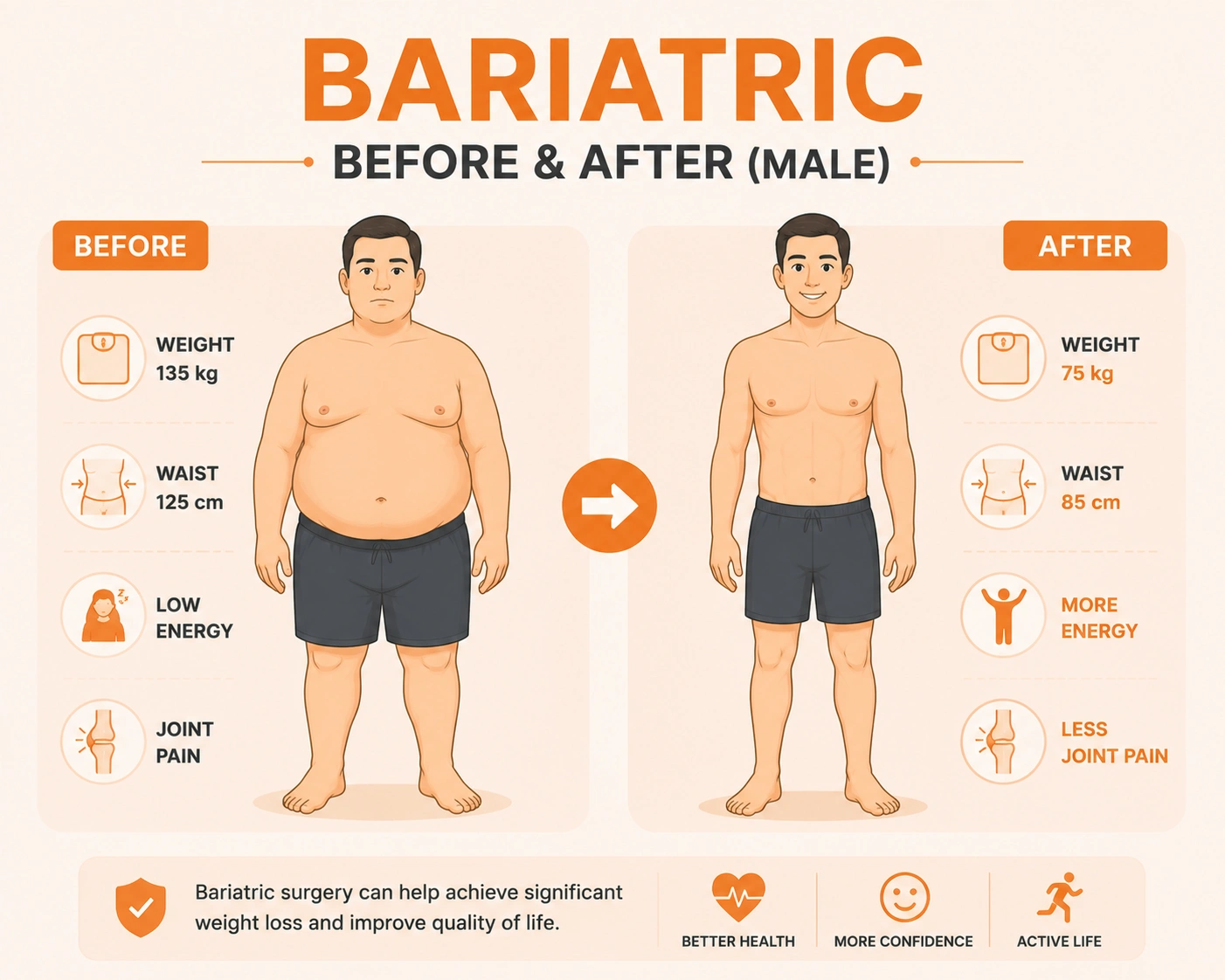
Bariatric Surgery Before and After Results Timeline by Month
Understanding your recovery timeline helps set realistic expectations and stay motivated. Results follow a predictable pattern when MOH guidelines and ERAS protocols are followed.
Month 0-1: Immediate Post-Op Phase
- Weight loss: 8-12kg average in first 30 days
- Diet: Liquid only for 2 weeks, then pureed foods
- Activity: Walking daily, no lifting >5kg. Return to desk work: 2-3 weeks
- Visible changes: Face and neck slimming first. Clothes feel looser
- What to expect: Fatigue, swelling at incisions, rapid satiety with 30-60ml fluids
Month 1-3: Rapid Weight Loss Phase
- Weight loss: 35-50% of excess weight lost by month 3
- Diet: Soft foods week 3-6, then small regular meals. Protein 60-80g/day
- Activity: Resume gym week 6+. No heavy lifting until cleared
- Visible changes: Significant waist reduction. Rings/watches loose. Many patients drop 2-3 clothing sizes
- Medical: Comorbidities like sleep apnea and hypertension often improve
Month 3-6: Steady Progress Phase
- Weight loss: 50-65% of excess weight lost by month 6
- Diet: Regular textured food in tiny portions. Chew thoroughly 20-30 times
- Activity: Full exercise routine. Strength training recommended
- Visible changes: Body shape changes dramatically. Energy levels increase
- Plateau warning: Weight loss slows – this is normal. Stay consistent
Month 6-12: Nearing Target Phase
- Weight loss: 60-75% of excess weight lost by month 12
- Diet: New normal established. 3 small meals + 1-2 protein snacks
- Activity: Most patients exercising 3-5x weekly
- Visible changes: Final body contour emerges. Loose skin may appear
- Medical: Type 2 diabetes remission in 78-85% of gastric bypass patients
Month 12-18: Maintenance Phase
- Weight loss: 60-80% of excess weight lost total. Weight stabilizes
- Diet: Lifelong habits solidified. Vitamin supplements daily forever
- Activity: Regular exercise essential to maintain results
- Visible changes: Final results. Consider plastic surgery for excess skin after 18 months if weight stable
- Follow-up: Annual blood tests for vitamin deficiencies for life
Malaysian patients using ERAS protocol have median hospital stay of 2.3 days vs 4.5 days traditional, with faster early recovery.
Bariatric Surgery Before and After Photos Malaysia Clinics
Quick answer: Licensed Malaysian surgeons show before/after photos during private consultations only, not publicly, to protect patient privacy under PDPA 2010.
What to expect from legitimate before/after photos:
- Consent documented: All photos require written patient consent
- Standardized angles: Front, side, and back views in same clothing/lighting
- Timeline marked: Clear labels: “Pre-op”, “3 months”, “12 months”
- No editing: Reputable MOH-licensed surgeons don’t photoshop or use filters
- Realistic results: Shows loose skin, stretch marks, surgical scars – not “perfect” bodies
Red flags in before/after marketing:
- Photos on social media without visible consent/watermarks
- Dramatic “1 month” transformations – real fat loss takes time
- No face/body shown – can’t verify it’s same person
- Clinics guaranteeing specific kg lost – illegal under MOH advertising rules
- Before/after from international patients only, no Malaysian cases
How to request photos ethically:
- Ask during consultation: “Can I see de-identified photos of patients with similar BMI to mine?”
- Request specific procedure: sleeve vs bypass results differ
- Ask for 12-month+ photos: Early results don’t show final outcome
- Verify: “Were these patients also on your dietitian program?”
The best indicator isn’t photos – it’s asking for 30-day complication rates and 1-year excess weight loss % data from the surgeon’s own audit.
Expected Weight Loss Results After Bariatric Surgery
Results are measured as % Excess Weight Loss (%EWL) or % Total Weight Loss (%TWL), not just kg.
Average outcomes in Malaysia by 12-18 months:
Starting BMI | Typical Excess Weight | Expected Loss | Remaining Weight |
|---|---|---|---|
BMI 35-40 | 25-35kg excess | 60-70% = 15-24kg | Within 5-10kg of ideal |
BMI 40-50 | 40-60kg excess | 65-75% = 26-45kg | May still be overweight |
BMI 50+ | 70kg+ excess | 70-80% = 49-56kg+ | Significant improvement |
30-day outcomes from Malaysian data:
- Absolute weight loss: 13-18kg average
- Absolute BMI loss: 4.6-6.3 points
- %TWL: 11-12% of total body weight
- %EWL: 21-38% depending on starting BMI
Comorbidity improvements:
- Type 2 Diabetes: 78-85% remission with gastric bypass, 50-60% with sleeve
- Hypertension: 60-70% resolve or reduce medication
- Sleep apnea: 80-85% improvement, many stop CPAP
- PCOS: Improved fertility and cycle regularity
- Joint pain: Significant reduction as weight decreases
Important: 10-20% of patients experience weight regain after 2-5 years if diet/exercise not maintained. Surgery is a tool, not a cure.
Bariatric Surgery Before and After Results for Different Procedures
Each procedure produces different weight loss patterns and speeds.
1. Gastric Sleeve / Sleeve Gastrectomy
- Mechanism: Restrictive. Removes 75-80% of stomach
- Weight loss speed: Fastest in months 1-6
- 1-year %EWL: 60-70% average
- Best for: BMI 35-50, no severe GERD
- Before/after look: Even weight loss. Less malabsorption = fewer vitamin issues
- Malaysia popularity: 70-80% of all procedures
2. Roux-en-Y Gastric Bypass (RYGB)
- Mechanism: Restrictive + malabsorptive + hormonal
- Weight loss speed: Slightly slower start but higher total loss
- 1-year %EWL: 70-80% average
- Best for: BMI 40+, Type 2 diabetes, GERD
- Before/after look: Most dramatic total weight loss. Higher loose skin
- Diabetes: 78-85% remission rate – gold standard
3. One Anastomosis Gastric Bypass (OAGB) / Mini Bypass
- Mechanism: Simplified bypass with 1 connection vs 2
- Weight loss speed: Similar to RYGB
- 1-year %EWL: 70-80% average
- Best for: Similar to RYGB but simpler surgery
- Advantage: ∼50% fewer complications than RYGB in Malaysian centres
4. Gastric Balloon / ESG (Non-surgical)
- Mechanism: Space-occupying, temporary
- Weight loss speed: Moderate, 6-month duration
- Total %TWL: 10-15% of total weight
- Best for: BMI 27-35, or pre-surgery prep
- Before/after look: Modest change. Weight often regained if habits don’t change
Procedure choice depends on BMI, diabetes status, GERD, and surgeon recommendation. Sleeve = most common. Bypass = best for diabetes.
Factors That Affect Bariatric Surgery Before and After Outcomes
Quick answer: Surgery creates 40% of results. Your habits create 60%. Age, starting BMI, and follow-up adherence are the biggest predictors.
Factors you CAN’T control:
- Age: Patients <45 lose more weight than >55. Metabolism slows with age
- Starting BMI: BMI >50 loses more total kg but lower %EWL than BMI 35-40
- Gender: Men often lose faster due to higher muscle mass
- Genetics: Family history affects metabolic rate and fat distribution
- Years obese: Longer duration = more metabolic adaptation to fight weight loss
Factors you CAN control – Most important:
- Protein intake: 60-80g/day minimum. Low protein = muscle loss, not fat loss
- Follow-up attendance: Patients attending 12-month visit lose 15% more than non-attenders
- Exercise: 150+ min/week of cardio + strength training prevents 80% of regain
- Vitamin compliance: Lifelong for bypass. Deficiencies cause fatigue and weight regain
- Mental health: Untreated depression/binge eating = #1 cause of poor results
- Alcohol: High calories, absorbed faster post-surgery. Can cause ulcers
- Sleep: <6 hours/night linked to 55% higher regain risk
- Support system: Patients in support groups lose 12% more at 2 years
Surgical factors:
- Surgeon experience: >200 cases = lower complication and revision rates
- Hospital ERAS protocol: Reduces stay to 2.3 days and speeds recovery
- Pre-op weight loss: Losing 5-10% before surgery shrinks liver, safer operation
- Procedure selection: Wrong procedure for your physiology = suboptimal loss
Medical factors:
- Diabetes duration: <5 years = 90% remission chance. >10 years = 40% chance
- Medications: Steroids, antidepressants, insulin can slow weight loss
- PCOS/Thyroid: Must be optimized pre-op for best results
Best results in Malaysia come from MOH-licensed surgeons + hospital-based ERAS programs + 12-month dietitian support + patient commitment. Miss any piece and outcomes drop.