



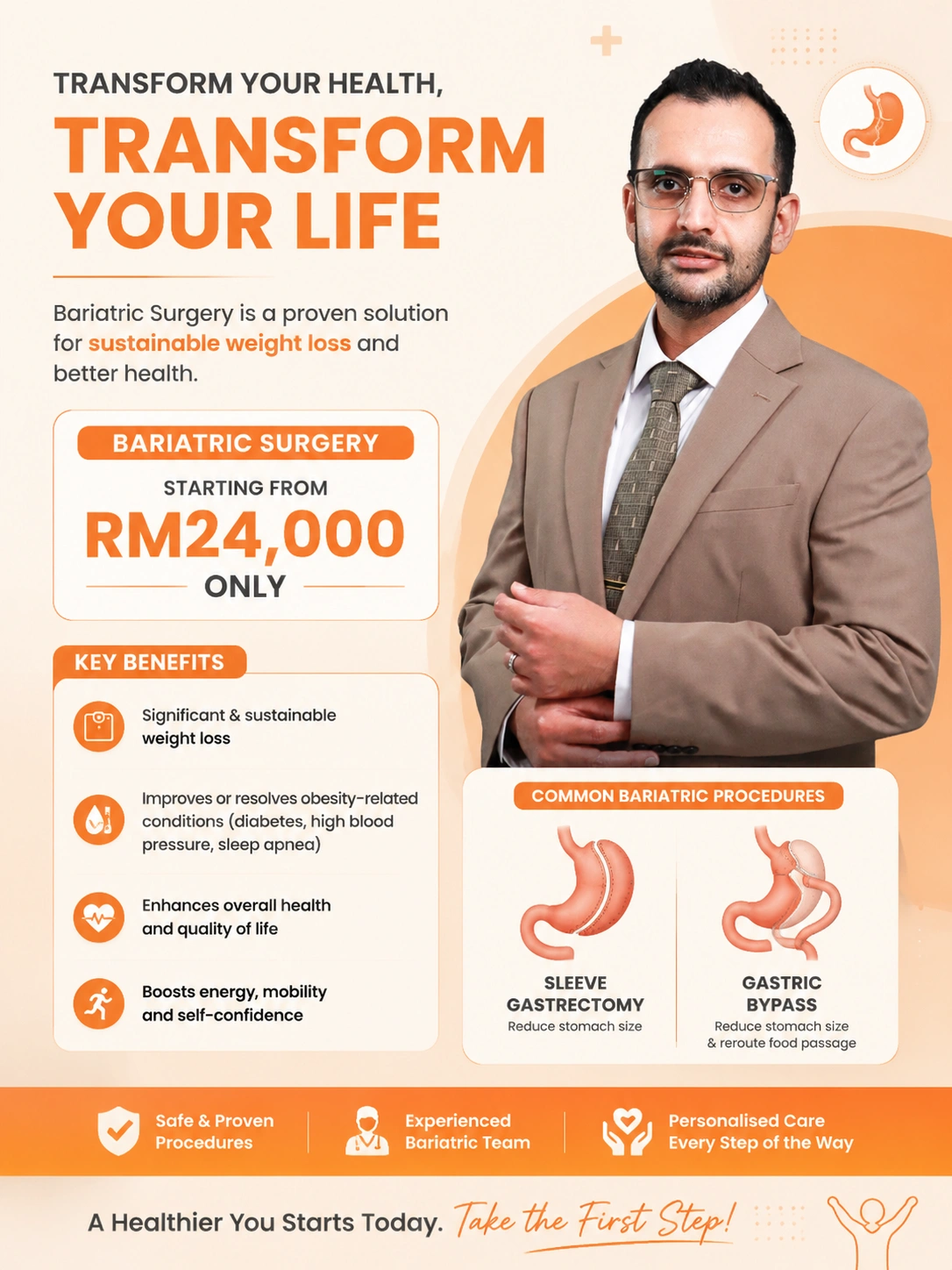
What is Gastric Sleeve Surgery in Malaysia?
Gastric sleeve surgery (Laparoscopic Sleeve Gastrectomy) is a permanent, surgical weight-loss procedure where approximately 80% of the stomach is removed, leaving a narrow, banana-shaped tube or “sleeve.” In Malaysia, the average cost for a gastric sleeve package at private specialist hospitals ranges from RM 22,000 to RM 35,000.
The procedure works by physically restricting food intake and drastically reducing the production of Ghrelin (the hunger hormone), allowing individuals with clinical obesity to achieve substantial, long-term weight reduction and reverse metabolic comorbidities like Type 2 diabetes.
Gastric Sleeve Surgery at a Glance
| Component | Specification / Metric | Clinical Notes |
| Average Cost (Private) | RM 22,000 – RM 35,000 | Includes laparoscopic staplers, ward stay, and specialist fees. |
| Minimum BMI Qualification | $\ge 32.5 \text{ kg/m}^2$ with comorbidities | Based on consensus guidelines for Asian populations. |
| Expected Weight Loss | 60% – 70% of excess body weight | Typically achieved within the first 12 to 18 months. |
| Hospital Stay | 2 to 3 nights | Done via minimally invasive “keyhole” laparoscopy. |
| Financing Alternatives | EPF Account 2 (Akaun Sejahtera) | Allowed under medical withdrawal for morbid obesity. |
How Gastric Sleeves Work for Weight Loss
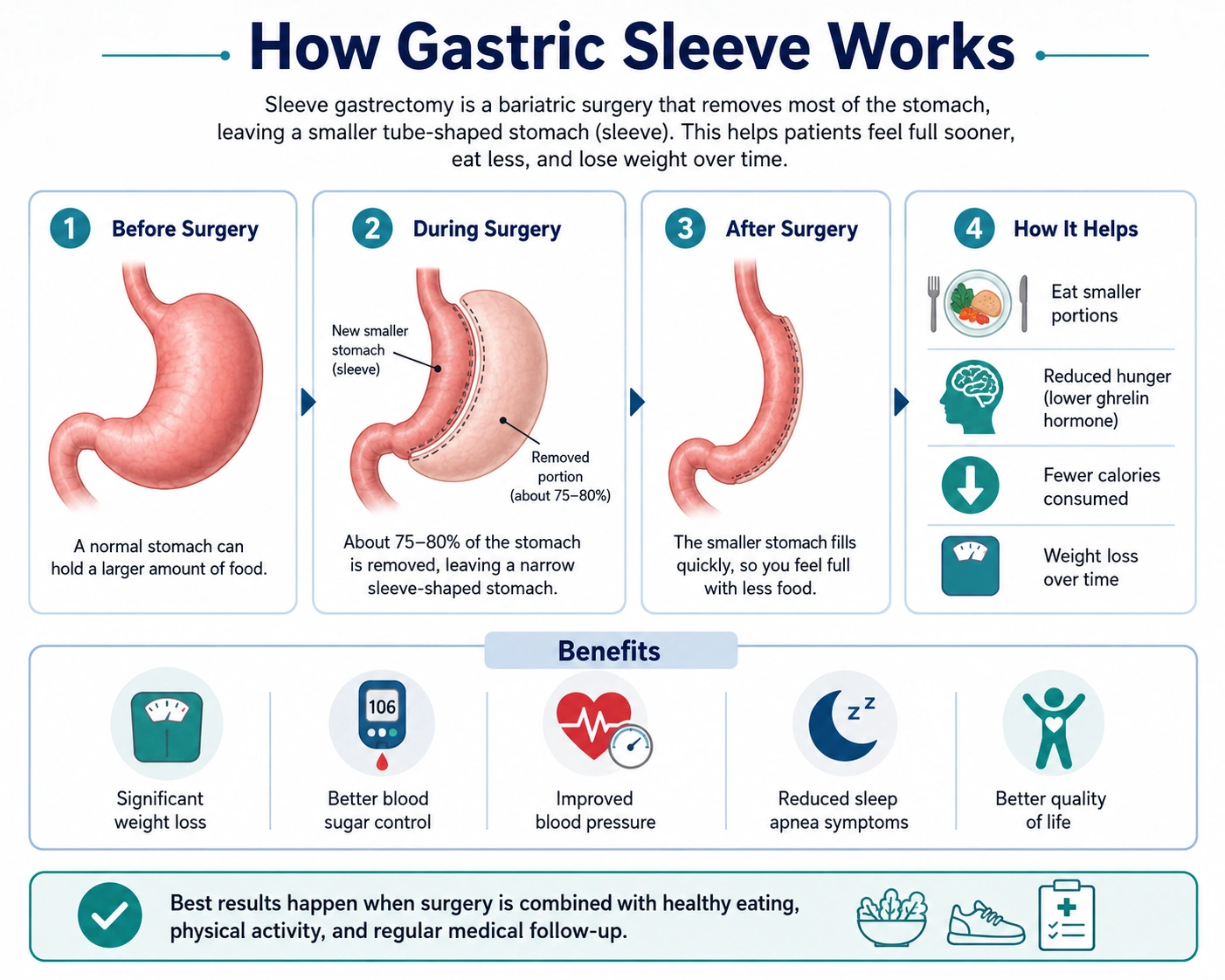
Gastric sleeve surgery alters your digestive anatomy through a dual mechanism of physical restriction and hormonal rebalancing.
[ 80% Stomach Removal ] ➔ [ Smaller Meal Capacity ] + [ Reduced Ghrelin (Hunger Hormone) ]
                       = Rapid, Sustainable Weight Loss
By removing the majority of the stomach, your structural food capacity is limited to about 100–150 mL per meal. Furthermore, the portion of the stomach that is excised contains the primary cells responsible for secreting Ghrelin. This hormonal drop suppresses chronic cravings and resets your biological satiety levels.
Who Qualifies for Sleeve Surgery
Bariatric surgeons in Malaysia utilize specialized BMI cut-offs adjusted for Asian health risks:
BMI of 37.5 or higher: Qualifies automatically as an intervention for Class III (morbid) obesity.
BMI between 32.5 and 37.4: Qualifies if accompanied by at least one serious obesity-related comorbidity, such as Type 2 diabetes, severe sleep apnea, fatty liver disease, or hypertension.
History of failure: Documentation showing that structured lifestyle interventions, diets, or medical weight management have failed to yield long-term control.
Laparoscopic Procedure Steps Explained
The procedure is carried out under general anesthesia using minimally invasive techniques:
The surgeon creates 4 to 5 small incisions (about 1 to 2 cm each) across the abdominal wall.
The abdomen is inflated with medical-grade carbon dioxide gas to optimize visual clarity and workspace.
A specialized camera (laparoscope) and long surgical instruments are introduced.
Using advanced laparoscopic staplers, the surgeon cuts and seals the stomach vertically. The remaining 80% of the stomach structure is then pulled out through one of the small incisions.
Hospital Stay and Recovery Time
Patients generally spend 2 to 3 nights in the hospital ward to ensure the staple line is healing securely and oral liquid intake is well-tolerated. Most desk-job professionals can return to normal work within 10 to 14 days, while heavy lifting and high-intensity exercises must be deferred for 4 to 6 weeks.
Gastric Sleeves Cost in Malaysia
Total expenditures fluctuate depending on the hospital tier, individual medical complexity, and the specific surgical alatan utilized.
Price Range by Hospital Type
| Institutional Tier | Estimated Package Cost (RM) | Key Variables |
| Public / Government Teaching Hospitals | RM 15,000 – RM 25,000 | Lower costs but subject to highly extensive elective waiting lists. |
| Private Specialist Hospitals | RM 22,000 – RM 35,000 | Rapid scheduling, premium private amenities, standard packages. |
| Premium Tertiary Medical Centers | RM 28,000 – RM 45,000 | Full multidisciplinary teams, cutting-edge surgical infrastructure. |
What Surgery Packages Include
Standard “bundled” packages at private specialist centers typically incorporate:
Surgical specialist, anesthesiologist, and operating theater utilization fees.
Inpatient room accommodation (usually a standard 2-night stay) and nursing care.
Essential single-use medical consumables, including premium laparoscopic stapler cartridges.
Take-home medications (pain relief, anti-emetics, and basic antibiotics) for the first month.
Note: Pre-operative workups (comprising extensive blood screenings, X-rays, ECGs, and a diagnostic upper endoscopy) are often billed independently, costing an additional RM 800 to RM 2,000.
Insurance and EPF Coverage Options
Private Health Insurance: Most Malaysian medical cards categorize weight-loss procedures as elective or cosmetic exclusions. However, exceptions are sometimes granted on a strict case-by-case basis if the surgery is deemed a life-saving metabolic necessity (e.g., severe uncontrolled Type 2 diabetes with a high BMI).
EPF Withdrawal (Akaun Sejahtera): The Employees Provident Fund (EPF) permits pre-retirement health withdrawals from Account 2 (Akaun Sejahtera) to cover bariatric surgical costs. This requires official medical board documentation certifying that the condition represents a critical health crisis (morbid obesity with chronic comorbidities).
Results and Side Effects to Expect
Weight Loss in First 12 Months
Weight loss is progressive and swift during the introductory phases:
Months 1 to 3: Patients commonly shed 20% to 30% of their excess weight, driven largely by the mandatory liquid-to-puréed dietary progression.
Month 6: Up to 50% of excess body weight is lost. Comorbidities like high blood pressure and blood sugar levels often experience substantial clinical remission.
Year 1: Patients reach an average of 60% to 70% reduction in excess weight. At this junction, weight plateaus, and metabolic adaptation requires active portion maintenance.
Common Risks and Complications
While statistically safe, a gastric sleeve is a major anatomical alteration carrying specific surgical risks:
Staple Line Leaks (1% – 2% incidence): A structural gap where gastric fluid leaks into the abdominal cavity. This requires immediate medical intervention.
Nutritional Deficiencies: Due to reduced stomach volume and lowered intrinsic factor production, the absorption of Vitamin B12, Iron, Vitamin D, and Calcium drops. Lifelong daily multivitamin supplementation is mandatory.
New or Worsening Acid Reflux (GERD): The high-pressure nature of the narrow gastric tube can trigger or exacerbate heartburn symptoms in a subset of patients.
Required Diet After Surgery
The newly formed gastric sleeve requires a strict, multi-stage recovery diet to heal completely without stretching the staple lines:
[ Weeks 1-2: Clear & Full Liquids ] ➔ [ Weeks 3-4: Puréed & Blended Foods ] ➔ [ Week 5+: Soft & Solid Proteins ]
Long-term habits demand that you always eat your solid proteins first, chew food thoroughly to a paste-like consistency, and avoid drinking liquids concurrently with meals to prevent vomiting or severe discomfort.
Gastric Sleeves vs Other Procedures
Sleeve vs Gastric Bypass Comparison
Gastric Sleeve: Involves zero rerouting or altering of the small intestines. It preserves natural nutrient absorption pathways better and carries a lower risk of long-term marginal ulcers.
Gastric Bypass (Roux-en-Y): Creates a tiny gastric pouch and connects it directly to the middle section of the small intestine, bypassing part of the digestive tract. It offers superior resolution for severe, chronic acid reflux (GERD) and highly aggressive Type 2 diabetes but demands stricter nutritional vigilance.
Sleeve vs Intragastric Balloon
Gastric Sleeve: A permanent surgical restructuring with significantly higher, long-term weight reduction potential (60% to 70% excess weight loss).
Intragastric Balloon: A completely non-surgical, temporary option where a device is placed inside the stomach for 4 to 12 months. It produces more modest weight loss (10% to 15% of total body weight) and carries a notable risk of weight regain once the device is retrieved.
Choosing a Bariatric Surgeon in Malaysia
To guarantee optimal safety, verify the baseline clinical benchmarks of your medical provider:
Surgeon Credentials to Verify
NSR Registration: Confirm that the specialist is actively registered on the National Specialist Register (NSR) of Malaysia under General Surgery, with formal fellowship training in Advanced Laparoscopic, Upper Gastrointestinal (Upper GI), or Metabolic and Bariatric Surgery.
Multidisciplinary Team Structure: Exceptional outcomes do not rely on the surgeon alone. Choose specialized centers that provide a dedicated supportive framework consisting of bariatric-trained clinical dietitians, physical therapists, and bariatric nurses to manage your lifelong post-op care.
FAQ
How painful is gastric sleeve recovery?
Because laparoscopic techniques avoid large muscle-cutting incisions, structural pain is highly manageable. Most patients describe the immediate post-operative sensation as a deep abdominal fullness or mild soreness, paired with temporary shoulder pain caused by the residual carbon dioxide gas used during surgery. This is controlled using routine hospital analgesics.
Will I regain weight after surgery?
Yes, weight regain is possible if lifestyle habits break down. While the stomach cannot grow back to its original massive size, it can stretch slightly over time. More importantly, frequently consuming high-calorie liquids (like ice cream, milkshakes, or sweet teas) or constantly snacking throughout the day (grazing) can bypass the physical restriction of the sleeve completely.
What is the age limit for sleeves?
The standard age bracket for metabolic surgery ranges from 18 to 65 years. However, adolescent bariatric protocols or geriatric procedures for patients over 65 are evaluated individually by medical boards, provided the patient displays strong cardiopulmonary health and the metabolic advantages far outweigh the anesthetic risks.