




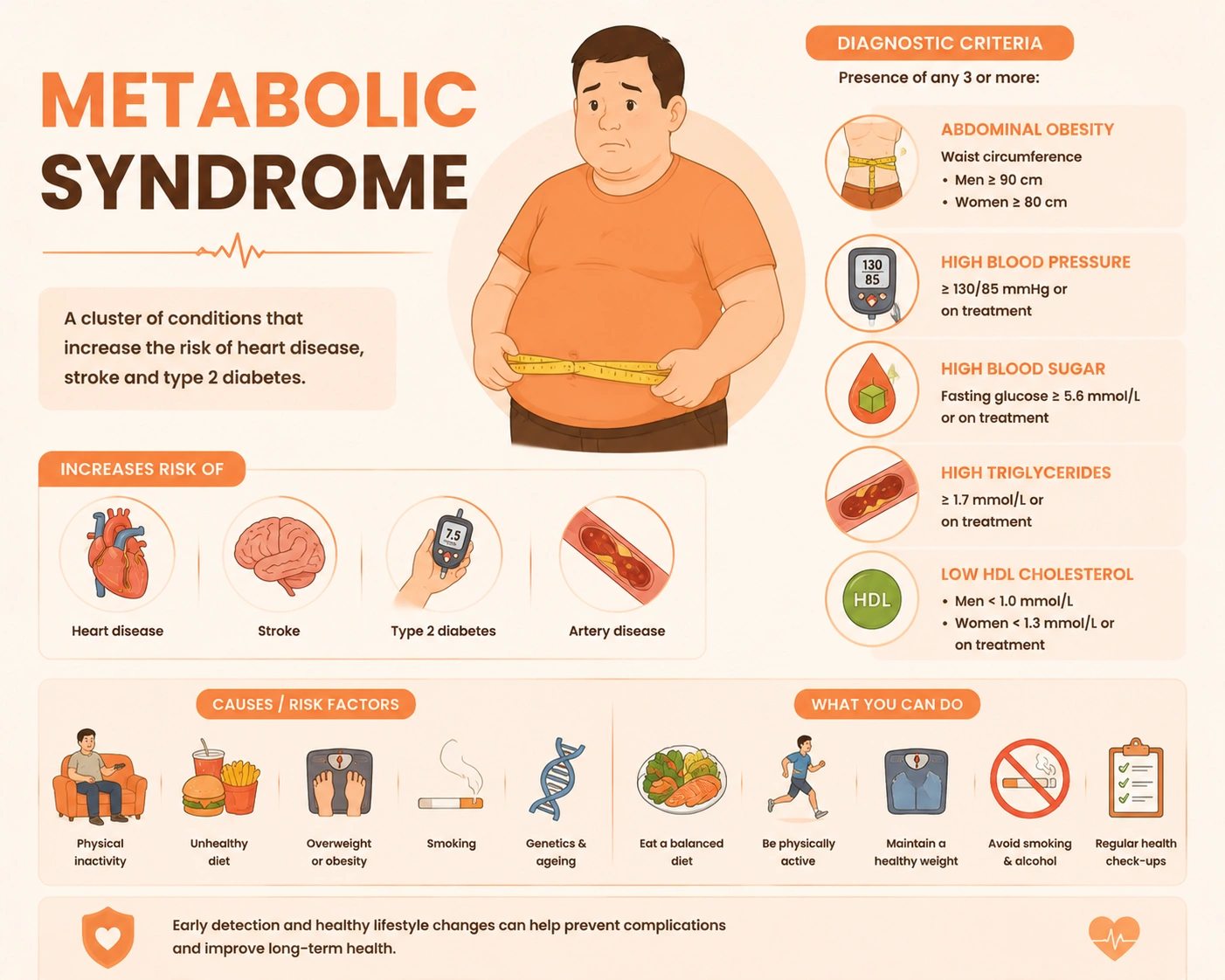
Metabolic syndrome is a cluster of conditions that occur together and increase risk of heart disease, stroke, and type 2 diabetes.
Diagnosis requires at least 3 of these 5 criteria: 1) Abdominal obesity: waist circumference >40 inches in men or >35 inches in women. 2) High blood pressure: ≥130/85 mmHg or on medication. 3) High fasting blood sugar: ≥100 mg/dL or on medication. 4) High triglycerides: ≥150 mg/dL or on medication. 5) Low HDL cholesterol: <40 mg/dL in men or <50 mg/dL in women or on medication.
Insulin resistance is the key underlying mechanism. First-line treatment is lifestyle change: weight loss, diet, exercise. Medication treats individual components if needed.
Causes and Risk Factors of Metabolic Syndrome
Core Mechanism
Insulin resistance drives most cases. Cells do not respond normally to insulin. Pancreas produces more insulin to keep blood sugar normal. Over time this leads to high blood sugar, abnormal lipids, and high blood pressure.
Major Risk Factors
- Abdominal obesity: Excess visceral fat releases inflammatory substances that worsen insulin resistance
- Physical inactivity: Reduces insulin sensitivity and increases weight gain
- Diet: High in refined carbs, sugar, saturated fat, and calories
- Age: Risk increases after age 40
- Genetics: Family history of type 2 diabetes or early heart disease
- Other conditions: PCOS, nonalcoholic fatty liver disease, sleep apnea
Diagnostic Criteria for Metabolic Syndrome
Measure | Cutoff |
|---|---|
Waist circumference | Men >40 in / 102 cm, Women >35 in / 88 cm. Asian cutoff: Men >35.4 in / 90 cm, Women >31.5 in / 80 cm |
Blood pressure | ≥130/85 mmHg or drug treatment for hypertension |
Fasting glucose | ≥100 mg/dL or drug treatment for high glucose |
Triglycerides | ≥150 mg/dL or drug treatment for high triglycerides |
HDL cholesterol | Men <40 mg/dL, Women <50 mg/dL or drug treatment for low HDL |
Diagnosis: 3 or more criteria met.
Health Risks Linked to Metabolic Syndrome
- Type 2 diabetes: 5x higher risk vs people without metabolic syndrome
- Cardiovascular disease: 2x risk of heart attack and stroke
- Nonalcoholic fatty liver disease: Fat buildup and inflammation in liver
- Chronic kidney disease: Due to high blood pressure and diabetes
- Polycystic ovary syndrome: Strongly associated with insulin resistance
Treatment and Management of Metabolic Syndrome
1. Lifestyle Modification
- Weight loss: 5-10% of body weight improves all components
- Diet: Mediterranean or DASH diet. Focus on vegetables, fruit, whole grains, lean protein, nuts, olive oil. Limit added sugar, refined carbs, saturated fat, sodium
- Exercise: 150 minutes moderate aerobic activity per week + 2 days resistance training
- Stop smoking and limit alcohol
2. Medications
Used when lifestyle is not enough. Target specific components:
- Blood pressure: ACE inhibitors, ARBs, diuretics
- Cholesterol: Statins for LDL, fibrates or niacin for triglycerides and HDL
- Blood sugar: Metformin improves insulin sensitivity
- Weight: GLP-1 receptor agonists if BMI ≥27 with comorbidities
3. Monitoring
Check waist, blood pressure, fasting glucose, lipids every 6-12 months. Screen for diabetes, liver disease, and sleep apnea.
Prevention of Metabolic Syndrome
- Maintain healthy waist size through diet and activity
- 30 minutes activity daily: Walking, cycling, swimming
- Eat fiber: ≥25-30g per day from vegetables, legumes, whole grains
- Limit sugary drinks and processed foods
- Annual health screening if risk factors present
FAQs About Metabolic Syndrome in Malaysia
Is metabolic syndrome the same as diabetes?
No. Metabolic syndrome is a cluster of risk factors that includes high blood sugar. Having metabolic syndrome increases risk of developing type 2 diabetes, but not everyone with metabolic syndrome has diabetes.Can metabolic syndrome be reversed?
Yes. Metabolic syndrome can be reversed with sustained weight loss of 5-10%, regular exercise, and a healthy diet. Reversal means fewer than 3 diagnostic criteria are present.What foods should you avoid with metabolic syndrome?
Avoid refined carbs, added sugar, sugary drinks, fried foods, processed meats, and trans fats. Limit alcohol and sodium. These foods worsen insulin resistance, blood pressure, and lipids.Do thin people get metabolic syndrome?
Yes. Thin people can have metabolic syndrome, called “metabolically obese normal weight”. This occurs with high visceral fat, low muscle mass, or genetic insulin resistance despite normal BMI.How fast does metabolic syndrome progress to diabetes?
Progression varies. Without intervention, about 30-40% of people with metabolic syndrome develop type 2 diabetes within 10 years. Lifestyle change cuts risk by over 50%.
Can Bariatric Surgery Fix Metabolic Syndrome?
Yes, bariatric surgery can fix metabolic syndrome in many patients.
- High remission rates: 60-80% of patients no longer meet metabolic syndrome criteria 1-2 years after gastric bypass or sleeve gastrectomy
- Mechanisms: Improves insulin resistance, reduces visceral fat, alters gut hormones, restricts calorie intake
- Components improved: Lowers blood pressure, normalizes fasting glucose, reduces triglycerides, raises HDL, reduces waist circumference
- Best candidates: BMI ≥35 with metabolic syndrome, or BMI ≥30 with uncontrolled type 2 diabetes
- Timeline: Most metabolic improvements occur within weeks to months, before full weight loss
- Not guaranteed: 20-40% may not achieve full remission, especially with long-standing disease or limited weight loss
- Lifestyle still needed: Diet and exercise required after surgery to maintain remission