


Types of Bariatric Surgery available in Malaysia primarily include Laparoscopic Sleeve Gastrectomy and Roux-en-Y Gastric Bypass, alongside less common options like Gastric Banding and Duodenal Switch. Choosing the right procedure depends heavily on your Body Mass Index (BMI), presence of comorbidities like Type 2 diabetes, budget (with private hospital packages ranging from RM22,000 to RM45,000), and your willingness to commit to long-term nutritional supplements.
Metabolic and bariatric surgery is a clinically proven intervention for individuals struggling with severe obesity. Rather than a cosmetic shortcut, these procedures structurally alter the digestive system to resolve underlying metabolic disorders, lower cardiovascular risk, and sustain long-term weight reduction.
Main Types of Bariatric Surgery Available in Malaysia
Modern weight-loss surgeries are performed using minimally invasive laparoscopic techniques (keyhole surgery), ensuring faster healing and minimal scarring. The mechanisms rely on restriction (shrinking the stomach size) or malabsorption (shortening the digestive pathway to limit nutrient intake), or a combination of both.
Gastric Bypass Surgery: How It Works, Pros and Cons
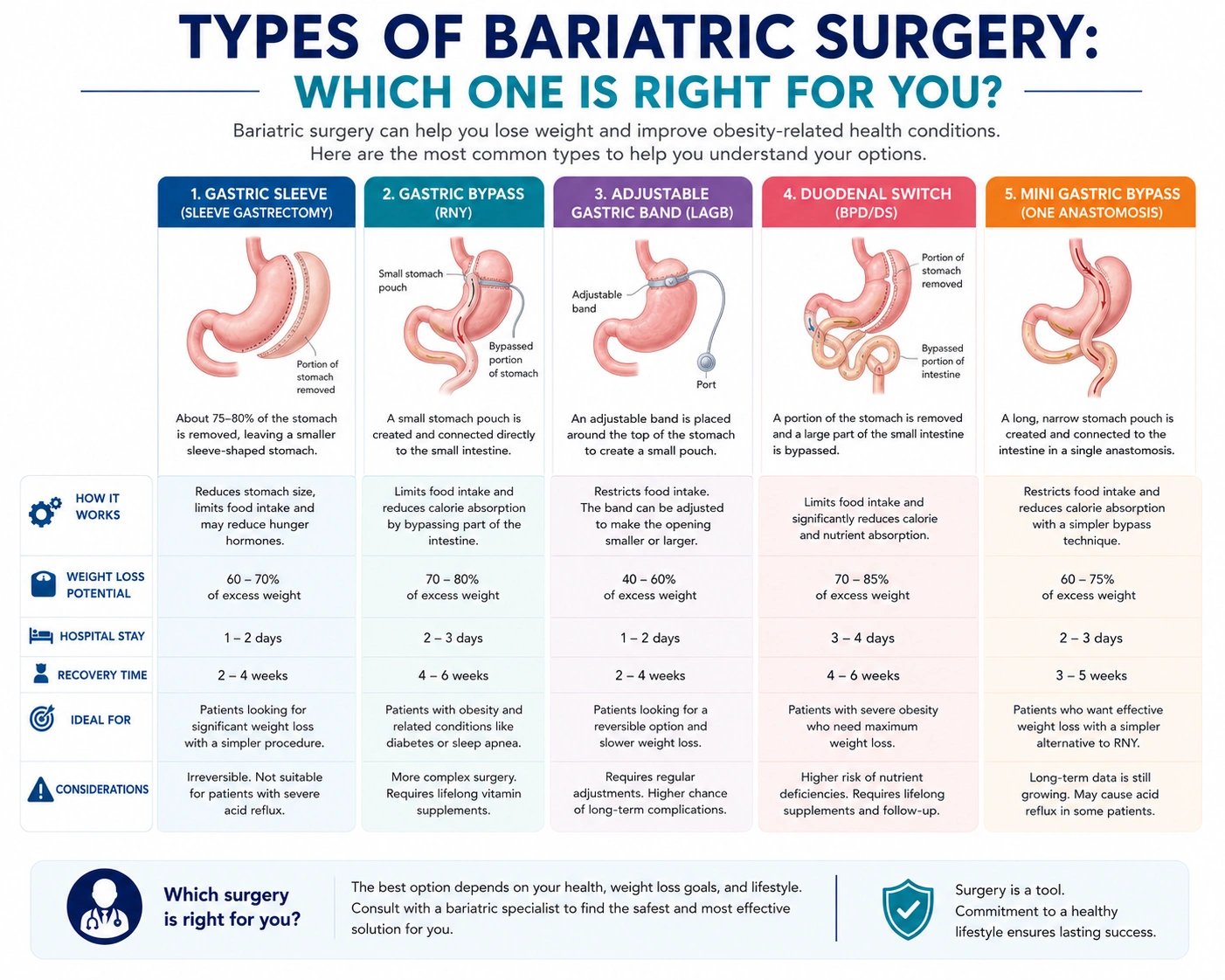
Often referred to as the Roux-en-Y Gastric Bypass (RYGB), this is a combined restrictive and malabsorptive procedure. The surgeon staples off the upper section of the stomach to create a tiny pouch (about the size of an egg) and connects it directly to the middle portion of the small intestine (jejunum). Food entirely bypasses the lower stomach and the upper segment of the small intestine.
Pros: Highly effective for rapid weight loss; exceptional track record for putting Type 2 diabetes into remission; significantly reduces severe acid reflux (GERD).
Cons: Technically complex and irreversible; higher risk of “Dumping Syndrome” (nausea, cramping, and dizziness caused by sugar moving too rapidly into the small intestine); requires strict, lifelong vitamin supplementation due to reduced nutrient absorption.
Sleeve Gastrectomy: How It Works, Pros and Cons
The Laparoscopic Sleeve Gastrectomy (LSG) is a purely restrictive procedure and stands as the most frequently performed bariatric surgery in Malaysia. The surgeon permanently removes approximately 75% to 80% of the stomach along its greater curvature, leaving a narrow, vertical tube resembling the shape and size of a small banana.
Pros: Anatomically simpler than a bypass as the intestines are not rerouted; significantly reduces production of ghrelin (the hunger hormone), sharply lowering appetite; lower long-term risk of severe vitamin deficiencies.
Cons: Completely irreversible; can trigger or worsen pre-existing acid reflux; potential for the staple line to leak immediately post-op (though rare in experienced hands).
Gastric Banding: How It Works, Pros and Cons
Adjustable Gastric Banding involves placing an inflatable silicone ring around the topmost section of the stomach to create a restrictive, small upper pouch. The band connects via a thin tube to an access port placed underneath the skin, allowing a surgeon to adjust its tightness by injecting or removing saline solution.
Pros: Fully reversible and adjustable; does not cut or staple the stomach or alter intestinal anatomy; lowest initial surgical complication rate.
Cons: Significantly lower and slower weight-loss results compared to sleeve or bypass; high rate of long-term mechanical failure (band slippage, erosion into the stomach wall, or port infection); frequently requires a secondary revision surgery to remove the band.
Biliopancreatic Diversion with Duodenal Switch: How It Works, Pros and Cons
The Duodenal Switch (BPD/DS) is a highly aggressive, predominantly malabsorptive surgery reserved for super-obesity. It begins with a sleeve gastrectomy, followed by a major rerouting of the small intestine to ensure that food only mixes with digestive enzymes in the last few feet of the bowel, severely limiting calorie and fat absorption.
Pros: Delivers the highest percentage of total body weight loss; most powerful option for reversing severe metabolic disorders and extreme insulin resistance.
Cons: Highest risk profile for surgical complications; can cause chronic foul-smelling gas and frequent diarrhea; carries a critical, permanent risk of severe protein malnutrition and profound vitamin deficiencies if dietary protocols are ignored.
Bariatric Surgery Comparison: Which Procedure Suits You Best?
Weight Loss Results Comparison by Surgery Type
Clinical data tracks weight loss as a percentage of Excess Body Weight (EBW) or Total Body Weight (TBW) lost within the first 1 to 2 years post-surgery.
| Surgery Type | Average Excess Weight Loss (% EWL) | Average Total Body Weight Loss (% TBW) |
| Sleeve Gastrectomy | 60% – 70% | ~29.5% |
| Gastric Bypass (Roux-en-Y) | 70% – 80% | ~34.2% |
| Duodenal Switch (BPD/DS) | 80% – 90%+ | ~40%+ |
| Gastric Banding | 40% – 50% | ~15% – 20% |
Eligibility and BMI Requirements for Each Bariatric Surgery
The Ministry of Health (MOH) Malaysia adheres to strict clinical practice guidelines for obesity interventions. Because Asian populations carry a higher percentage of body fat and metabolic risk at a lower body weight, the Body Mass Index (BMI) thresholds are adjusted down compared to Western standards:
Class III Obesity (BMI $\ge$ 37.5 $\text{kg/m}^2$): Eligible for all surgical procedures based on weight criteria alone.
Class II Obesity (BMI 32.5 to 37.4 $\text{kg/m}^2$): Eligible for surgery if they present with at least one serious obesity-related comorbidity (e.g., Type 2 diabetes, severe obstructive sleep apnea, uncontrolled hypertension, or debilitating joint disease).
Risks and Complication Rates: Gastric Bypass vs Sleeve vs Others
While all surgical procedures carry standard surgical risks (bleeding, infection, deep vein thrombosis), the long-term complication profiles differ substantially:
Sleeve Gastrectomy: Low surgical risk profile. Main long-term complication is de novo (newly onset) gastroesophageal reflux disease (GERD) or a narrowing of the sleeve pouch (stricture).
Gastric Bypass: Moderate risk profile. More complex due to creating two internal connections (anastomoses). Long-term risks include marginal ulcers at the connection site, internal hernias, bowel obstructions, and chronic dumping syndrome.
Duodenal Switch: High risk profile. Carries severe metabolic risks, including bone density loss (osteoporosis), anemia, and fat-soluble vitamin depletion (Vitamins A, D, E, K).
Gastric Banding: Low immediate surgical risk, but has the highest long-term device failure rate, with up to 30% to 50% eventually requiring band removal.
Cost and Recovery for Bariatric Surgery in Malaysia
Bariatric Surgery Cost in Malaysia: Hospital & Surgeon Fees
The total out-of-pocket financial investment varies depending on whether you undergo the procedure at a private medical center, a semi-government university teaching hospital, or via a specific bundled clinical package.
Laparoscopic Sleeve Gastrectomy: Bundled private hospital packages in the Klang Valley range between RM25,000 to RM35,000. This generally includes a 2-to-3-night ward stay, operating theater fees, anesthesia, and the required specialized laparoscopic titanium staplers.
Gastric Bypass (Roux-en-Y / OAGB): Costs are higher due to the prolonged operating time and additional surgical consumables, ranging from RM30,000 to RM45,000 in private specialist hospitals.
University / Government Settings: Semi-private options at academic teaching hospitals may offer lower base surgical pricing (RM15,000 to RM25,000), though elective surgery waiting lists can stretch significantly longer.
Insurance Note: While insurance historically classified weight-loss treatments as cosmetic, major Malaysian insurance providers and EPF withdrawals now review coverage for bariatric surgeries on a case-by-case basis under strict conditions — typically requiring a documented medical necessity where a patient’s BMI exceeds 32.5 alongside life-threatening comorbidities.
Recovery Time and Diet Changes After Each Surgery Type
The initial physical recovery from laparoscopic surgery is rapid, with most patients discharged within 2 to 3 days and returning to light desk work within 1 to 2 weeks. However, the true recovery lies in the progressive post-operative dietary phases required to protect the delicate new staple lines:
[Weeks 1 - 2: Clear & Full Liquids] ➔ [Weeks 3 - 4: Pureed Foods] ➔ [Weeks 5 - 6: Soft Solid Foods] ➔ [Month 2+: Lifelong Healthy Solids]
Sleeve and Bypass: Because stomach capacity drops to around 100–150 ml (or 30 ml for a bypass pouch), eating too quickly or drinking liquids during a meal will cause vomiting, intense pressure, and pain. Meals must be small, protein-focused, and thoroughly chewed.
Duodenal Switch: Requires an immediate, high-protein diet (80–100g daily) supplemented by lifelong double-dose bariatric multivitamins, calcium, and iron to counteract intestinal malabsorption.
How to Choose the Right Bariatric Surgery for You
Questions to Ask Your Bariatric Surgeon in Malaysia
To ensure a safe and tailored outcome, prepare these specific inquiries for your initial clinical evaluation:
Are you a credentialed member of the Malaysian Metabolic and Bariatric Surgery Society (MMBSS)?
Based on my current BMI, metabolic blood markers, and medical history, which specific procedure would you recommend for me, and why?
What is your personal complication and leak rate for this specific procedure?
Does your hospital bundle include post-operative long-term support from a clinical dietitian and a bariatric coordinator?
When Gastric Sleeve Is Better Than Gastric Bypass
A Gastric Sleeve is frequently selected over a Gastric Bypass if:
You have a history of multiple extensive abdominal surgeries, making intestinal rerouting dangerous due to scar tissue (adhesions).
You suffer from conditions requiring continuous, long-term use of non-steroidal anti-inflammatory drugs (NSAIDs) like aspirin or ibuprofen. These medications are strictly contraindicated after a gastric bypass due to a very high risk of forming severe marginal ulcers in the intestinal pouch.
Your lifestyle or profession prevents you from managing the rigorous, precise malabsorptive micronutrient supplement schedules required by a bypass.
Long-Term Lifestyle Commitment After Bariatric Surgery
Bariatric surgery is a powerful tool to reset your metabolic baseline, but it is not a magic shield against weight regain. Over time, the remaining stomach tissue can stretch if chronically overfed.
Long-term success depends on a permanent behavioral contract: tracking your daily protein intake, prioritizing nutrient-dense whole foods over slider foods (soft, high-calorie processed foods like ice cream or milkshakes that pass easily through a sleeve), maintaining a consistent exercise regimen, and scheduling annual blood panels with your bariatric team to catch nutritional deficits early.