



Quick answer: Lifelong vitamin supplementation is mandatory after bariatric surgery in Malaysia to prevent serious deficiencies. Gastric bypass and sleeve patients have different needs, but all must take a multivitamin, B12, calcium, vitamin D, and iron as baseline. Skipping vitamins causes anemia, osteoporosis, nerve damage, and Wernicke’s encephalopathy.
Essential Vitamins After Bariatric Surgery You Must Take
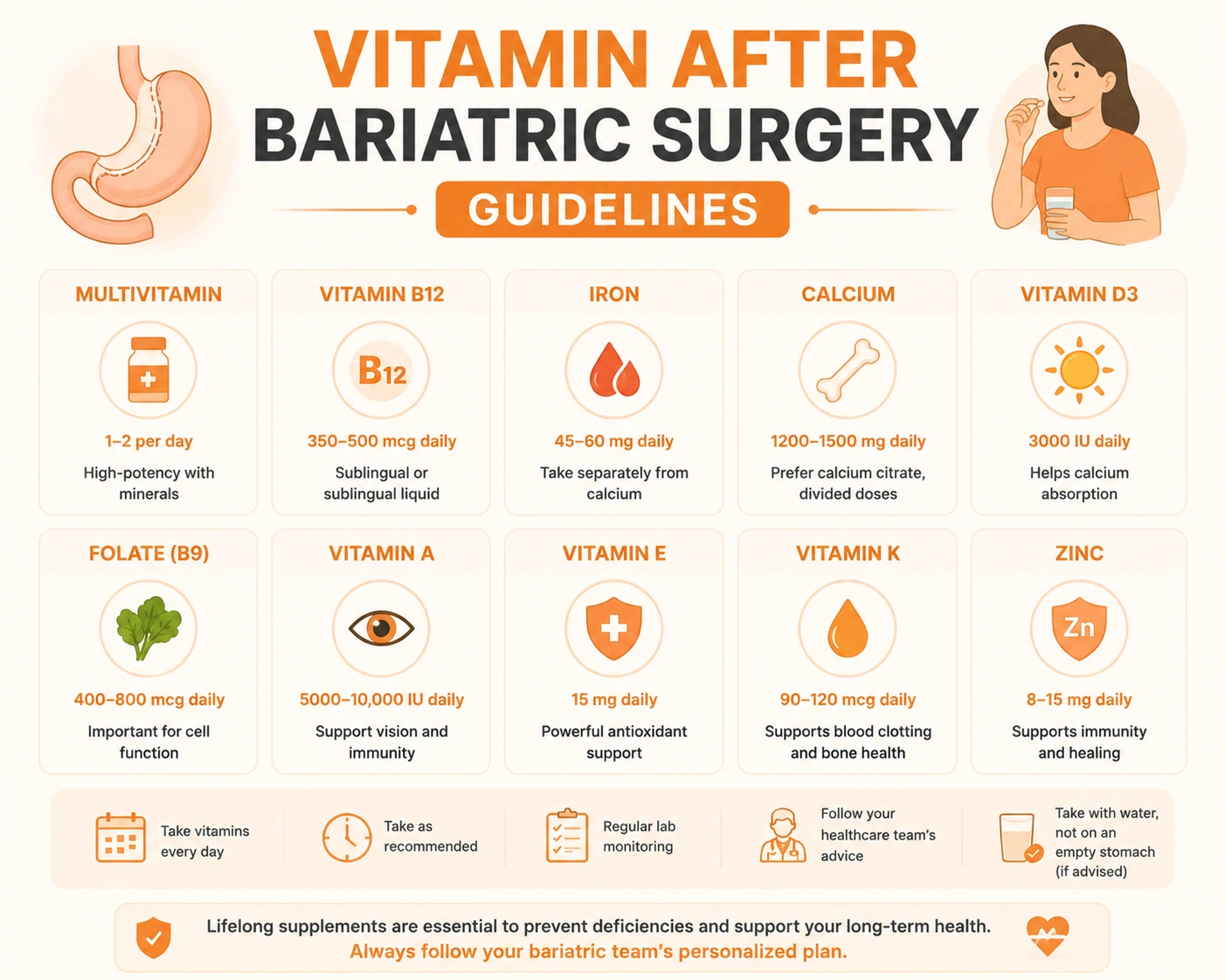
All bariatric procedures reduce nutrient absorption. MOH guidelines require these supplements daily for life unless your surgeon advises otherwise.
1. Multivitamin with Iron – Foundation
- Why: Covers broad deficiencies after reduced stomach size and bypassed intestine
- Requirement: High-potency bariatric-specific formula. Regular pharmacy multivitamins are too weak
- Key nutrients: Must contain 100-200% RDA of A, B1, B12, C, D, E, K, folate, zinc, copper, selenium
- Sleeve vs Bypass: Both need it. Bypass patients need 2x daily due to malabsorption
2. Vitamin B12 – Nerve Protection
- Why: Stomach removal reduces intrinsic factor. No intrinsic factor = no B12 absorption
- Requirement: 500-1000mcg daily sublingual, OR 1000mcg monthly injection
- Risk if missed: Irreversible nerve damage, memory loss, anemia in 12-18 months
- Note: Blood levels can be normal while tissue levels are dangerously low
3. Calcium Citrate + Vitamin D3 – Bone Health
- Why: Bypassed duodenum = poor calcium absorption. Rapid weight loss = bone loss
- Requirement: 1200-1500mg calcium citrate daily, split into 500-600mg doses
- Vitamin D3: 3000 IU daily minimum. Target blood level >30ng/mL
- Critical: Calcium carbonate is NOT absorbed post-bypass. Must be citrate form
- Timing: Take 2 hours apart from iron and multivitamin
4. Iron – Prevent Anemia
- Why: Bypassed duodenum + reduced stomach acid = poor iron absorption
- Requirement: 45-60mg elemental iron daily for bypass. 18-27mg for sleeve
- Form: Ferrous fumarate or chelated iron best tolerated. Avoid ferrous sulfate – causes nausea
- High risk: Menstruating women, bypass patients. Check ferritin every 6 months
- Timing: Empty stomach with vitamin C. Never with calcium or tea/coffee
5. Vitamin B1 (Thiamine) – Mandatory First 6 Months
- Why: Rapid weight loss + vomiting + poor intake = acute deficiency risk
- Requirement: 100mg daily for first 6 months minimum, then 12mg daily
- Risk if missed: Wernicke’s encephalopathy – emergency brain damage in 2-3 weeks
- High risk: Persistent vomiting, alcohol use, not taking multivitamin
6. Zinc & Copper – Balance Required
- Why: Iron and calcium supplements block zinc absorption. Zinc blocks copper
- Requirement: 15-30mg zinc daily + 2mg copper if taking high-dose zinc
- Risk if missed: Hair loss, poor wound healing, immune dysfunction, anemia
Gastric sleeve patients need multivitamin + B12 + calcium/D3 minimum. Gastric bypass patients need all above + higher iron + lifelong monitoring.
Vitamin Deficiency Risks After Bariatric Surgery
Quick answer: 60-80% of patients develop at least one deficiency without supplements. Most are preventable with correct dosing and blood monitoring.
Most common deficiencies in Malaysia:
Nutrient | Risk Timeline | Symptoms | Severe Consequences |
|---|---|---|---|
B12 | 12-18 months | Fatigue, tingling hands/feet, memory fog | Permanent nerve damage, dementia |
Iron | 6-24 months | Pallor, breathlessness, hair loss, pica | Severe anemia, heart failure |
Vitamin D | 3-6 months | Bone pain, muscle weakness, low mood | Osteoporosis, fractures |
Calcium | 1-2 years | Numbness, muscle cramps | Osteoporosis, kidney stones |
Thiamine B1 | 2-6 weeks | Vomiting, confusion, eye movement issues | Wernicke-Korsakoff syndrome – brain damage |
Folate | 3-12 months | Fatigue, mouth sores | Anemia, birth defects if pregnant |
Vitamin A | 6-18 months | Night blindness, dry eyes | Permanent vision loss |
Zinc | 6-12 months | Hair loss, poor wound healing, taste loss | Immune failure |
Copper | 12-24 months | Anemia not responding to iron | Spinal cord damage |
Why deficiencies happen:
- Restrictive: Sleeve removes 80% of stomach = less acid, less intrinsic factor, eat less food
- Malabsorptive: Bypass skips duodenum/jejunum where iron, calcium, B12 absorbed
- Rapid weight loss: Body uses stored vitamins faster than intake
- Food intolerance: Red meat, dairy, vegetables often poorly tolerated early on
- Non-compliance: 30-40% of patients stop vitamins after 1 year – biggest risk factor
High-risk groups: Gastric bypass, women of childbearing age, adolescents, alcohol users, chronic vomiters, missed follow-up appointments.
Deficiency symptoms appear months AFTER blood levels drop. By the time you feel tired, you’re already deficient. Prevention > treatment.
Vitamin After Bariatric Surgery Dosage and Schedule
Timing matters. Calcium and iron block each other. Multivitamins block iron. Space doses correctly or you waste money.
Standard daily schedule for gastric bypass patients:
Time | Supplements | Why This Timing |
|---|---|---|
Morning empty stomach | Iron 45-60mg + Vitamin C 500mg | Best absorption. No calcium/dairy/tea 2hrs before/after |
With breakfast | Bariatric multivitamin #1 + B12 500mcg sublingual | Food reduces nausea. B12 under tongue |
Mid-day with snack | Calcium citrate 500-600mg + D3 1500IU | Split dose. Citrate absorbed with or without food |
With dinner | Bariatric multivitamin #2 | Second dose for bypass patients |
Bedtime | Calcium citrate 500-600mg + D3 1500IU | Second dose. Don’t take with iron |
Standard daily schedule for gastric sleeve patients:
- Morning: Multivitamin + B12 + D3
- Mid-day: Calcium citrate 500mg
- Evening: Calcium citrate 500mg + Iron if needed
- Note: Sleeve patients absorb iron better, may not need high dose unless menstruating
Dosage by procedure – MOH/ASMBS Guidelines:
Supplement | Sleeve Gastrectomy | Gastric Bypass/RYGB | OAGB/Mini Bypass |
|---|---|---|---|
Multivitamin | 1x daily high-potency | 2x daily high-potency | 2x daily high-potency |
B12 | 500mcg daily SL or monthly IM | 1000mcg daily SL or monthly IM | 1000mcg daily SL or monthly IM |
Calcium citrate | 1200mg daily | 1500-2000mg daily | 1500-2000mg daily |
Vitamin D3 | 3000 IU daily | 3000 IU daily | 3000 IU daily |
Iron | 18-27mg if deficient | 45-60mg daily | 45-60mg daily |
Thiamine B1 | 100mg daily x 6mo, then 12mg | 100mg daily x 6mo, then 12mg | 100mg daily x 6mo, then 12mg |
Blood test schedule – Don’t skip:
- 3 months: FBC, iron, B12, folate, vitamin D
- 6 months: Add calcium, PTH, LFT, albumin
- 12 months: Full panel + zinc, copper, vitamin A
- Annually for life: All above. Adjust doses based on results
Set phone alarms. Use pill organizers. 80% of deficiencies are from forgetting, not wrong dose.
Best Vitamin Supplements for Bariatric Patients Malaysia
Quick answer: Use “bariatric-formulated” chewable, liquid, or capsule vitamins. Regular pharmacy vitamins are under-dosed and poorly absorbed post-surgery.
What to look for on labels:
- “Bariatric” or “Post-WLS” – Formulated per ASMBS guidelines
- Chewable/liquid first 3-6 months – Pills may not break down with less stomach acid
- Calcium citrate – Not carbonate. Check ingredients
- Iron as fumarate/bisglycinate – Gentler than sulfate
- No gummies – Insufficient doses, sugar causes dumping syndrome
- Halal certified – Important for Malaysian patients. Check Jakim logo
Types of bariatric vitamins available:
- All-in-one chewable: 2-4 tablets = complete daily needs. Convenient but large
- Separate components: Multivitamin + separate calcium + separate iron. More pills but flexible dosing
- Patch/transdermal: Not recommended. Poor absorption evidence for bariatric patients
- Liquid: Good for first month when swallowing difficult
How to choose in Malaysia:
- Ask your dietitian – MOH centres have approved brands list
- Check for KKM MAL number – Registered with Ministry of Health Malaysia
- Avoid: Herbal “slimming” vitamins, mega-dose single vitamins, overseas unregistered products
- Cost: RM 150-300/month is normal. Deficiency treatment costs RM 1000s
Where to buy:
- Hospital pharmacy – safest, dietitian recommended
- Licensed community pharmacies – bring your surgeon’s list
- Online – only from official Malaysian distributors with KKM approval
Red flags: “Cures obesity”, “No vitamins needed after sleeve”, “One pill forever”, social media sellers without KKM cert.
Most Malaysian bariatric centres provide a starter pack for 3 months post-op. Continue same brands or get dietitian to approve switches.
Long Term Vitamin Needs After Bariatric Surgery
Quick answer: Vitamin needs are lifelong. Risk of deficiency actually INCREASES after year 2 as food intake stays small but compliance drops.
Why lifelong?
- Anatomy is permanent: Removed stomach and bypassed intestine don’t grow back
- Malabsorption is permanent: Bypass patients absorb 50% less calcium/iron forever
- Food volume stays small: 1 cup per meal = impossible to get RDA from food alone
- Age-related decline: Absorption worsens after 50, increasing risk
Year 1 vs Year 10 needs:
Timeframe | Key Focus | Common Mistakes |
|---|---|---|
Year 1 | Prevent acute deficiencies: B1, B12, iron | Stopping vitamins because “I feel fine” |
Year 2-5 | Prevent bone loss: Calcium/D3 critical | Switching to “regular” multivitamin to save cost |
Year 5-10 | Monitor copper, zinc, vitamin A | Skipping annual bloods – silent deficiencies |
Year 10+ | Adjust for age, menopause, meds | Assuming needs decrease – they don’t |
Special situations requiring dose changes:
- Pregnancy: Must wait 12-18mo post-op. Need prenatal + extra folate, B12, iron. High-risk pregnancy
- Menopause: Increase calcium to 2000mg, vitamin D to 5000 IU
- Kidney stones: May need to reduce calcium or change to citrate
- Hair loss: Check zinc, iron, protein – not just “normal post-op”
- Alcohol use: Double thiamine B1, risk of deficiency skyrockets
- Diarrhea/IBS: May need higher doses due to malabsorption
What happens if you stop vitamins?
- Month 3-6: Thiamine deficiency if vomiting. B1 emergency
- Month 6-12: Iron/B12 stores deplete. Fatigue starts
- Year 2-3: Bone density loss measurable. Fractures by year 5-10
- Year 5+: Neurological damage from B12/copper may be irreversible
Long-term monitoring plan:
- Annual bloods: Non-negotiable. Even if you feel well
- DEXA scan: Bone density every 2 years after year 2
- Dietitian review: Yearly to adjust for age/appetite changes
- Medication review: Some drugs affect vitamin levels
Most successful patients in Malaysia treat vitamins like blood pressure meds – automatic, non-negotiable, for life. Cost RM 5-10/day to prevent RM 50,000 complications.