


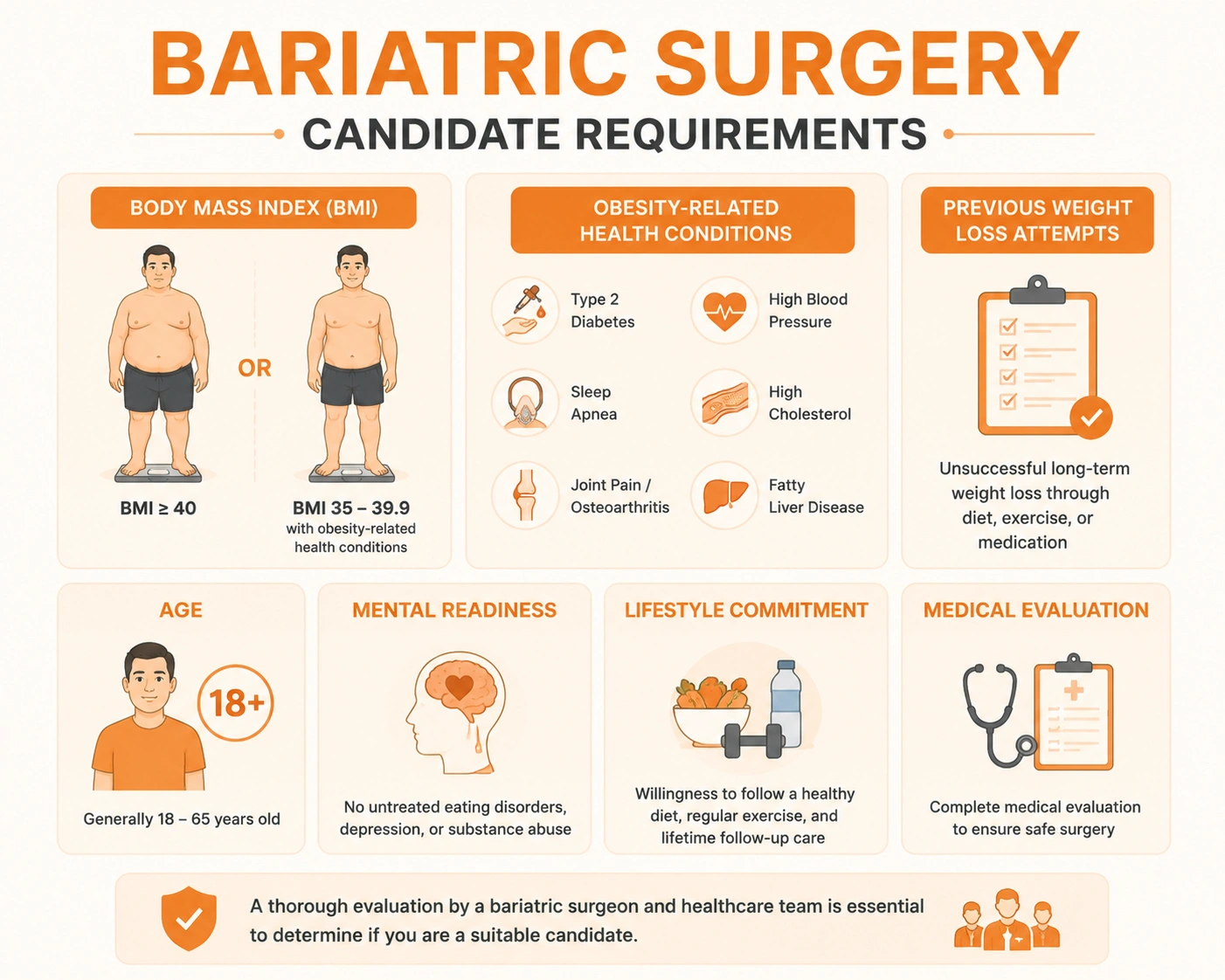
Quick answer: You qualify for bariatric surgery Malaysia if you have BMI ≥37.5 alone, or BMI ≥32.5 with obesity-related medical conditions, are aged 18-65, and pass psychological and lifestyle assessments. All candidates must be evaluated by an MOH-licensed bariatric surgeon.
BMI Requirements for Bariatric Surgery Candidates
Body Mass Index (BMI) is the primary screening tool used by Malaysia’s Ministry of Health (MOH) to determine eligibility.
MOH Clinical Practice Guidelines for Obesity:
BMI Category | Eligibility Status | Requirements |
|---|---|---|
<32.5 | Not eligible | Surgery not offered as routine practice regardless of comorbidities |
32.5 – 37.4 | Eligible with comorbidities | Must have at least ONE obesity-related medical condition |
≥37.5 | Eligible | Qualifies with or without comorbidities |
≥27.5 (Asian) | Case-by-case | Some centres accept with metabolic comorbidities for Asian patients |
How to calculate BMI: Weight(kg) ÷ Height(m)²
Example: 136kg, 160cm = 136 ÷ (1.6 × 1.6) = BMI 53.1 = Eligible
Important notes:
- Asian criteria: MOH recognizes obesity in Asians at BMI >27.5 vs >30 globally, due to higher body fat at lower BMI
- Class III Obesity = BMI ≥37.5. This is considered “severe obesity” in Malaysia
- Class II Obesity = BMI 32.5-37.4. Requires comorbidity to qualify
- Waist circumference also used: >90cm men or >80cm women indicates higher cardiovascular risk
If your BMI is 32.5-37.4 but you have no medical conditions, you will not qualify. Focus on treating comorbidities first or consider medical weight management.
Medical Conditions That Qualify You for Bariatric Surgery
If your BMI is 32.5-37.4, you need at least one of these obesity-related comorbidities to qualify under MOH guidelines.
Qualifying medical conditions include:
Metabolic Conditions:
- Type 2 Diabetes, especially uncontrolled HbA1c >7% or on insulin
- Hypertension – high blood pressure requiring medication
- Dyslipidemia – high cholesterol or triglycerides
- Metabolic syndrome – cluster of diabetes, hypertension, abnormal lipids
Respiratory Conditions:
- Obstructive Sleep Apnea – diagnosed via sleep study, often requiring CPAP
- Obesity Hypoventilation Syndrome – trouble breathing due to weight
- Asthma worsened by obesity
Musculoskeletal Conditions:
- Osteoarthritis of weight-bearing joints: knees, hips, spine
- Chronic back pain due to weight
- Limited mobility affecting daily activities
Cardiovascular Conditions:
- Coronary heart disease or history of heart attack
- Heart failure with preserved ejection fraction
- Stroke history related to obesity
Gastrointestinal Conditions:
- Non-alcoholic fatty liver disease (NAFLD/NASH)
- GERD – severe acid reflux, though may influence procedure choice
- Gallbladder disease related to obesity
Reproductive Conditions:
- PCOS – Polycystic Ovary Syndrome with infertility
- Male hypogonadism – low testosterone due to obesity
Other Conditions:
- Pseudotumor cerebri – increased brain pressure
- Urinary incontinence due to abdominal pressure
- Depression/anxiety related to obesity – requires psych clearance
Type 2 diabetes + BMI ≥32.5 is the strongest indication. Gastric bypass shows 78-85% diabetes remission in Malaysian patients.
Age and Health Criteria for Bariatric Surgery Approval
Age and overall health determine surgical safety, not just weight.
Age requirements:
- Standard range: 18 to 65 years old per MOH guidelines
- Adolescents 14-17: Case-by-case only. Requires specialist consult from paediatrician, endocrinologist, psychologist. Must have reached physiological bone maturity and failed 6+ months supervised weight loss
- Adults >65: Possible if physiologically healthy. Higher surgical risk assessed individually. Benefits must outweigh risks
Health criteria you must meet:
- Failed conservative treatment: Documented attempts at diet, exercise, and/or medication for 6+ months without sustained weight loss
- Medically fit for general anaesthesia: Cardiac and pulmonary clearance if history of heart/lung disease
- No active substance abuse: Alcohol, drugs, or smoking must be stopped 6+ weeks pre-op
- No untreated endocrine disorders: Thyroid, Cushing’s, or other hormonal causes of obesity must be treated first
- No active cancer: Must be cancer-free or in remission 5+ years
- No pregnancy: Cannot be pregnant or planning pregnancy within 12-18 months post-op
- No uncontrolled psychiatric illness: Schizophrenia, active suicidal ideation, or severe eating disorders must be stable
Conditions requiring extra caution or optimization:
- Previous abdominal surgeries – may affect laparoscopic approach
- Inflammatory bowel disease like Crohn’s
- Severe heart failure or pulmonary hypertension
- Liver cirrhosis
- Autoimmune conditions on high-dose steroids
Being “too sick” for surgery is rare. Most conditions are optimized first, not used to disqualify you. Pre-op weight loss of 5-10% often required to shrink liver and improve safety.
Psychological and Lifestyle Assessment Requirements
Quick answer: MOH requires psychological evaluation to ensure you understand lifelong changes and have realistic expectations. This is mandatory, not optional.
Psychological assessment evaluates:
- Understanding of risks: You know surgery is a tool, not a cure. Complications can occur
- Eating behavior: Screen for binge eating disorder, night eating, emotional eating
- Mental health stability: Depression, anxiety, bipolar must be treated and stable
- Substance use: Active alcohol or drug abuse disqualifies until 1 year sober
- Social support: Do you have family/friends to help during recovery?
- Realistic expectations: Understand you’ll still need diet/exercise. No “easy way out”
- Body image: Counseling if severe body dysmorphia present
Lifestyle commitments you must agree to:
- Lifelong diet changes: 3 small protein-focused meals, no fizzy drinks, no alcohol early on
- Vitamin supplements: Daily for life, especially with gastric bypass
- Follow-up schedule: 1 week, 1 month, 3 months, 6 months, 12 months, then annually forever
- Exercise plan: 150+ minutes weekly once cleared. Required to maintain weight loss
- No pregnancy: Avoid for 12-18 months post-op due to malnutrition risk to baby
- No smoking: Must quit 6+ weeks pre-op. Smoking increases leak and ulcer risk 5x
What happens if you fail psych eval: You’re not rejected permanently. You’ll be referred for counselling, nutritional therapy, or addiction treatment. Re-assessment in 3-6 months.
10-20% of patients regain weight after 2-5 years due to poor lifestyle adherence. Surgeons screen carefully because your commitment determines success.
How to Check If You Meet Bariatric Surgery Candidate Requirements
Use this 5-step self-check before booking a consultation with an MOH-licensed surgeon.
Step 1: Calculate Your BMI
- Formula: Weight(kg) ÷ Height(m)²
- Use online MOH BMI calculator
- If <32.5: Not a candidate. See GP for medical weight loss
- If 32.5-37.4: Go to Step 2
- If ≥37.5: Skip to Step 3, you likely qualify
Step 2: List Your Medical Conditions
- Do you have diabetes, hypertension, sleep apnea, PCOS, or joint pain?
- Need official diagnosis from doctor, not self-diagnosed
- If BMI 32.5-37.4 + zero conditions: Not eligible yet
- If BMI 32.5-37.4 + 1 condition: Proceed to Step 3
Step 3: Age & Basic Health Screen
- Are you 18-65? If no, need special approval
- Do you smoke, drink daily, or use drugs? Must quit
- Can you walk 100m? Extreme immobility needs extra assessment
- Any untreated heart, liver, or psychiatric issues? Get treated first
Step 4: Assess Your Readiness
Ask yourself honestly:
- Am I ready to never drink carbonated drinks again?
- Will I take vitamins every day for life?
- Can I attend 5+ hospital visits in year 1?
- Is my family supportive of this change?
- If you answered “no” to any, discuss with psychologist first
Step 5: Book Official Assessment
- See your GP for referral letter and basic blood tests
- Contact MOH-licensed bariatric centre for multidisciplinary assessment
- Bring: IC, medical reports, list of medications, weight history
- Assessment includes: Surgeon, dietitian, psychologist, anaesthetist review
- Decision: Takes 1-3 visits. If approved, pre-op program starts
Documents to prepare:
- Recent blood test: FBC, renal/liver profile, HbA1c, thyroid, lipids
- Sleep study if snoring/apnea suspected
- Endoscopy if severe GERD
- Psychiatric letter if history of depression/anxiety
Don’t self-reject. Many patients think “I’m not sick enough” but qualify due to undiagnosed sleep apnea or fatty liver. Let the bariatric team assess you.
Final checklist: BMI ≥32.5 with comorbidity OR ≥37.5 ✓ Age 18-65 ✓ Failed dieting ✓ No active addiction ✓ Mentally ready for lifelong change ✓