

Common Bariatric Surgery Risks & Complications in Malaysia
Bariatric Surgery Risks & Complications include acute short-term surgical hazards such as staple-line leaks (occurring in 1% to 2% of patients), internal bleeding, deep vein thrombosis, and dumping syndrome. Long-term risks are predominantly chronic metabolic issues, including severe micronutrient deficiencies (iron, vitamin B12, calcium, and vitamin D), gallstone formation, internal hernias, and the potential for late-stage weight regain caused by the stretching of the stomach pouch due to anatomical non-compliance.
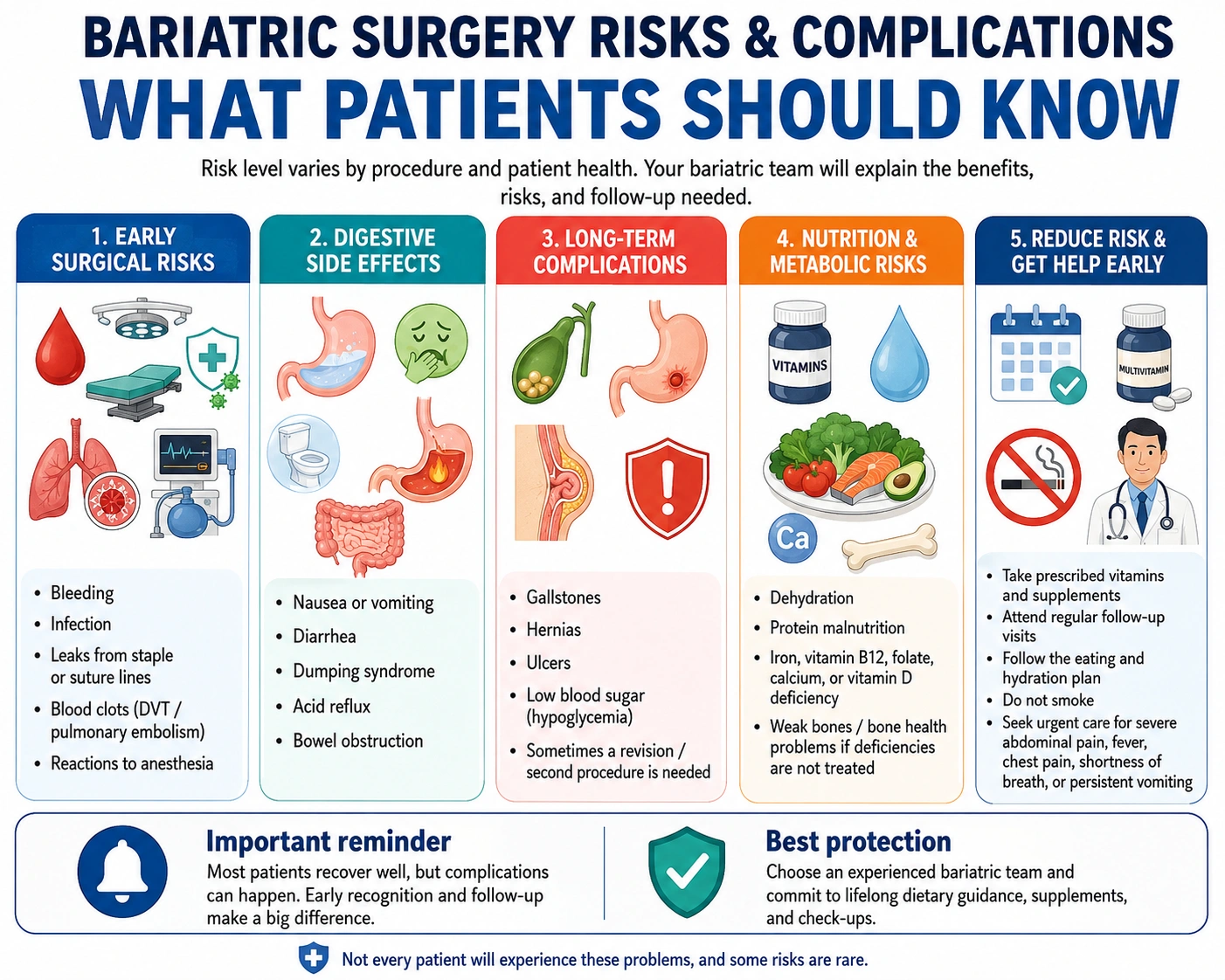
While metabolic and bariatric procedures are highly effective at reversing severe obesity and type 2 diabetes, no major surgical intervention is entirely without risk. Understanding both the immediate post-operative hazards and the chronic, long-term lifestyle complications is essential for making an informed clinical choice.
Short-Term Risks & Complications After Bariatric Surgery
Short-term or acute complications generally occur within the first 30 days following the surgical procedure and are directly related to the physical trauma of surgery, anesthesia, and early anatomical healing.
Bleeding, Infection, and Blood Clots After Surgery
Internal Bleeding: Can occur along the cut edge of the stomach or where the intestines are reconnected. While most bleeding stops naturally, significant hemorrhage may require a secondary endoscopic or laparoscopic intervention.
Surgical Site Infection: Laparoscopic procedures utilize tiny keyhole incisions, keeping infection rates low. However, localized portal infections can still occur if wound care guidelines are neglected.
Deep Vein Thrombosis (DVT) & Pulmonary Embolism: Patients with severe obesity carry a higher baseline risk for blood clots forming in the deep veins of the legs. If a clot breaks free, it can travel to the lungs, creating a life-threatening emergency. To mitigate this, Malaysian hospitals enforce early post-op walking, compression stockings, and preventative blood-thinning injections.
Anesthesia Risks and Leaks from Staple Line
Anesthesia Risks: Severe obesity frequently coexists with obstructive sleep apnea (OSA) and airway resistance, making general anesthesia technically demanding. Pre-operative lung screening is mandatory to safely manage ventilation.
Staple-Line Leaks: This is one of the most critical acute complications. It occurs when a gap forms along the line of surgical staples in a gastric sleeve or gastric bypass, allowing highly acidic digestive fluids to leak into the sterile abdominal cavity. If left untreated, a leak can cause a severe abdominal infection called peritonitis.
Dumping Syndrome: Symptoms After Gastric Bypass or Sleeve
Dumping syndrome occurs when poorly digested, highly concentrated sugary or high-carbohydrate food passes rapidly from the stomach pouch directly into the small intestine. It is most common after a Roux-en-Y gastric bypass.
| Type of Dumping | Timeline Post-Meal | Primary Symptoms | Physical Cause |
| Early Dumping | 10 to 30 minutes | Nausea, vomiting, intense abdominal cramping, bloating, diarrhea, and a racing heart rate. | Rapid shifting of fluid into the gut to dilute concentrated sugars. |
| Late Dumping | 1 to 3 hours | Dizziness, cold sweating, shaking, extreme fatigue, and fainting. | A sudden spike and subsequent crash in blood sugar levels (reactive hypoglycemia). |
Long-Term Complications of Bariatric Surgery
Long-term complications can emerge months or even years after the initial procedure, requiring ongoing clinical vigilance and continuous behavioral adjustments.
Nutritional Deficiencies: Iron, B12, Calcium, Vitamin D
Because bariatric surgeries reduce food volume and often bypass key absorption zones in the digestive tract, severe malnutrition can occur without diligent supplementation:
Iron Deficiency Anemia: Caused by reduced stomach acid (which helps dissolve iron) and the bypassing of the duodenum, where iron is primarily absorbed.
Vitamin B12 Deficiency: The stomach produces intrinsic factor, a protein crucial for absorbing Vitamin B12. Shrunk or bypassed stomachs cannot produce enough of it, leading to nerve damage and fatigue if unsupplemented.
Calcium and Vitamin D Depletion: Essential for bone maintenance. Malabsorption forces the body to pull calcium directly from the skeleton, significantly raising the risk of early-onset osteoporosis and bone fractures.
Gallstones, Hernias, and Bowel Obstruction Risks
Gallstones: Rapid, drastic weight loss causes the liver to release excess cholesterol into the bile, which can crystalize into gallstones. Up to 30% of bariatric patients develop gallstones within the first year, sometimes requiring gallbladder removal (cholecystectomy).
Internal Hernias & Bowel Obstruction: Exclusive to gastric bypass and malabsorptive procedures where the intestines are rerouted. The structural shifting can create small gaps in the abdominal tissue where loops of the intestine can twist or become trapped, requiring emergency corrective surgery.
Weight Regain and Stomach Stretching Years After Surgery
The human stomach is a highly distensible muscle. If a patient chronically overeats, ignores satiety cues, or frequently consumes high-calorie liquids and soft “slider foods” (such as ice cream, milkshakes, and chocolates), the stomach pouch can stretch out over several years. This anatomical stretching undermines the restrictive mechanism of the surgery, leading to a frustrating plateau or a significant regain of lost weight.
Risks Compared by Bariatric Surgery Type
The statistical probability and specific nature of complications vary substantially based on the anatomical complexity of the procedure chosen.
Gastric Bypass Complication Rates vs Sleeve Gastrectomy
Sleeve Gastrectomy (LSG): Features a lower long-term complication rate because the intestinal tract remains entirely intact. The primary chronic risk is the development or worsening of severe gastroesophageal reflux disease (GERD).
Gastric Bypass (RYGB): Carries a higher overall long-term complication rate due to its anatomical complexity. Because it involves creating two separate internal junctions (anastomoses), patients face a persistent risk of marginal ulcers at the connection sites, internal hernias, and chronic dumping syndrome.
Gastric Banding Slippage and Erosion Risks
While laparoscopic adjustable gastric banding has the lowest immediate surgical risk, it carries the highest long-term device failure rate. Over time, the silicone band can slip out of place, causing a severe blockage, or it can slowly erode through the stomach wall. Up to 40% of gastric band patients ultimately require a secondary surgery to have the device removed due to these structural complications.
BPD/DS: Higher Malnutrition and Complication Risk
The Biliopancreatic Diversion with Duodenal Switch (BPD/DS) is the most aggressive malabsorptive option. While it achieves exceptional weight loss results, it has the highest long-term complication rate. Patients are at severe risk for profound protein malnutrition, chronic foul-smelling diarrhea, and debilitating vitamin deficiencies if their diet and supplementation are not tightly managed.
How to Reduce Bariatric Surgery Risks in Malaysia
Complication rates drop dramatically when surgeries are conducted under strict clinical guidelines and supported by a structured post-operative plan.
Choosing MOH-Approved Bariatric Surgeons and Hospitals
To maximize safety, ensure your procedure is performed by a credentialed upper gastrointestinal or bariatric surgeon who is an active member of the Malaysian Metabolic and Bariatric Surgery Society (MMBSS). Choose hospitals accredited by the Ministry of Health (MOH) that house dedicated bariatric wards and have 24/7 access to advanced intensive care and emergency endoscopy services.
Required Pre-Surgery Screening to Lower Complication Risk
A thorough, multidisciplinary pre-operative screening is your best defense against unexpected surgical complications:
[Cardiology: Heart Function & ECG] ➔ [Pulmonology: Sleep Study for Sleep Apnea] ➔ [Gastroenterology: Endoscopy for Ulcers/H. Pylori] ➔ [Psychology: Behavioral & Mental Readiness]
Optimizing your blood sugar (HbA1c), stabilizing blood pressure, and eradicating any active stomach infections before entering the operating theater significantly drops your short-term complication rates.
Post-Surgery Diet and Follow-Up Schedule to Prevent Issues
Preventing long-term issues requires total commitment to a lifetime medical surveillance schedule:
Dietary Progression Compliance: Adhere strictly to the phased post-op diet (liquids to purees to soft solids) over the first 6 weeks to let the internal staple lines heal completely without stretching or leaking.
Mandated Micronutrient Tracking: Take high-quality bariatric multivitamins, iron, and calcium supplements every single day without exception.
Routine Blood Screenings: Schedule routine follow-ups with your bariatric team—typically at 1 month, 3 months, 6 months, 12 months, and annually thereafter—to check comprehensive blood panels, track organ function, and catch nutritional deficits early before symptoms appear.