

Gastric Balloon vs Bariatric Surgery: Gastric balloon is a temporary, non-surgical device placed in the stomach for 6–12 months to aid weight loss. Bariatric surgery permanently alters the stomach or digestive tract. Balloon suits BMI 30–40, surgery for BMI ≥35 with comorbidities or ≥40. Balloon costs RM12,000–RM17,800; surgery RM18,000–RM50,000 in Malaysia.
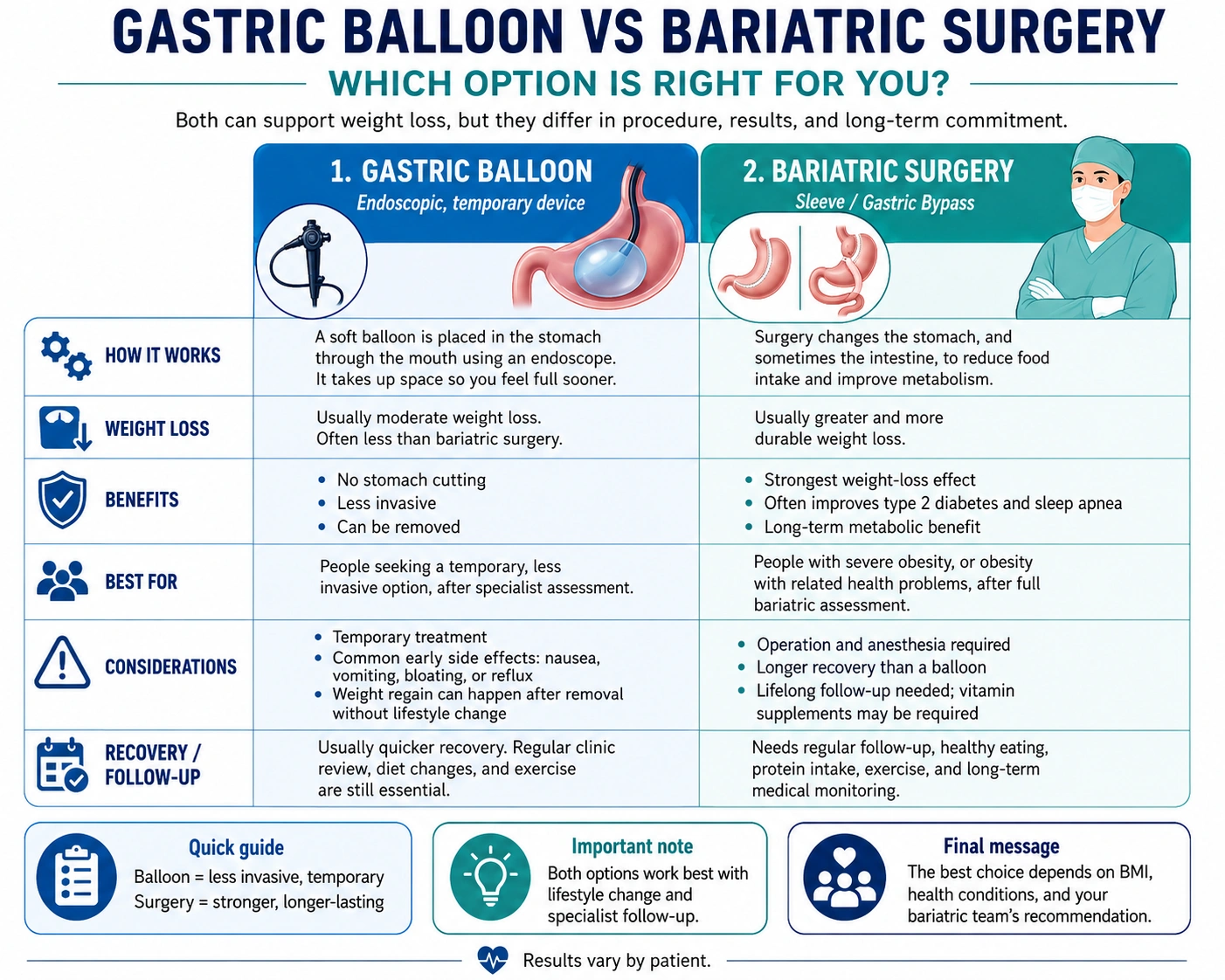
Gastric Balloon vs Bariatric Surgery: Key Differences
What Is a Gastric Balloon Procedure
Gastric balloon, or intragastric balloon, is a non-surgical weight loss procedure. A soft silicone balloon is placed in the stomach via endoscopy or swallowed in capsule form, then filled with saline. It takes up space, reduces stomach capacity, and helps you feel full faster. The balloon stays for 6 to 12 months before removal. Types available in Malaysia include Orbera, Spatz, and Allurion swallowable balloon.
What Is Bariatric Surgery
Bariatric surgery refers to surgical procedures that change the digestive system to promote weight loss. Common types in Malaysia are laparoscopic sleeve gastrectomy, gastric bypass, and mini gastric bypass. These permanently reduce stomach size or reroute intestines, affecting hormones that control hunger and blood sugar.
How Gastric Balloon vs Bariatric Surgery Work
Aspect | Gastric Balloon | Bariatric Surgery |
|---|---|---|
Method | Temporary balloon placed in stomach | Permanent surgical change to stomach/intestines |
Anaesthesia | Mild sedation or none for swallowable | General anaesthesia required |
Duration | 20–30 minutes, day-care | 1–3 hours, 2–3 days hospital stay |
Reversibility | Fully reversible on removal | Mostly permanent |
Mechanism | Restricts volume, early satiety | Restriction + hormone changes + malabsorption |
Who Qualifies for Gastric Balloon vs Bariatric Surgery in Malaysia
BMI Requirements for Gastric Balloon
Gastric balloon is typically offered to adults with BMI 30 to 40 who failed diet and exercise. Some centres accept BMI 27 with obesity-related conditions. It is ideal for patients needing moderate weight loss or to reduce risk before other surgery.
BMI Requirements for Bariatric Surgery
Bariatric surgery eligibility: BMI ≥40, or BMI ≥35 with comorbidities like type 2 diabetes, hypertension, or sleep apnoea. European guidelines also consider BMI >30 with uncontrolled type 2 diabetes. Surgeons assess overall health, not just BMI.
Medical Conditions That Affect Eligibility
You may not qualify for a balloon if you have previous stomach surgery, large hiatal hernia, active ulcers, or inflammatory bowel disease. For surgery, severe heart or lung disease, unstable psychiatric illness, or inability to follow lifelong follow-up can be barriers. Pregnancy and substance abuse exclude both options.
Gastric Balloon vs Bariatric Surgery: Results and Weight Loss
Expected Weight Loss With Gastric Balloon
Malaysian data from a high-volume centre showed average total body weight loss (TBWL) of 10.5% at 4 months and 13.7% at 12 months with swallowable balloons. Patients lost 9.8 kg at 4 months, up to 12.9 kg at 1 year. Results vary with diet and lifestyle adherence.
Expected Weight Loss With Bariatric Surgery
Sleeve gastrectomy patients lose 50–70% of excess weight within 12–18 months. Gastric bypass averages 60–80% excess weight loss. This translates to 25–35% TBWL, significantly higher than balloon outcomes.
How Long Results Last for Each Option
Gastric balloon results last if lifestyle changes continue after removal. Weight regain is common without follow-up. Bariatric surgery provides long-term results; most patients maintain >50% excess weight loss at 5 years. However, 20% may regain significant weight without behavioural changes.
Risks and Side Effects Comparison
Gastric Balloon Risks and Complications
Common: nausea, vomiting, cramps, reflux in the first week. Serious risks: balloon deflation, bowel obstruction, gastric ulcer, or perforation. Removal is needed if intolerance occurs. No surgical incisions means lower major complication rates.
Bariatric Surgery Risks and Complications
Short-term: bleeding, infection, leaks, blood clots, anaesthesia risks. Long-term: nutritional deficiencies, dumping syndrome, gallstones, hernia, or need for revision. Mortality risk is <0.3% in accredited centres.
Recovery Time: Gastric Balloon vs Bariatric Surgery
Gastric Balloon: Back to work in 1–3 days. No incisions. Diet progresses from liquids to solids over 2 weeks.
Bariatric Surgery: Hospital stay 2–3 nights. Return to normal activity in 2–4 weeks. Liquid diet for 2 weeks, then pureed, then soft food over 6–8 weeks.
Cost of Gastric Balloon vs Bariatric Surgery in Malaysia
Gastric Balloon Price in Malaysia 2026
Type | Starting Price 2026 | Includes |
|---|---|---|
Spatz Balloon | From RM12,900 | Endoscopy, balloon, medication, surgeon consult. Removal extra |
Allurion Swallowable | RM16,800 – RM17,800 | Balloon, X-ray, 12-month dietitian support, health tracker |
Orbera | From RM12,000 | Endoscopic placement, 6-month program |
Bariatric Surgery Cost in Malaysia 2026
Procedure | Starting Price 2026 | Typical Range |
|---|---|---|
From RM18,000 | RM18,000 – RM40,000 | |
Mini Gastric Bypass | From RM25,000 | RM25,000 – RM40,000 |
Gastric Bypass Roux-en-Y | From RM30,000 | RM30,000 – RM50,000 |
Packages usually include surgeon, anaesthetist, operating theatre, 1–3 nights hospital stay, pre-op tests, and post-op follow-up. Prices vary by hospital and surgeon.
Does Insurance Cover Gastric Balloon vs Bariatric Surgery
Most insurance and medical cards in Malaysia exclude obesity treatment unless linked to life-threatening comorbidities. Bariatric surgery may be approved for BMI ≥37.5 with diabetes or heart disease, subject to policy. Gastric balloon is rarely covered as it’s considered elective. EPF Account 2 withdrawal can be used for bariatric surgery at approved hospitals.
Pros and Cons: Gastric Balloon vs Bariatric Surgery
Advantages of Gastric Balloon
- Non-surgical and reversible
- Lower cost and minimal downtime
- Suitable for lower BMI patients
- Can be repeated if needed
- Bridges patients to safer surgery weight
Disadvantages of Gastric Balloon
- Temporary – removed after 6–12 months
- Less total weight loss vs surgery
- Risk of nausea, vomiting, early removal
- Weight regain common without habits change
- Not suitable for severe obesity alone
Advantages of Bariatric Surgery
- Highest long-term weight loss
- Improves or resolves diabetes, hypertension, sleep apnoea
- Permanent tool for weight control
- Cost-effective long-term vs treating comorbidities
- Significant quality of life improvement
Disadvantages of Bariatric Surgery
- Major surgery with anaesthesia risks
- Permanent anatomical change
- Lifelong vitamin supplementation needed
- Higher upfront cost
- Longer recovery and dietary restrictions
Which Is Better: Gastric Balloon vs Bariatric Surgery for You
Choose Gastric Balloon If You Have Lower BMI
Pick gastric balloon if your BMI is 30–40, you want a non-surgical start, need to lose 10–15 kg, or must reduce weight before knee replacement or other surgery. Good for patients afraid of surgery or with high surgical risk.
Choose Bariatric Surgery If You Have Severe Obesity
Choose bariatric surgery if BMI ≥40 or ≥35 with diabetes, hypertension, or fatty liver. It’s the standard when you need 25+ kg loss, have metabolic disease, or failed multiple diets. Surgery provides better diabetes remission rates.
Lifestyle Changes Required After Each Procedure
Both require commitment. With balloon: high-protein diet, portion control, 150 min exercise weekly, and dietitian follow-up for 12 months. With surgery: lifelong vitamin intake, protein priority, no fizzy drinks or alcohol early on, and annual blood tests. Weight regain happens if old habits return.