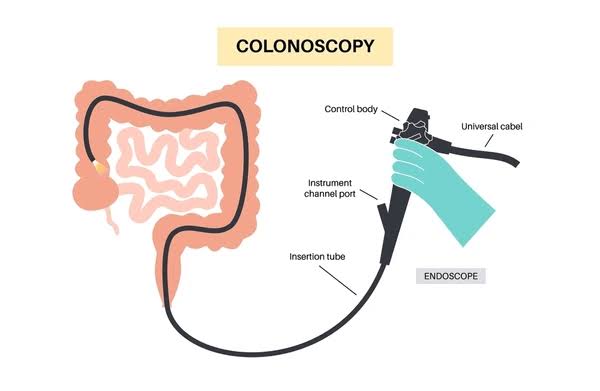

A colonoscopy is a safe and effective procedure used to examine the large intestine and rectum. It helps detect polyps, inflammation, and signs of colorectal cancer before symptoms become serious. Book your screening today for peace of mind and better digestive health.
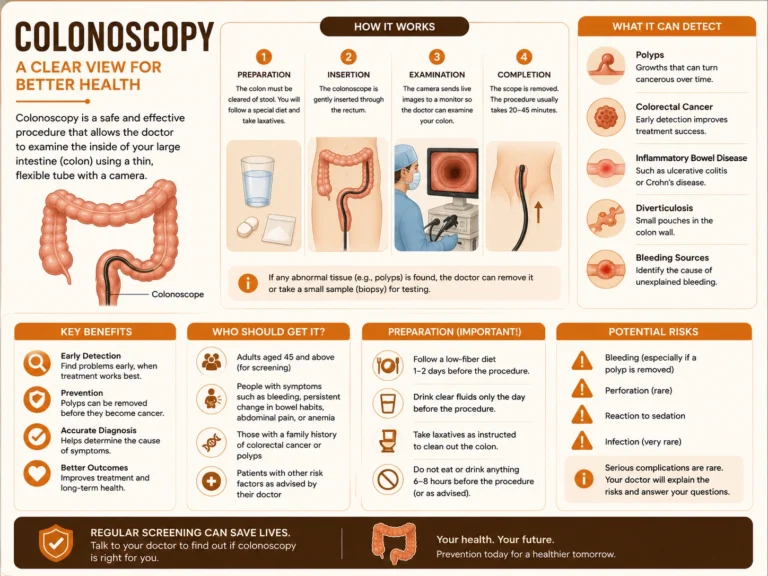
A colonoscopy is a diagnostic procedure that allows a doctor to view the inside of the colon using a thin, flexible tube with a small camera attached. It is commonly used to investigate digestive symptoms and screen for colorectal cancer.
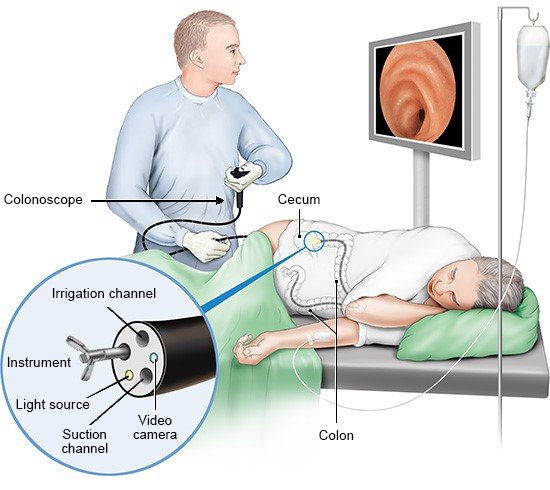
During the procedure, the colonoscope is gently inserted through the rectum and guided through the colon. The camera sends real-time images to a monitor, allowing the doctor to identify abnormalities such as polyps, bleeding, or inflammation. If needed, tissue samples can be collected for further testing.
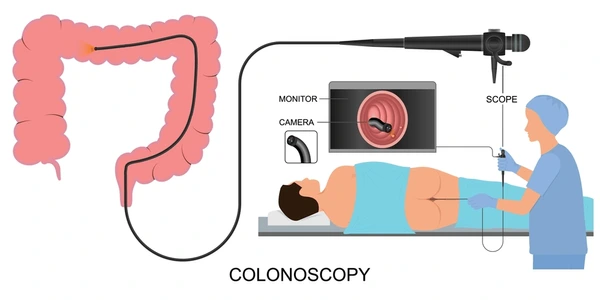
A colonoscopy helps detect colorectal cancer at an early stage, identify the cause of digestive symptoms, remove precancerous polyps, and monitor existing bowel conditions. Early detection can significantly improve treatment outcomes and long-term health.
Your doctor reviews your medical history and explains the procedure.
You will follow a special diet and take bowel-cleansing medication to empty the colon.
A sedative is administered to help you stay comfortable during the procedure.
The colonoscope is inserted to carefully examine the lining of the colon and rectum.
If necessary, tissue samples are taken or polyps are removed during the procedure.
You will rest briefly before returning home with post-procedure instructions.
Most patients experience little to no pain because sedation is usually provided during the procedure.
The procedure typically takes between 30 and 60 minutes.
Screening is generally recommended from age 45, or earlier if you have risk factors or a family history of colorectal cancer.
Yes. Proper bowel preparation is required to ensure clear visibility of the colon.
Yes. Most polyps can be safely removed during the procedure without the need for additional surgery.