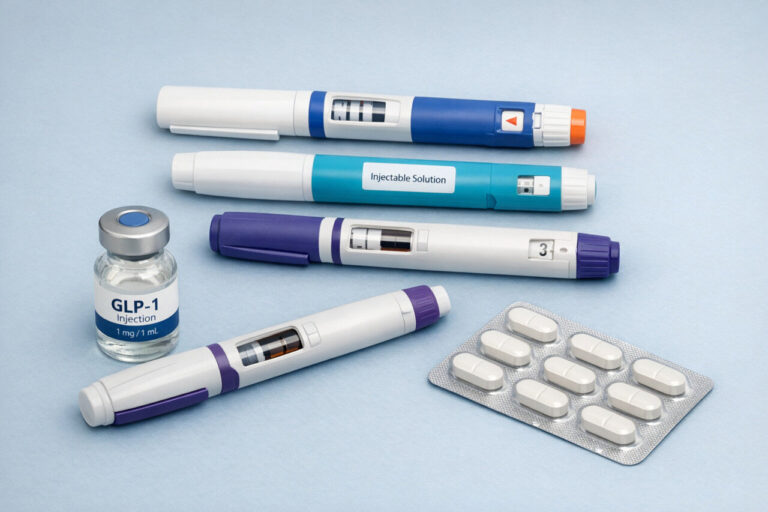

Achieve sustainable weight loss with anti-obesity medication. When combined with healthy eating, physical activity, and medical supervision, anti-obesity medications can help reduce appetite, control cravings, and support long-term weight management.
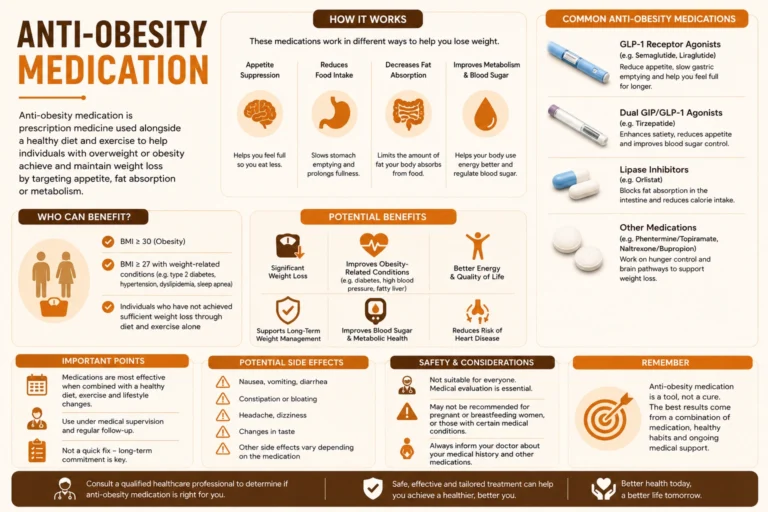
Anti-obesity medication refers to prescription medicines designed to help individuals lose weight and maintain weight loss. These medications are typically recommended for people with obesity or weight-related health conditions who have not achieved sufficient results through lifestyle changes alone.
Treatment is tailored to the individual’s health status, weight loss goals, and medical needs.
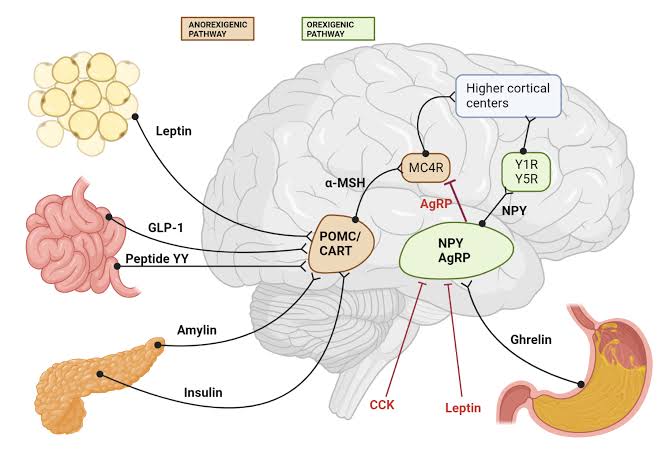
Anti-obesity medications work in different ways depending on the type prescribed. Some help reduce appetite, while others increase feelings of fullness after meals. Certain medications can also help control cravings and improve the body’s ability to regulate blood sugar levels.
When combined with lifestyle modifications, these medications can support gradual and sustainable weight loss.
Anti-obesity medication can help patients achieve meaningful weight loss without surgery. It may improve obesity-related conditions such as type 2 diabetes, high blood pressure, high cholesterol, and sleep apnea.
Many patients also experience better appetite control, increased confidence, improved mobility, and enhanced overall health.
A comprehensive assessment is performed to evaluate your weight, medical history, lifestyle habits, and weight loss goals.
Necessary investigations may be conducted to identify underlying health conditions and determine the most appropriate treatment approach.
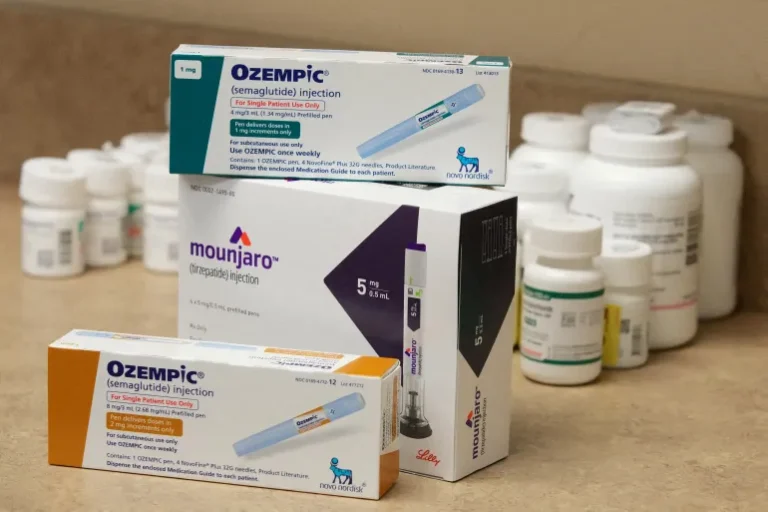
The doctor recommends a suitable anti-obesity medication based on your individual needs, health profile, and expected outcomes.
Treatment begins according to the prescribed dosage schedule, alongside dietary and lifestyle recommendations.
Regular follow-up appointments help monitor progress, manage side effects, and optimize long-term weight loss results.
Individuals with obesity or weight-related health conditions who have not achieved adequate weight loss through diet and exercise alone may be suitable candidates.
Anti-obesity medication works best when combined with healthy eating habits, regular physical activity, and lifestyle modifications.
Weight loss results vary depending on the medication prescribed, individual response, adherence to treatment, and lifestyle factors.
When prescribed and monitored by a qualified healthcare professional, anti-obesity medications are generally safe for eligible patients. Potential risks and side effects should be discussed during consultation.
The duration of treatment varies depending on your weight loss goals, overall health, response to therapy, and medical recommendations. Continuous follow-up is important for long-term success.