


Laparoscopic surgery, often referred to as keyhole surgery or minimally invasive surgery (MIS), has become the gold standard approach for a wide variety of medical conditions across Malaysia. By utilizing advanced video technology and specialized medical instruments, Malaysian surgical specialists can perform complex procedures through tiny incisions, offering patients a faster route back to their normal daily routines.
What Is Laparoscopic Surgery?
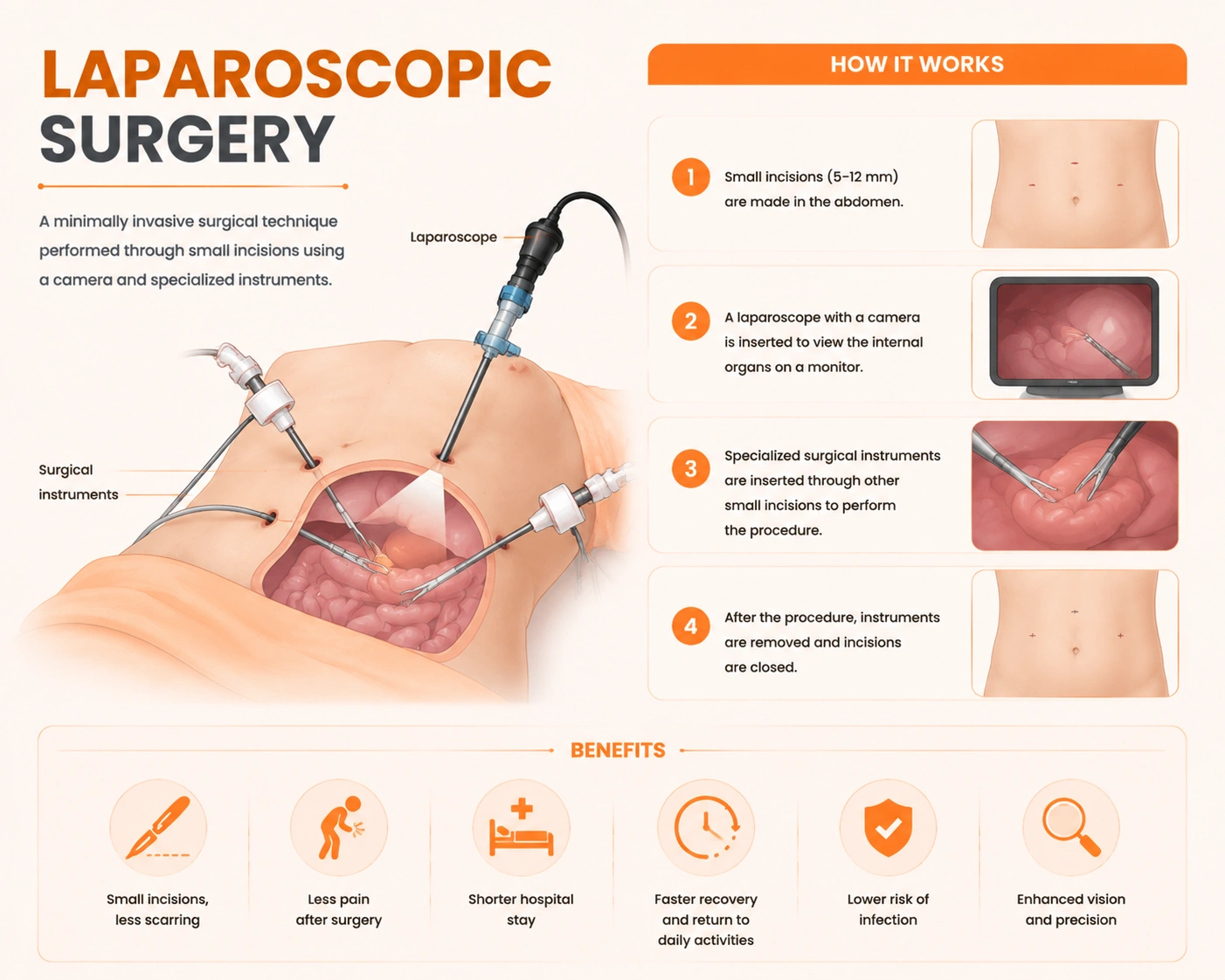
Laparoscopic surgery is an advanced, modern surgical technique where operations are performed through small cuts (usually between 0.5 to 1.5 centimeters long) rather than the large abdominal incisions required in conventional open surgery.
The procedure gets its name from the central medical tool used: the laparoscope. A laparoscope is a long, thin, flexible tube equipped with a high-intensity light source and a high-definition video camera at its tip.
How the Procedure Works
Creating the Workspace: Once the patient is placed under general anesthesia, the surgeon creates a tiny incision near the belly button.
Insufflation: Carbon dioxide gas ($CO_2$) is gently introduced into the abdominal cavity. This expands the abdomen, elevating the abdominal wall away from the internal organs to provide a clear view and a safe working space.
Visual Guidance: The laparoscope is inserted, transmitting live, high-resolution magnified video images onto a large surgical display monitor in the operating theater.
Targeted Operation: Guided by the digital screen, the surgeon inserts microscopic, specialized surgical instruments through two or three other tiny incision points to repair, slice, or extract the damaged tissue.
Key Benefits of Minimally Invasive Surgery
Choosing a laparoscopic approach over traditional open surgery offers several distinct clinical advantages that improve overall patient outcomes.
Significantly Less Post-Operative Pain: Because muscles and major nerve pathways are not sliced open, patients experience substantially lower levels of pain during early healing. This minimizes the need for heavy prescription opioid medications.
Minimal Blood Loss: The high-definition magnification allows surgeons to see blood vessels with intense clarity, leading to precise cauterization and minimal blood loss during the operation.
Reduced Infection Risk: Internal tissues are not exposed to the open air of the operating room for long periods, which significantly lowers the risk of post-surgical bacterial contamination.
Smaller External Scars: Instead of a long, prominent scar across the abdomen, laparoscopic incisions leave behind tiny, subtle marks that fade completely into the skin over time.
Shorter Hospital Stay: Most keyhole procedures require only an overnight stay or can even be conducted as a same-day ambulatory daycare service, allowing you to recover in the comfort of your home.
Common Laparoscopic Procedures Performed in Malaysia
Private and public hospitals throughout Malaysia utilize laparoscopy across multiple medical specialties, including general surgery, gynecology, and urology.
General Surgery
Laparoscopic Cholecystectomy: The surgical removal of the gallbladder, typically required for patients suffering from painful gallstones, chronic cholecystitis, or biliary colic.
Laparoscopic Appendicectomy: The rapid removal of an inflamed appendix to treat acute appendicitis before a dangerous rupture occurs.
Laparoscopic Hernia Repair (Herniorrhaphy): Patching structural tears in the abdominal wall or groin utilizing a synthetic mesh to cure inguinal, umbilical, or hiatal hernias.
Colorectal Resection (Colectomy): Removing diseased portions of the large intestine or bowel to treat severe diverticulitis or early-stage colorectal cancer.
Gynecological Procedures
Laparoscopic Cystectomy: Removing painful ovarian cysts while preserving the surrounding healthy ovarian tissue and maternal fertility.
Laparoscopic Myomectomy: The targeted removal of uterine fibroids to relieve heavy menstrual bleeding and pelvic pressure.
Total Laparoscopic Hysterectomy (TLH): The complete removal of the uterus, often recommended for advanced endometriosis, chronic adenomyosis, or gynecological malignancies.
Estimated Cost of Laparoscopic Surgery in Malaysia
Malaysia is a renowned global hub for medical tourism, celebrated for providing world-class private healthcare at highly competitive prices. The total cost of an operation depends heavily on the specific procedure, the length of the hospital stay, and individual patient health complexities.
Indicative Private Hospital Package Rates (2026 Price Ranges)
| Surgical Procedure | Typical Recovery Setup | Estimated Price Range (MYR) |
| Laparoscopic Appendicectomy | 1 to 2 Nights Stay | RM 9,000 – RM 14,000 |
| Laparoscopic Hernia Repair | Daycare or 1 Night Stay | RM 10,000 – RM 15,000 |
| Laparoscopic Cholecystectomy | 1 to 2 Nights Stay | RM 13,000 – RM 18,000 |
| Laparoscopic Hysterectomy | 2 to 3 Nights Stay | RM 28,000 – RM 38,000 |
Does Insurance Cover Laparoscopic Surgery?
Yes. If the laparoscopic operation is deemed medically necessary by a certified medical specialist (such as treating an inflamed organ, acute internal bleeding, a hernia, or tumors), it is fully eligible for coverage under standard Malaysian medical cards and private health insurance policies. Always coordinate with your hospital’s billing department to secure a formal Letter of Guarantee (LG) prior to admission.
Recovery Timeline and Post-Operative Care
Because keyhole surgery preserves the integrity of your abdominal wall muscles, the physical recovery timeline is drastically compressed compared to traditional open surgeries.
What to Expect Immediately After Surgery
You may wake up experiencing a mild sensation of bloating or localized pain radiating up into your shoulders. This is a normal side effect caused by residual carbon dioxide gas trapped under the diaphragm. Walking around gently in your hospital room helps your body reabsorb and eliminate the gas naturally within 24 to 48 hours.
Long-Term Healing Milestones
Days 1 to 3: Focus on consuming a light, easily digestible diet. Keep your incision site dressings completely clean and dry to prevent superficial skin infections.
Week 1: Most patients can comfortably return to low-stress desk jobs and resume light driving.
Weeks 2 to 4: Internal tissues continue to knit back together. You can gradually reintroduce normal daily walking and basic household chores.
Week 6: Your surgeon will run a final follow-up assessment. Once cleared, you can safely return to strenuous exercise, heavy lifting (greater than 5 kilograms), and rigorous sports.
Conclusion
Laparoscopic surgery in Malaysia has revolutionized patient experiences by turning complex abdominal operations into precise, highly manageable outpatient or short-stay events. By selecting a minimally invasive technique, you swap long, painful recovery periods and prominent scarring for smaller keyhole incisions, less risk of post-operative infection, and a significantly faster return to your routine. Whether you require a routine gallbladder removal or a complex gynecological intervention, consulting a credentialed laparoscopic surgeon at an accredited Malaysian medical facility ensures you receive world-class care tailored for a smooth, swift recovery.
Frequently Asked Questions
1. Is laparoscopic surgery safe?
Yes. Laparoscopy is a highly safe, routine surgical approach with a low incidence of complications. While minor risks like localized bruising or mild skin infection at the entry cuts exist, serious complications like organ damage or blood vessel punctures occur in less than 1% of cases when performed by an experienced specialist.
2. Can all surgeries be performed laparoscopically?
No. If a patient has extensive internal scar tissue (adhesions) from multiple prior open surgeries, severe inflammation, massive internal bleeding, or an exceptionally large tumor, a traditional open surgery may still be necessary to ensure maximum patient safety.
3. How long do I need to take off from work after keyhole surgery?
For a standard, uncomplicated procedure like an appendix or gallbladder removal, most individuals can comfortably return to sedentary office work or remote desk tasks within 7 to 10 days following the operation.
4. Why is carbon dioxide gas used during laparoscopy?
Carbon dioxide ($CO_2$) is used because it is non-flammable, safely tolerated by human tissues, and can be naturally absorbed by the bloodstream and exhaled through your lungs without causing internal chemical imbalances.
5. Will my surgical scars disappear completely?
While the incisions are tiny (typically under a centimeter), they will leave behind faint lines initially. Over the course of 6 to 12 months, these marks fade significantly, turning into thin, flesh-colored lines that are barely noticeable on the skin’s surface.