


A hernia occurs when an internal organ or fatty tissue squeezes through a weak spot in the surrounding muscle or connective tissue. This structural weakness often causes a visible bulge, persistent discomfort, or sharp pain when lifting objects, coughing, or bending over. Left untreated, certain hernias run the risk of becoming trapped (incarcerated) or losing their blood supply (strangulated), which requires emergency medical attention.
For individuals seeking corrective treatment, laparoscopic hernia repair has become the gold standard option throughout Malaysia. Often called keyhole surgery or minimally invasive surgery, this advanced technique replaces long, traditional abdominal incisions with small punctures, allowing general surgeons to fix the structural tear with optimal precision and minimal downtime.
What Is Laparoscopic Hernia Repair?
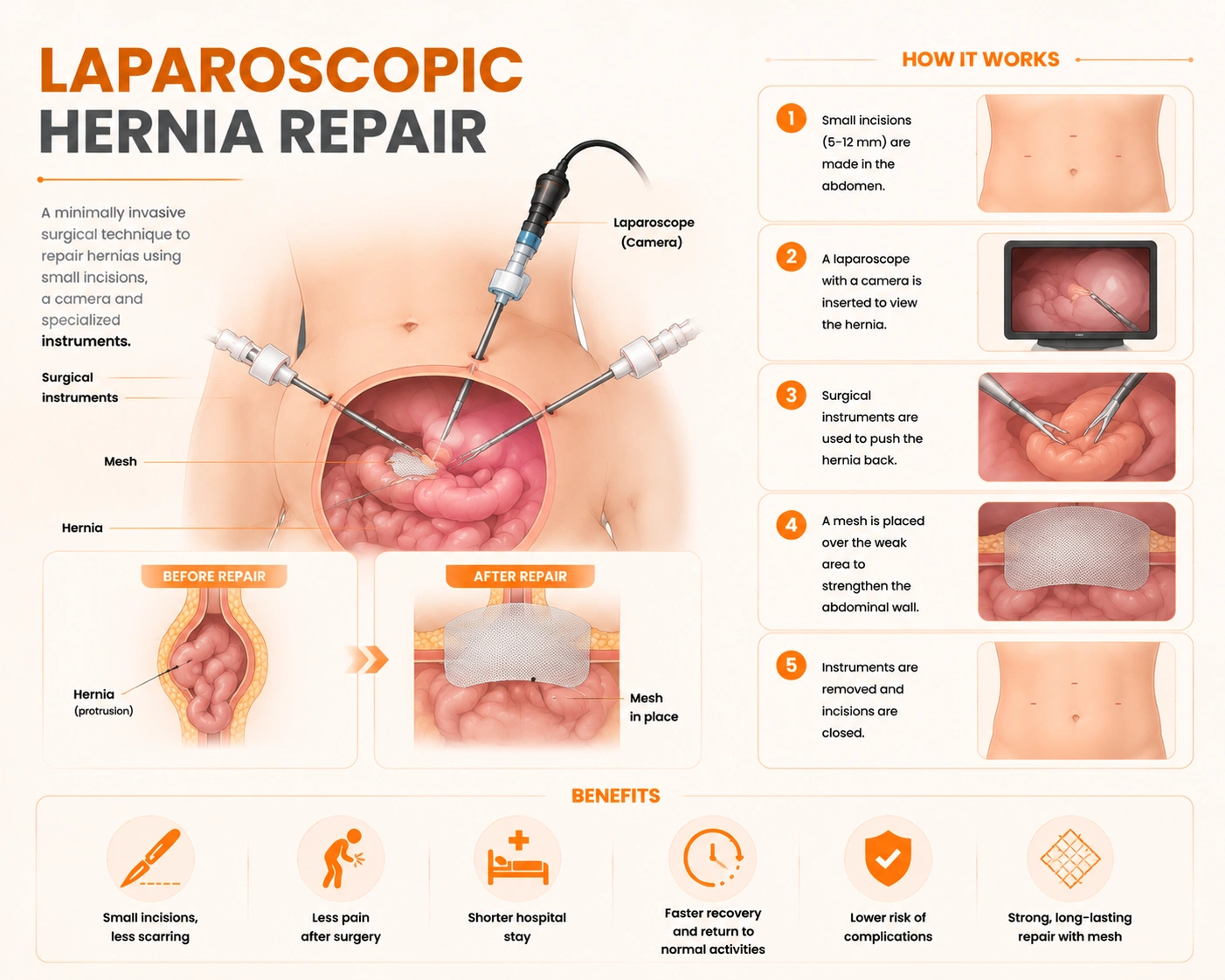
Laparoscopic hernia repair is a modern surgical approach performed under general anesthesia. Instead of creating a single wide incision over the hernia site (as done in conventional open surgery), a qualified general surgeon accesses the abdominal cavity through three tiny cut points (typically ranging from 0.5 to 1 centimeter).
The Surgical Process: Keyhole Repair and Mesh Placement
Insufflation: The surgeon makes a small puncture near the belly button and gently introduces medical-grade carbon dioxide gas ($CO_2$) to inflate the abdomen. This creates a safe working space and gives the surgeon a clear view of the internal organs.
Visualization: A specialized instrument called a laparoscope—a thin tube fitted with a high-intensity light source and a high-definition camera—is inserted through the primary puncture. Live, magnified video images are broadcasted onto a digital operating room monitor.
Reduction: Guided by the screen, the surgeon inserts microscopic surgical tools through the remaining two punctures to carefully pull the displaced tissue back into its proper anatomical position.
Hernioplasty (Mesh Reinforcement): To patch the structural tear in the muscle wall and prevent recurrence, the surgeon overlays a flexible, biocompatible synthetic mesh. This mesh acts as a scaffold for new tissue growth, permanently reinforcing the abdominal wall.
Types of Hernias Treated with Laparoscopy in Malaysia
Most abdominal and groin wall defects are highly responsive to minimally invasive keyhole repairs.
Inguinal Hernia
An inguinal hernia occurs when a portion of the intestine or intra-abdominal fat pushes into the inguinal canal located in the groin. This is the most common type of hernia, particularly among men. Laparoscopic approaches for groin repairs generally fall into two categories:
TAPP (Transabdominal Preperitoneal): The surgeon enters the peritoneal cavity and places the mesh behind the lining of the abdominal wall.
TEP (Totally Extraperitoneal): The surgeon performs the entire repair outside the peritoneal cavity, avoiding contact with the abdominal organs entirely.
Femoral Hernia
Slightly lower than the groin crease, a femoral hernia presents as a bulge in the upper thigh. It occurs when tissue pushes into the femoral canal, which houses the main femoral artery and vein. This type is more common in women and carries a high risk of strangulation, making timely keyhole repair crucial.
Ventral and Umbilical Hernia
Umbilical Hernia: Occurs when fat or bowel tissue pushes through a natural weakness at or near the belly button. It is common in adults who experience frequent abdominal pressure due to pregnancy or chronic obesity.
Ventral/Incisional Hernia: Develops along the line of a previous open surgical scar where the abdominal muscles have weakened or separated over time.
Hiatal Hernia
A hiatal hernia occurs when the upper portion of the stomach pushes upward through the hiatus (a small opening in the diaphragm) into the chest cavity. This often causes chronic gastroesophageal reflux disease (GERD) and severe acid reflux, requiring a specific laparoscopic anti-reflux repair.
Estimated Cost of Laparoscopic Hernia Repair in Malaysia
Malaysia is a leading hub for medical tourism and private healthcare, offering world-class surgical facilities at highly competitive prices compared to Western nations or neighboring regional hubs.
The final cost of a laparoscopic repair depends on the hospital choice, the complexity of the hernia (unilateral vs. bilateral), the specific surgical mesh used, and the length of your stay.
Private Hospital Indicative Package Costs (2026 Price Estimates)
| Type of Hernia Repair | Typical Hospital Stay | Estimated Cost Range (MYR) |
| Unilateral Inguinal Hernia (One Side) | Daycare or 1 Night | RM 10,000 – RM 14,000 |
| Bilateral Inguinal Hernia (Both Sides) | 1 to 2 Nights | RM 14,000 – RM 19,000 |
| Umbilical / Ventral Hernia Repair | Daycare or 1 Night | RM 11,000 – RM 16,000 |
| Laparoscopic Hiatal Hernia Repair | 2 to 3 Nights | RM 18,000 – RM 24,000 |
Insurance Eligibility and Pre-Authorization
Because an untreated hernia poses a structural risk of strangulation or bowel obstruction, repair operations are classified as medically necessary. Therefore, the procedure is fully covered by standard Malaysian medical insurance cards and international health policies.
Before checking into the hospital, ensure your surgeon’s administrative team submits a pre-authorization request to your insurer to obtain a formal Letter of Guarantee (LG), which will cover the operating theater fees, surgeon charges, and surgical mesh costs.
Advantages of the Laparoscopic Approach Over Open Surgery
Opting for keyhole surgery instead of conventional open surgery provides several medical and practical benefits:
Substantially Less Pain: Sparing the skin and large muscle sheets from wide incisions reduces post-operative nerve irritation and localized trauma, leading to less reliance on heavy painkillers.
Faster Recovery and Return to Work: Most patients are able to return to sedentary office jobs or light desk duties within 5 to 7 days, compared to a 3-to-4-week recovery timeline for open repairs.
Perfect for Bilateral or Recurrent Cases: If you have hernias on both sides of your groin, the surgeon can repair both using the exact same three small cuts. It is also the ideal choice for repairing a hernia that has returned after a previous open surgery, as it avoids going through old scar tissue.
Lower Risk of Wound Infection: Small, well-sealed puncture wounds have an incredibly low risk of bacterial contamination compared to wide, open incisions.
Recovery Timeline and Post-Surgical Care
Because keyhole surgery leaves your core abdominal muscles largely intact, your body heals rapidly. However, adhering to structural recovery milestones prevents the mesh from shifting before it bonds firmly to the tissue.
Immediate Post-Operative Phase (Days 1 to 3)
Managing Gas Discomfort: You may feel mild shoulder ache or abdominal bloating. This is caused by residual carbon dioxide gas irritating the phrenic nerve. Gentle pacing around your room helps your body absorb the gas naturally.
Wound Care: Keep the small adhesive dressings over your puncture wounds clean and dry. Most surgeons use waterproof dressings, allowing you to take brief showers starting on day two.
Mid-Term Recovery (Weeks 1 to 3)
Dietary Guidance: Eat fiber-rich foods (fruits, vegetables, oats) and drink plenty of water to prevent constipation. Straining during bowel movements can place undue pressure on the newly repaired muscle wall.
Activity Levels: You can comfortably drive a car once you are no longer taking prescription painkillers and can perform an emergency stop without feeling groin pain. Light walking is highly encouraged.
Full Clearance (Weeks 4 to 6)
Avoid lifting heavy objects (anything exceeding 5 kilograms) or engaging in intense core exercises (planks, crunches, heavy squats) for at least 4 to 6 weeks.
Attend your scheduled follow-up clinic visit. Once your surgeon confirms that the abdominal wall has healed smoothly over the mesh, you can fully return to vigorous sports, heavy lifting, and demanding physical labor.
Conclusion
Laparoscopic hernia repair in Malaysia provides patients with a safe, precise, and highly efficient way to address abdominal wall and groin weaknesses. By trading large incisions for high-definition camera guidance and specialized synthetic mesh scaffolding, the procedure reduces post-operative pain, minimizes scarring, and dramatically speeds up your recovery timeline. Whether you are addressing an uncomfortable inguinal bulge or managing chronic acid reflux from a hiatal defect, consulting a certified general surgeon at an accredited Malaysian healthcare facility ensures access to world-class minimally invasive treatments covered by your medical insurance.
Frequently Asked Questions
1. Will I be able to feel the surgical mesh inside my body after a hernia repair?
No. Once the surgical area heals, the lightweight, bio-compatible mesh integrates completely into your own muscle tissue. It is flexible and designed to mimic the natural elasticity of your abdominal wall, making it undetectable during everyday movements.
2. Can a hernia return after a laparoscopic repair?
While the recurrence rate for modern laparoscopic repairs using mesh is exceptionally low (typically under 2% to 3%), a hernia can return if the patient engages in premature heavy lifting, suffers from chronic severe coughing, or experiences rapid weight gain before the area has fully healed.
3. Is laparoscopic hernia repair performed under local or general anesthesia?
Laparoscopic hernia repair is always performed under general anesthesia. This ensures that your abdominal muscles are completely relaxed during the inflation of the abdomen with gas, allowing the surgeon to operate safely and precisely while you remain completely asleep.
4. What is the difference between an incarcerated and a strangulated hernia?
An incarcerated hernia means the bulging tissue has become trapped outside the muscle wall and cannot be pushed back in. A strangulated hernia is a critical medical emergency where the blood supply to that trapped tissue is cut off, requiring immediate open or laparoscopic intervention to prevent tissue necrosis.
5. Are there any long-term limitations after undergoing this surgery?
Once you complete the initial 6-week healing window and receive final clearance from your general surgeon, there are no long-term physical restrictions. You can return to a completely normal lifestyle, including heavy gym workouts, competitive sports, and strenuous daily activities.