

Choosing to undergo bariatric surgery is a major milestone. For many people struggling with severe obesity, it is not just about looks. It is a critical medical step toward reclaiming health, gaining back mobility, and preventing serious long-term illnesses.
However, the financial aspect can feel overwhelming. If you are researching options in Malaysia, you likely want to know the real numbers, what is included in the price tag, and how you can fund the procedure. This comprehensive guide breaks down the costs of weight loss surgery in Malaysia, including how you can potentially use your EPF (KWSP) savings to pay for it.
How Much Does Bariatric Surgery Cost in Malaysia?
In Malaysia, the cost of bariatric surgery varies wildly depending on whether you choose a public or private hospital.
For a private hospital, you can generally expect the total package price to range between RM 25,000 and RM 45,000. Some highly complex procedures or premium medical centres may charge up to RM 60,000 or more.
Public government hospitals offer heavily subsidised rates for Malaysian citizens, often costing under RM 5,000 to RM 10,000. However, public hospitals have incredibly strict selection criteria, require a long evaluation process, and feature extensive waiting lists that can last for months or even years.
Average Cost by Bariatric Surgery Type
Different surgeries require different tools, operating times, and recovery needs. This directly changes the final bill. Here is a breakdown of average price ranges across private healthcare facilities in Malaysia.
Gastric Sleeve Cost
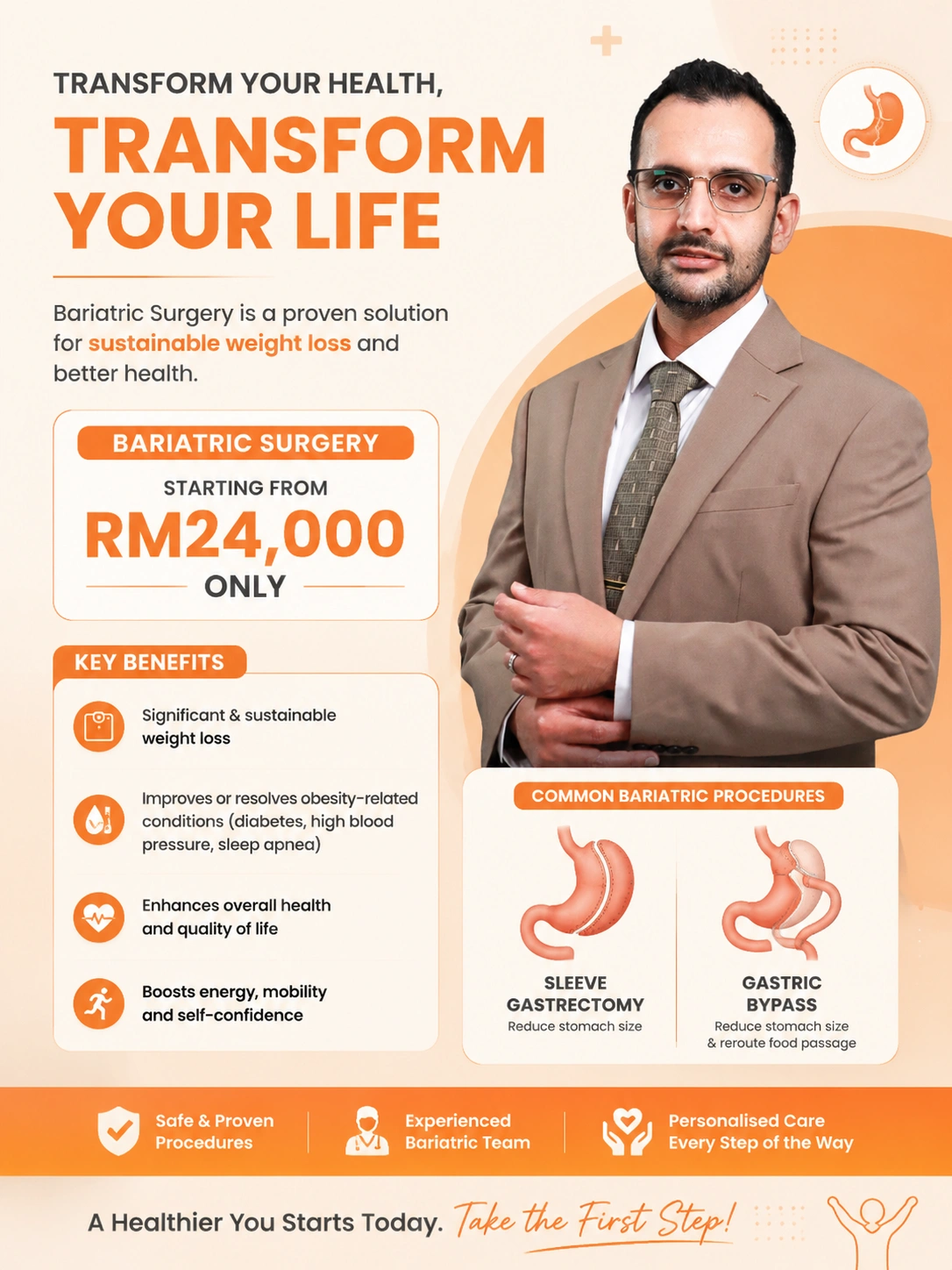
The Gastric Sleeve (Sleeve Gastrectomy) is currently the most popular weight loss surgery in Malaysia. The surgeon removes about 80% of the stomach, leaving a narrow tube or “sleeve.”
Average Cost: RM 25,000 to RM 35,000
Why it costs this much: It is a straightforward restrictive procedure that does not involve rerouting the intestines, keeping operating times shorter.
Gastric Bypass Cost
The traditional Roux-en-Y Gastric Bypass is the gold standard for treating severe obesity and Type 2 diabetes. It creates a tiny stomach pouch and connects it directly to the lower small intestine.
Average Cost: RM 35,000 to RM 45,000
Why it costs this much: This procedure is more complex. It requires specialized surgical staplers and a longer time in the operating theatre.
Mini Gastric Bypass Cost
The Mini Gastric Bypass is a modified, simplified version of the traditional bypass. It uses a single connection between the new stomach tube and the small intestine.
Average Cost: RM 32,000 to RM 40,000
Why it costs this much: Because it requires fewer anatomical connections than a standard bypass, it takes less time to perform, which reduces overall hospital fees.
Adjustable Gastric Band Cost
Commonly known as the LAP-BAND, this involves placing an inflatable silicone ring around the top of the stomach.
Average Cost: RM 20,000 to RM 28,000
Why it costs this much: While it appears cheaper initially, this procedure has become quite rare in Malaysia. Many doctors no longer recommend it due to lower long-term success rates and the potential cost of future adjustments or removal.
Duodenal Switch Cost
The Biliopancreatic Diversion with Duodenal Switch (BPD/DS) combines a gastric sleeve with a massive rerouting of the small intestine.
Average Cost: RM 45,000 to RM 60,000+
Why it costs this much: This is a highly technical, multi-hour surgery reserved for extreme cases of morbid obesity. It requires an advanced surgical team and extensive post-operative monitoring.
What Is Included in the Cost?
When a hospital gives you a “package price” for bariatric surgery, it typically groups several specific costs together. It is important to know exactly what you are paying for.
Surgeon’s Fees
This covers the professional fee for the primary bariatric surgeon who performs your operation, along with their surgical assistants.
Hospital Charges
This includes the cost of your hospital room stay (usually 2 to 4 nights), ward nursing care, and daily meals tailored to your post-surgery fluid diet.
Anaesthesia Fees
A qualified anaesthetist must administer general anaesthesia and monitor your vital signs throughout the entire surgery. Their professional fees and the medications used are covered here.
Operating Theatre Fees
This pays for the physical use of the high-tech surgical room, laparoscopic equipment, cameras, and the specialized, single-use surgical staplers needed to alter your stomach.
Medications
Your package usually includes immediate medications used during your stay, such as intravenous (IV) pain relief, anti-nausea drugs, and blood thinners to prevent clots.
Follow-up Care
Many comprehensive packages bundle your initial follow-up visits with the surgeon and dietitian during the first few weeks after you are discharged.
What Factors Affect Bariatric Surgery Cost in Malaysia?
The price you are quoted can change based on several real-world factors:
Choice of Hospital: Premium private medical centres in Kuala Lumpur or Penang generally charge more than smaller community specialist hospitals.
Your Health Condition: If you have severe medical complications (like severe heart disease or uncontrolled diabetes), you may require extra specialist evaluations, specialized anaesthesia care, or a stay in the Intensive Care Unit (ICU), which increases the bill.
Length of Stay: If your recovery takes longer than the standard 2 or 3 days due to minor complications, every extra night in the hospital adds to the cost.
Surgical Consumables: The price of high-quality, imported surgical staples and medical devices can cause fluctuations in package deals.
Can You Use EPF (KWSP) to Pay for Bariatric Surgery?
Yes, you may be eligible to withdraw funds from your Employees Provident Fund (EPF / KWSP) to pay for bariatric surgery. However, approval is never automatic. EPF views bariatric surgery strictly through a medical lens—it will not fund it if it is done for cosmetic or aesthetic reasons.
Important Caveat: Eligibility depends entirely on your specific health status, your doctor’s official medical report, and final approval from the EPF board. You must prove that the surgery is a life-saving medical necessity.
Who May Be Eligible?
To qualify under the medical withdrawal guidelines, you generally must be an active EPF member under 55 years old with a Body Mass Index (BMI) that places you in the morbidly obese category (usually a BMI over 40, or over 35 with severe health complications). Your doctor must state that your condition is life-threatening if left untreated.
Which EPF Withdrawal Scheme Applies?
You can apply under the EPF Health Withdrawal Scheme (Pengeluaran Kesihatan). This scheme allows members to withdraw savings from Akaun Sejahtera (formerly known as Account 2) to cover approved medical expenses for themselves or immediate family members.
Documents Required for EPF Withdrawal
To build a strong case for approval, you will need to gather:
Official EPF Medical Withdrawal Form: Available via the i-Akaun portal or local branches.
Detailed Specialist Medical Report: A signed report from your bariatric surgeon stating your exact BMI, co-morbidities (like diabetes or sleep apnoea), and an explicit statement that the surgery is a life-saving medical necessity.
Official Hospital Quotation: A breakdown of the estimated surgery package costs.
Identification Documents: Copy of your MyKad and relevant proof of relationship if you are withdrawing to pay for a family member.
How to Apply for an EPF Withdrawal
Consultation: Meet with a certified bariatric surgeon to confirm you meet the medical criteria for surgery.
Request Documentation: Ask the hospital’s billing and medical records department for the required EPF medical report and official cost quotation.
Submit via i-Akaun: Log into your EPF i-Akaun portal, navigate to the ‘Withdrawal’ section, select ‘Health’, and upload your digital documents. Alternatively, you can visit a physical EPF branch to submit them.
Wait for Approval: EPF will review the medical necessity of your case. Processing typically takes anywhere from 1 to 3 weeks.
Does Medical Insurance Cover Bariatric Surgery in Malaysia?
Historically, standard medical cards in Malaysia categorized bariatric surgery as a cosmetic or weight-loss treatment, meaning it was completely excluded from coverage.
However, things are slowly changing. Today, some premium insurance providers or corporate insurance policies may cover metabolic surgery under very strict conditions. To get coverage, you typically must suffer from uncontrolled Type 2 diabetes alongside a high BMI, and conventional medical treatments must have failed.
Always call your insurance agent to read the fine print. If your policy excludes weight-loss surgery, you will have to fund it out-of-pocket or via EPF.
Are Instalment or Financing Options Available?
Since private surgery requires a significant upfront payment, many Malaysian private hospitals offer financial flexibility:
Credit Card 0% EPP: Most major private hospitals partner with local banks (such as Maybank, CIMB, or Public Bank) to offer 0% Easy Payment Plans (EPP). This allows you to split your surgery bill into monthly instalments over 6, 12, or 24 months without paying interest.
Personal Medical Loans: Some banks and third-party financial institutions offer specialized medical financing loans for elective procedures, though these will carry standard personal loan interest rates.
Is Bariatric Surgery Worth the Cost?
While spending RM 30,000 or more sounds steep, it helps to look at the long-term return on investment (ROI) for your health.
When you look at the math, living with severe obesity is incredibly expensive. Over a decade, the recurring costs of daily diabetes medications, high blood pressure pills, cholesterol management, CPAP machine rentals, and frequent doctor visits add up fast. By reversing or curing these conditions, bariatric surgery often pays for itself within a few years while adding high-quality, active years back to your life.
Why Do Bariatric Surgery Prices Vary Between Hospitals?
If you shop around, you will notice that Hospital A might quote RM 27,000 while Hospital B quotes RM 39,000 for the exact same Gastric Sleeve surgery. Prices vary because of:
The Surgeon’s Experience: Highly reputable, senior bariatric surgeons who have performed thousands of cases often command higher professional fees.
Hospital Tier: Premium luxury medical hubs charge higher room rates and operating theatre fees than mid-tier specialist hospitals.
Inclusions and Exclusions: A cheaper quote might omit post-surgery dietitian follow-ups or take-home medications, leading to unexpected out-of-pocket costs later.
Frequently Asked Questions
How much does bariatric surgery cost in Malaysia?
In private hospitals, it generally costs between RM 25,000 and RM 45,000 depending on the type of surgery. Public hospitals are heavily subsidised (often under RM 10,000) but come with long waiting lists and strict eligibility requirements.
Can I use my EPF savings to pay for bariatric surgery?
Yes, you can apply under the EPF Health Withdrawal Scheme to tap into your Akaun Sejahtera. However, it must be proven to be a life-saving medical necessity rather than a cosmetic choice, and it requires final approval from EPF.
Does medical insurance cover bariatric surgery?
Most standard Malaysian medical insurance policies exclude it. However, some premium or corporate plans may cover it if it is deemed a life-saving “metabolic surgery” to treat severe, uncontrolled Type 2 diabetes.
Is financing available?
Yes. Most private hospitals accept 0% interest credit card instalment plans (EPP) for up to 24 months, allowing you to break the cost down into manageable monthly payments.
What is included in the surgery package?
A standard package includes surgeon fees, anaesthetist fees, operating room charges, surgical staplers, a 2-to-3-night ward stay, and basic post-op medications.
Are there any hidden or additional costs?
Pre-surgery screenings (like blood tests, heart checks, and specialist consults) and long-term vitamin supplements are usually billed separately from the core surgery package.
Which bariatric procedure is the most affordable?
The Gastric Sleeve is generally the most affordable mainstream option (ranging from RM 25,000 to RM 35,000) because it has a shorter operating time and a simpler surgical technique compared to a gastric bypass.
How can I get an accurate quotation?
You must schedule a personal consultation with a bariatric surgeon. They will assess your health, calculate your BMI, choose the right procedure for your body, and provide an official hospital billing estimation.
Can international patients undergo bariatric surgery in Malaysia?
Yes. Malaysia is a major medical tourism hub. International patients can easily access world-class bariatric care at private hospitals, though package pricing may vary slightly from local resident rates.
Does the cost include long-term follow-up?
Basic packages usually cover your first one or two check-ups. Long-term follow-up care over the subsequent years—such as blood tests to track vitamin levels and routine dietitian appointments—is typically paid for as you go.