



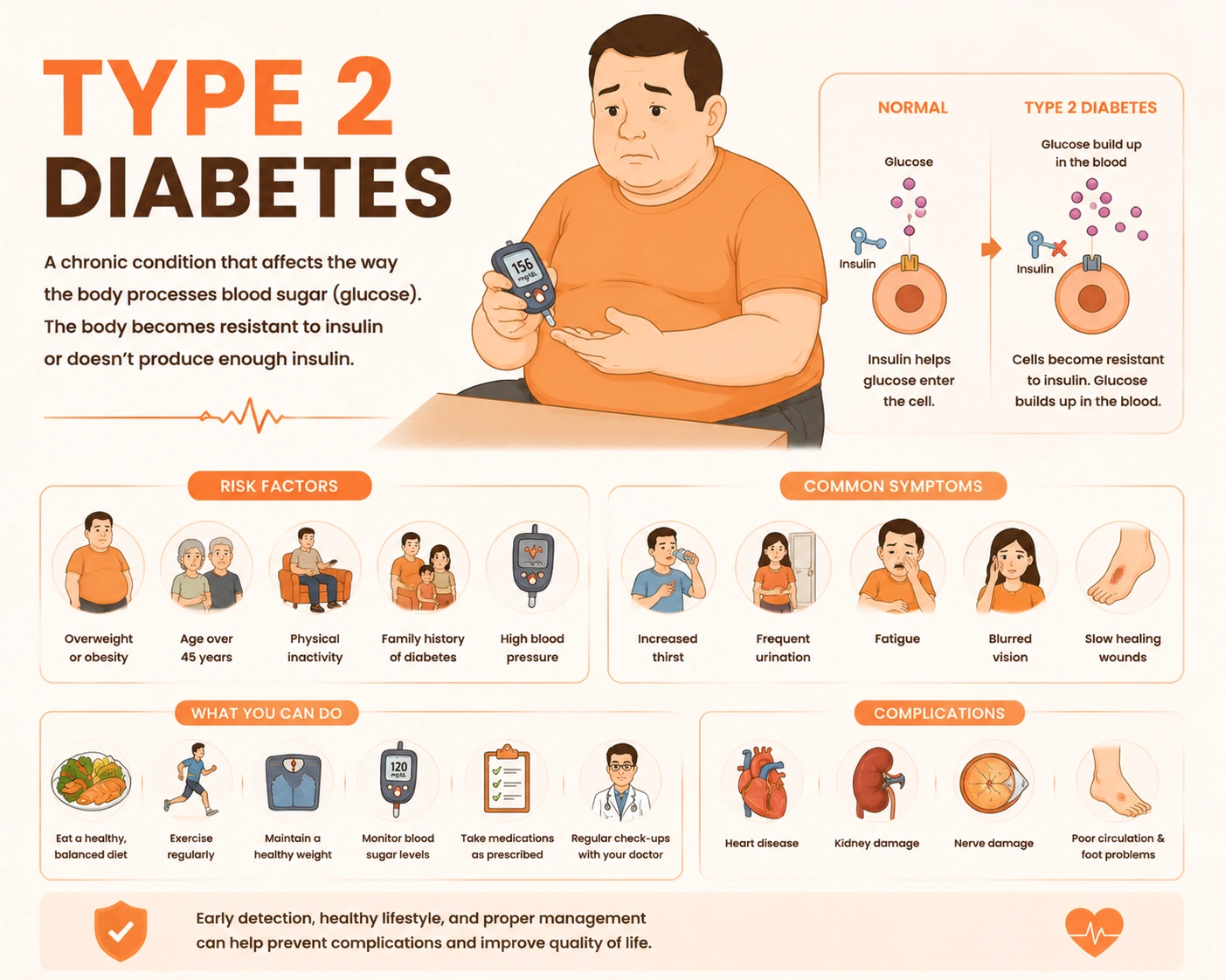
Diabetes Jenis 2 (kencing manis Jenis 2) ialah gangguan metabolik di mana badan menjadi rintang terhadap insulin atau tidak menghasilkan insulin yang mencukupi, menyebabkan paras gula darah kekal tinggi (hiperglisemia). Ia berbeza daripada diabetes Jenis 1 — di mana badan langsung tidak dapat menghasilkan insulin akibat tindak balas autoimun — kerana pesakit Jenis 2 masih menghasilkan insulin, tetapi sel badan tidak bertindak balas terhadapnya dengan berkesan. Punca utama termasuk obesiti dan kurang bersenam, walaupun faktor genetik turut berperanan. Membimbangkan, diabetes Jenis 2 kini dikesan dalam kalangan remaja seawal usia 14 tahun di Malaysia — trend yang sebelum ini lebih sinonim dengan golongan dewasa.
Apa Itu Diabetes Jenis 2?
Diabetes Jenis 2 ialah bentuk kencing manis paling biasa, merangkumi majoriti kes kencing manis di seluruh dunia. Ia berlaku apabila sel-sel badan menjadi kurang responsif terhadap insulin (dipanggil rintangan insulin), atau apabila pankreas secara beransur-ansur kehilangan keupayaan untuk menghasilkan insulin yang mencukupi bagi mengimbangi rintangan tersebut. Akibatnya, glukosa tidak dapat diserap dengan berkesan oleh sel badan untuk dijadikan tenaga, dan terkumpul dalam aliran darah.
Berbeza daripada diabetes Jenis 1 yang biasanya muncul secara mendadak pada usia muda, diabetes Jenis 2 lazimnya berkembang secara perlahan-lahan dari semasa ke semasa, dan ramai individu tidak menyedari mereka menghidapinya sehingga ujian rutin atau komplikasi muncul.
Diabetes Jenis 1 vs Jenis 2: Apa Bezanya?
| Jenis 1 | Jenis 2 | |
|---|---|---|
| Punca asas | Sistem imun memusnahkan sel penghasil insulin (autoimun) | Rintangan insulin atau penghasilan insulin tidak mencukupi |
| Penghasilan insulin badan | Tiada langsung | Masih ada, tetapi tidak berkesan atau tidak mencukupi |
| Permulaan biasa | Mendadak, sering pada usia muda | Beransur-ansur, tradisinya pada usia dewasa |
| Kaitan gaya hidup | Tidak berkaitan gaya hidup | Berkait rapat dengan berat badan & aktiviti fizikal |
| Rawatan wajib | Suntikan insulin sepanjang hayat | Ubat oral, kadangkala insulin pada peringkat lanjut |
Diabetes Jenis 2 Kini Menyerang Golongan Muda
Salah satu trend paling membimbangkan pada masa kini ialah peningkatan kes diabetes Jenis 2 dalam kalangan golongan muda di Malaysia. Menurut kenyataan terkini pihak berkuasa kesihatan, diabetes Jenis 2 — yang sebelum ini lebih sinonim dengan golongan dewasa — kini dikesan dalam kalangan remaja seawal usia 14 tahun. Trend ini dikaitkan dengan peningkatan kadar obesiti kanak-kanak dan remaja, tabiat pemakanan tidak sihat, dan penurunan tahap aktiviti fizikal dalam kalangan generasi muda.
Ini menjadikan pengesanan awal dan pendidikan kesihatan tentang diabetes Jenis 2 semakin penting, bukan sahaja untuk golongan dewasa tetapi juga ibu bapa dan remaja.
Punca dan Faktor Risiko Diabetes Jenis 2
- Berat badan berlebihan atau obesiti — faktor risiko paling ketara, terutama lemak di sekitar perut
- Kurang aktiviti fizikal
- Pemakanan tinggi gula dan karbohidrat ringkas
- Sejarah keluarga diabetes
- Umur meningkat, walaupun kini semakin dikesan pada usia lebih muda
- Tekanan darah tinggi dan kolesterol tinggi
- Sejarah kencing manis semasa mengandung (gestational diabetes)
- Etnisiti tertentu yang menunjukkan kecenderungan risiko lebih tinggi mengikut kajian epidemiologi
- Kurang tidur atau kualiti tidur yang buruk
Simptom Diabetes Jenis 2
Kerana ia berkembang secara perlahan, simptom awal diabetes Jenis 2 sering tidak disedari. Antara tanda yang mungkin muncul:
- Kerap dahaga dan kerap buang air kecil
- Cepat penat atau lesu
- Penglihatan kabur
- Luka atau calar yang lambat sembuh
- Kebas atau kesemutan di tangan dan kaki
- Jangkitan kulit atau saluran kencing yang berulang
Untuk senarai lengkap tanda-tanda awal kencing manis, rujuk artikel Tanda Kencing Manis: 10 Simptom Awal Yang Perlu Dikenali.
Bagaimana Diabetes Jenis 2 Didiagnosis?
- Ujian gula darah puasa (FPG)
- Ujian HbA1c — mengukur purata gula darah dalam tempoh 2–3 bulan
- Ujian toleransi glukosa oral (OGTT)
- Saringan berkala digalakkan bagi individu berisiko tinggi walaupun tanpa gejala, kerana diabetes Jenis 2 sering berkembang secara senyap sebelum simptom jelas muncul
Adakah Diabetes Jenis 2 Boleh Diterbalikkan?
Tidak seperti Jenis 1, sesetengah kes diabetes Jenis 2 peringkat awal boleh mencapai tahap remisi (gula darah kembali ke paras normal tanpa ubat) melalui perubahan gaya hidup yang konsisten — terutama penurunan berat badan yang ketara, pemakanan seimbang, dan senaman berkala. Namun ini bukan jaminan untuk semua pesakit, dan keputusan untuk mengurangkan atau menghentikan ubat perlu sentiasa dibuat bersama doktor, bukan secara bersendirian.
Cara Mengurus dan Merawat Diabetes Jenis 2
- Ubat oral — seperti Metformin, biasanya menjadi pilihan pertama
- Suntikan insulin — diperlukan pada peringkat lanjut apabila ubat oral tidak lagi mencukupi
- Pemakanan seimbang — kurangkan gula dan karbohidrat ringkas, tingkatkan sayur dan bijirin penuh
- Aktiviti fizikal berkala — sekurang-kurangnya 150 minit seminggu
- Penurunan berat badan jika berlebihan berat badan
- Pemantauan gula darah berkala di rumah dan pemeriksaan HbA1c berkala di klinik
Untuk maklumat lanjut tentang jenis ubat dan cara ia berfungsi, rujuk artikel Ubat Kencing Manis: 6 Jenis Utama & Cara Ia Berfungsi. Untuk panduan pemakanan lengkap, rujuk Makanan Untuk Pesakit Kencing Manis.
Cara Mengurangkan Risiko Diabetes Jenis 2
- Kekalkan berat badan yang sihat sejak usia muda
- Galakkan aktiviti fizikal harian dalam kalangan kanak-kanak dan remaja
- Kurangkan pengambilan minuman manis dan makanan diproses
- Buat pemeriksaan gula darah berkala jika mempunyai sejarah keluarga atau faktor risiko lain
- Tingkatkan kesedaran tentang tanda-tanda awal, terutama dalam kalangan ibu bapa dan sekolah
Soalan Lazim (FAQ)
1. Apa beza utama diabetes Jenis 1 dan Jenis 2? Diabetes Jenis 1 berlaku apabila badan langsung tidak dapat menghasilkan insulin akibat tindak balas autoimun, manakala Jenis 2 berlaku apabila badan masih menghasilkan insulin tetapi menjadi rintang terhadapnya atau penghasilannya tidak mencukupi. Jenis 2 juga lebih berkait dengan faktor gaya hidup berbanding Jenis 1.
2. Betulkah diabetes Jenis 2 kini menyerang golongan muda? Ya. Menurut kenyataan pihak berkuasa kesihatan Malaysia baru-baru ini, diabetes Jenis 2 kini dikesan dalam kalangan remaja seawal usia 14 tahun, satu trend yang dikaitkan dengan peningkatan obesiti dan tabiat gaya hidup tidak sihat dalam kalangan golongan muda.
3. Apakah punca utama diabetes Jenis 2? Punca utama termasuk berat badan berlebihan, kurang aktiviti fizikal, pemakanan tinggi gula, dan sejarah keluarga diabetes, walaupun faktor genetik turut memainkan peranan penting pada sesetengah individu.
4. Bolehkah diabetes Jenis 2 diterbalikkan atau disembuhkan? Sesetengah kes diabetes Jenis 2 peringkat awal boleh mencapai remisi melalui penurunan berat badan yang ketara dan perubahan gaya hidup konsisten, tetapi ini tidak terjamin untuk semua pesakit dan sebarang perubahan ubat perlu dibuat bersama doktor.
5. Apakah simptom diabetes Jenis 2 yang perlu diperhatikan? Simptom termasuk kerap dahaga, kerap buang air kecil, cepat penat, penglihatan kabur, dan luka yang lambat sembuh — namun ramai pesakit tidak mengalami sebarang gejala jelas pada peringkat awal.
6. Bagaimana cara terbaik mencegah diabetes Jenis 2, terutama dalam kalangan remaja? Kekalkan berat badan sihat, galakkan aktiviti fizikal harian, kurangkan minuman manis dan makanan diproses, serta buat pemeriksaan gula darah berkala jika mempunyai faktor risiko seperti sejarah keluarga atau berat badan berlebihan.