


Gastric sleeve and gastric bypass are the two most commonly performed weight loss surgeries today, and both can lead to significant, lasting weight loss. But they work differently, carry different risk profiles, and tend to suit different patients. Here’s how they compare.
How Each Procedure Works
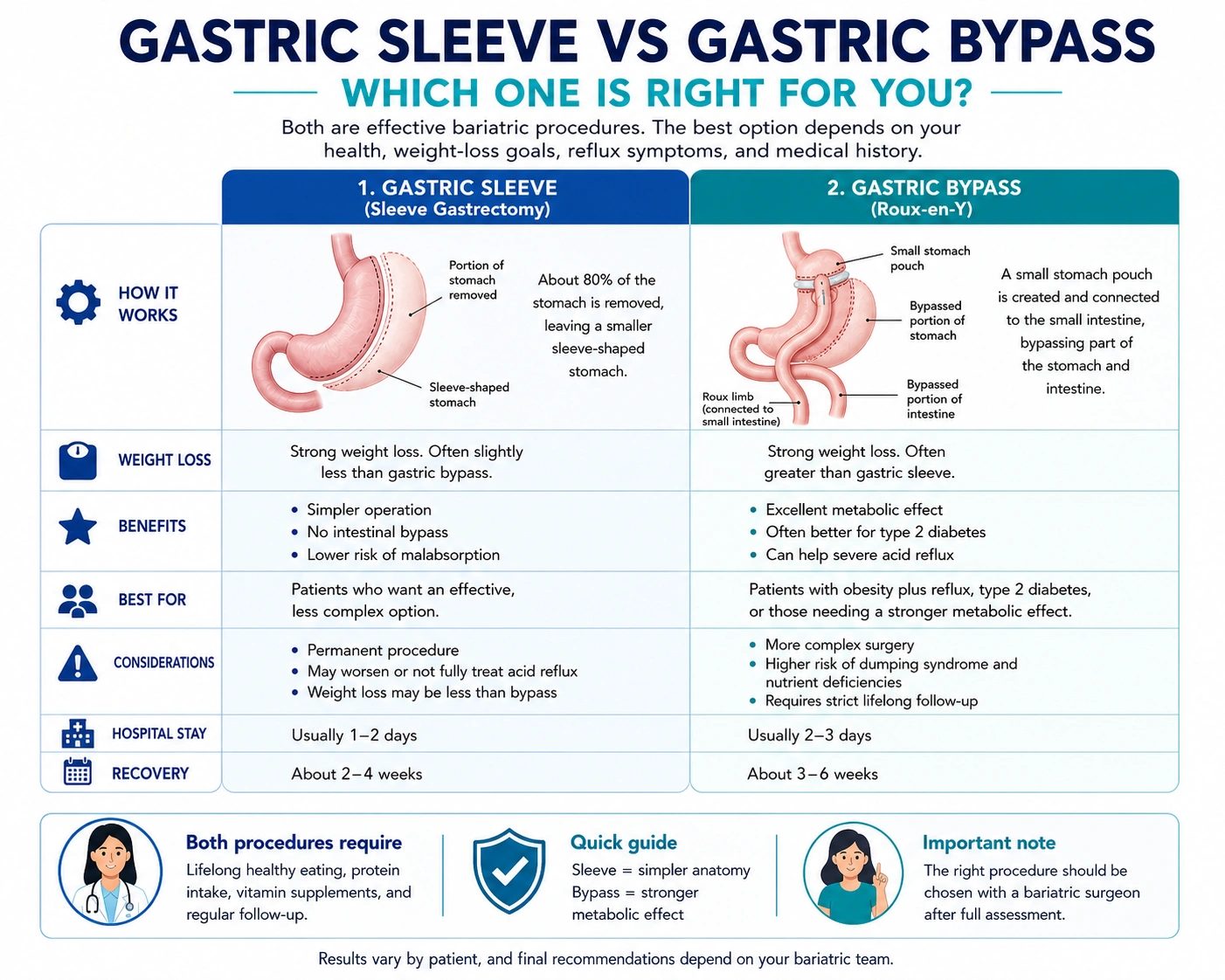
Gastric sleeve (sleeve gastrectomy) is a one-step procedure. The surgeon removes roughly 75–80% of the stomach, leaving behind a narrow, tube-shaped “sleeve.” This limits how much food the stomach can hold and reduces levels of the hunger hormone ghrelin, but doesn’t change how the intestines absorb nutrients.
Gastric bypass (Roux-en-Y) is a two-step procedure. The surgeon creates a small stomach pouch and then reroutes the small intestine to connect directly to it, bypassing a portion of the stomach and upper intestine. This limits food intake and reduces how many calories and nutrients the body absorbs.
Side-by-Side Comparison
| Gastric Sleeve | Gastric Bypass | |
|---|---|---|
| How it works | Restriction only (smaller stomach) | Restriction + reduced nutrient absorption |
| Surgical complexity | One-step, technically simpler | Two-step, more complex |
| Typical hospital stay | About 2–3 days | About 2–3 days |
| Weight loss (long-term) | Comparable to bypass over the long run; may be somewhat slower initially | Comparable to sleeve over the long run |
| Type 2 diabetes remission | Effective, though often slightly less than bypass | Often the most effective of the two |
| Complication risk | Generally lower | Somewhat higher |
| Acid reflux | May worsen existing reflux | Often improves reflux |
| Nutrient deficiency risk | Lower | Higher — lifelong monitoring needed |
| Reversibility | Not reversible | Not reversible (though revisable) |
| Relative cost | Typically lower | Typically higher |
Weight Loss Results
Long-term studies, including large registries like the Swedish Obese Subjects study, have found that both procedures lead to substantial weight loss over time — with some data suggesting average losses in a broadly similar range within the first one to two years. Some patients see slightly faster initial weight loss with gastric bypass, but by the time you look at outcomes several years out, sleeve gastrectomy and gastric bypass often land in a comparable range for most patients.
Effect on Related Health Conditions
Both procedures can significantly improve or resolve obesity-related conditions such as type 2 diabetes, high blood pressure, and sleep apnea. Gastric bypass has historically shown a slight edge in diabetes remission rates, largely due to its added effect on nutrient absorption and gut hormones. On the other hand, gastric bypass tends to improve acid reflux, while gastric sleeve can sometimes make existing reflux worse — an important factor for patients who already deal with GERD.
Recovery and Complexity
Both procedures are usually performed laparoscopically and involve a similar hospital stay of around two to three days. Because gastric sleeve doesn’t involve rerouting the intestines, it’s generally considered the technically simpler surgery, which is part of why it tends to carry a somewhat lower risk of perioperative complications compared to gastric bypass.
Risks and Long-Term Considerations
Gastric bypass carries a higher long-term risk of nutrient deficiencies — such as vitamin B12, iron, calcium, and folate — because of the intestinal rerouting involved, making lifelong vitamin supplementation and blood monitoring especially important. Gastric sleeve has a somewhat lower risk profile in this regard, though supplementation is still typically recommended. Both procedures carry general surgical risks like bleeding, infection, and leaks, and neither is considered reversible, although revision to a different procedure is sometimes possible later on.
Cost Differences
Gastric sleeve surgery is generally less expensive than gastric bypass, reflecting its simpler, one-step technique and shorter operating time. Exact costs vary widely by country, hospital, and insurance coverage, so it’s worth getting a detailed quote from your chosen surgical center.
Which Procedure Might Be Right for You?
There’s no single “better” option — the right choice depends on your individual health profile and goals:
- Gastric sleeve may be a good fit if you want a technically simpler procedure with a lower complication and nutrient-deficiency risk, and don’t have significant acid reflux.
- Gastric bypass may be a better fit if you have more severe type 2 diabetes or acid reflux, since it tends to offer stronger improvement in both.
Ultimately, this is a decision best made together with a bariatric surgeon who can review your weight, health conditions, and lifestyle to recommend the procedure most likely to work well for you long-term.