

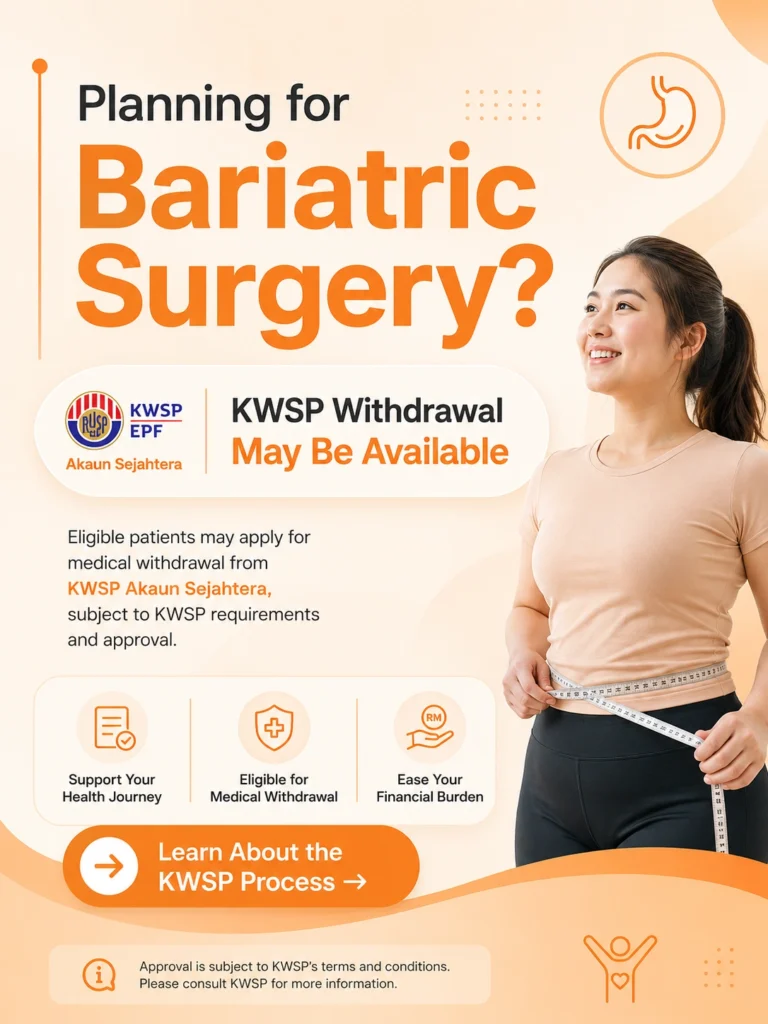
Bariatric surgery in Malaysia typically costs RM20,000 to RM45,000+, depending on the procedure. Gastric sleeve (sleeve gastrectomy) ranges from RM22,500 to RM36,000, gastric bypass from RM38,000 to RM45,000+, mini gastric bypass/OAGB from RM30,000 to RM45,000+, and non-surgical options like the gastric balloon from RM15,000 to RM20,000+. Prices vary by hospital, surgeon experience, and what’s included in the package — always confirm exactly what a quoted price covers before booking.
Overall Bariatric Surgery Cost Range in Malaysia
Across Malaysian hospitals and specialist clinics, bariatric surgery generally costs RM20,000 to RM45,000+, with some selected gastric sleeve packages starting as low as RM21,000–RM22,500 for suitable candidates, and more complex procedures like gastric bypass going above RM45,000 in higher-risk or more extensive cases.
The final price always depends on the specific procedure, the patient’s BMI and medical risk profile, the hospital or clinic, the surgeon’s experience, and exactly what’s bundled into the quoted package.
Cost by Procedure Type
| Procedure | Estimated Cost in Malaysia |
|---|---|
| Gastric Balloon (swallowable/endoscopic) | RM15,000 – RM20,000+ |
| Endoscopic Sleeve Gastroplasty (ESG) | From around RM25,000+ |
| Gastric Sleeve / Sleeve Gastrectomy | RM22,500 – RM36,000+ |
| Mini Gastric Bypass / OAGB | RM30,000 – RM45,000+ |
| Gastric Bypass (Roux-en-Y) | RM38,000 – RM45,000+ |
Why the range is so wide: these figures are estimates only. The actual quotation can only be confirmed after a consultation, BMI assessment, medical history review, and pre-operative screening — patients with additional health conditions or higher surgical risk may be quoted higher than the baseline range.
What’s Usually Included in a Package
Most bariatric surgery packages in Malaysia are built around a similar core structure, though exact inclusions vary by provider:
- Surgeon’s fee
- Anaesthetist’s fee
- Operating theatre charges
- General anaesthesia
- Standard ward stay (commonly 2–3 nights)
- Nursing care during admission
- Basic medication during hospital stay
- Pre-operative blood tests, ECG, and chest X-ray (if included in that specific package)
- Dietitian consultation (if included)
- Short-term post-operative follow-up — commonly up to 30 days (if included)
- Body composition analysis (offered by some hospitals)
Always request a detailed, line-by-line package breakdown before booking — this is the single most useful thing you can do to avoid surprise charges later.
What’s Usually NOT Included (Hidden Costs to Watch For)
Even comprehensive-looking packages typically exclude several cost items that patients often assume are covered:
- First consultation fee (sometimes charged separately)
- Additional blood tests, gastroscopy, ultrasound, or CT scans beyond the standard pre-op panel
- ICU or HDU (High Dependency Unit) admission, if required
- Complication management or additional procedures
- Extended hospital stay beyond the package’s covered nights
- Long-term vitamin/mineral supplements (B12, iron, calcium) — required indefinitely after most procedures, and consistently flagged as excluded across providers
- Long-term dietitian review and follow-up appointments beyond the package’s covered window (typically 30 days)
- Insurance paperwork/administration fees
- Tax or additional charges for non-citizens (6% SST commonly applies to foreign/expatriate patients)
This is the most important section for cost planning: the headline package price is not the total lifetime cost of bariatric surgery — ongoing supplements and follow-up care beyond the initial post-op window are recurring costs to budget for separately.
Why Prices Differ Between Procedures
- Procedure complexity: Gastric sleeve is generally the most affordable surgical option because it mainly involves reducing stomach size. Gastric bypass and mini gastric bypass/OAGB cost more because they involve both stomach reduction and rerouting part of the small intestine — a more technically complex, longer procedure.
- Patient BMI and medical risk: Patients with type 2 diabetes, high blood pressure, sleep apnea, fatty liver, GERD, PCOS, or joint issues may require more extensive pre-operative assessment, which can affect the final price.
- Pre-operative testing scope: Packages that bundle a full pre-op panel (blood tests, ECG, chest X-ray, gastroscopy, body composition analysis) are priced differently from bare-bones surgical-fee-only packages.
- Ward stay and recovery support: Most packages assume a standard 2–3 night stay; longer admission, additional monitoring, or higher-level care increases cost.
- Surgeon and facility: Surgeon experience, hospital accreditation, and location (e.g., Klang Valley vs. other states) all factor into final pricing.
Cost for Foreigners / Medical Tourists
Malaysia is a common destination for international bariatric patients, as prices are often more competitive than in some other countries. However, foreign patients should budget for more than just the surgical fee:
- Consultation and pre-operative tests
- Hospital admission fees
- Hotel/accommodation stay (before and after surgery)
- Local transport
- Companion’s accommodation, if traveling with support
- Medication
- Extra nights in Malaysia if recovery takes longer than planned
- 6% SST, which commonly applies specifically to expatriate and health-tourism patients
- Flight change fees, if recovery timeline shifts
Foreign patients should also plan how long-term follow-up will be managed after returning home, since bariatric surgery requires ongoing lifestyle, diet, and medical monitoring well beyond the initial recovery period.
For international cost context: some patients compare Malaysia’s pricing against other medical tourism destinations, where bariatric surgery may start from roughly $4,500 in India, $8,000 in Thailand, or $20,000 in Spain — Malaysia’s RM20,000–45,000 range (roughly USD 4,300–9,600) is generally positioned as a mid-range, accessible option regionally.
Is Bariatric Surgery Covered by Insurance in Malaysia?
Coverage depends entirely on the individual policy, insurer, and medical justification — there’s no universal yes/no answer.
Bariatric surgery is more likely to be considered for coverage when it’s medically necessary, typically due to obesity-related conditions such as:
- Type 2 diabetes
- Hypertension
- Sleep apnea
- Fatty liver disease
- Severe obesity-related joint pain
- Other significant obesity-related health risks
If an insurer classifies the procedure as purely cosmetic or elective, it’s less likely to be covered.
Before booking, patients should check:
- Medical card coverage details and specific exclusions
- Any waiting period that applies
- BMI requirement thresholds set by the insurer
- Whether pre-authorisation is required
- Whether a doctor’s medical report/clinical support letter is needed
- Hospital panel status (whether your chosen hospital is on your insurer’s panel)
- Required claim documentation
How successful claims typically work: the key to a successful bariatric insurance claim is having the procedure clinically positioned as metabolic surgery (not cosmetic). Surgeons typically write a support letter covering the patient’s BMI, obesity-related comorbidities (diabetes, high blood pressure), documented failed attempts at conservative weight loss (diet/exercise), and the clinical need to prevent further complications. According to one hospital’s reported experience, such letters achieve approval in roughly 70–80% of cases for major insurance policies (though this figure is provider-reported, not an industry-wide guarantee, and approval always depends on the individual policy). Some patients also combine partial insurance coverage with self-payment for the remaining balance.
Approval is never guaranteed and must always be confirmed directly with your insurance provider before committing to a procedure or date.
Can You Pay by Instalment?
Some providers offer instalment plans, 0% credit card easy-payment plans, or third-party financing — though this depends entirely on the specific provider, partner banks, and individual patient eligibility. Before booking, ask:
- Is instalment payment available at all?
- Which bank cards are accepted for 0% instalment plans?
- What is the maximum instalment tenure?
- Is a deposit required upfront?
- Are all package items eligible for instalment, or only the surgical fee?
- Are there additional administration fees for instalment plans?
Confirm all payment options and terms before choosing and locking in a surgery date.
Bariatric Surgery Cost vs. Lifetime Cost of Untreated Obesity
One useful way hospitals frame the cost conversation: bariatric surgery is a one-time payment, while untreated obesity with related complications tends to generate ongoing, compounding costs over a patient’s lifetime, including:
- Long-term diabetes medication, monitoring, and potential complications (including dialysis, in severe cases)
- CPAP machines and replacement parts for untreated sleep apnea, recurring for years
- Joint replacement surgery costs if osteoarthritis progresses
- Cardiac bypass surgery, if heart complications develop
Some clinical data cited by Malaysian bariatric providers reference diabetes remission rates of roughly 50–85% among bariatric patients with type 2 diabetes, with some patients able to stop insulin within 6 months post-surgery. Framed this way, some providers position bariatric surgery not as a cosmetic cost but as a preventive health investment that may reduce larger downstream healthcare spending — though individual outcomes vary, and this framing should be weighed alongside a full clinical consultation rather than treated as a guarantee.
Cheapest Bariatric Surgery in Malaysia: What to Check First
Many patients naturally search for the lowest-priced option, but the cheapest package is not always the safest or most complete one. Before choosing based on price alone, verify:
- Is the procedure performed by a qualified, registered bariatric surgeon?
- Is the surgery performed in a licensed medical facility?
- Does the price include anaesthesia and anaesthetist fees?
- Does it include operating theatre charges?
- Does it include ward stay, and for how many nights?
- Does it include pre-operative blood tests, ECG, and chest X-ray?
- Does it include dietitian support?
- Does it include post-surgery follow-up, and for how long?
- What happens — and what’s charged — if a complication occurs?
- Is ICU/HDU admission excluded from the quoted price?
- Are post-operative medications included?
- Is the quotation final, or only a rough estimate pending assessment?
Transparent, itemized pricing matters more than simply finding the lowest headline number.
How to Get an Accurate Quotation
Published package prices are estimates. An accurate, personalized quotation requires an in-person consultation and assessment, where the doctor typically reviews:
- Current weight and height (for BMI calculation)
- Full medical history and current medications
- Previous weight-loss attempts
- Eating habits
- Any obesity-related diseases or conditions
- Blood test results
- ECG results
- Anaesthesia risk profile
- Which procedure type is medically suitable
- Expected recovery plan
Only after this assessment can a hospital or surgeon confirm the specific procedure recommended and the exact price for your case.
Frequently Asked Questions
1. How much does bariatric surgery cost in Malaysia? Bariatric surgery in Malaysia typically costs between RM20,000 and RM45,000+, depending on the procedure. Gastric sleeve is generally the most affordable surgical option, while gastric bypass and mini gastric bypass/OAGB tend to cost more due to their added complexity.
2. What is the cheapest bariatric surgery option in Malaysia? Gastric balloon (a non-surgical, endoscopic option) is typically the lowest-cost option, starting from around RM15,000–16,000. Among surgical options, selected gastric sleeve packages may start from around RM21,000–22,500 for suitable candidates.
3. Why is gastric bypass more expensive than gastric sleeve? Gastric bypass is more complex — it involves creating a smaller stomach pouch and rerouting part of the small intestine — while gastric sleeve mainly reduces stomach size without rerouting the intestines, making it a shorter, less complex procedure.
4. Does a bariatric surgery package include everything? Not usually. Most packages cover surgery, anaesthesia, ward stay, and a limited follow-up period (often 30 days), but typically exclude first consultation fees, additional tests, ICU/HDU care, complication management, and — importantly — long-term supplements and extended follow-up. Always request a full, itemized breakdown.
5. Is bariatric surgery covered by insurance in Malaysia? It depends on your specific policy and whether the procedure is classified as medically necessary (e.g., linked to type 2 diabetes, hypertension, or sleep apnea) rather than cosmetic. Coverage, BMI requirements, and pre-authorisation rules vary by insurer — always confirm directly with your provider.
6. Can foreigners get bariatric surgery in Malaysia, and does it cost more? Yes, Malaysia is a common medical tourism destination for bariatric surgery. Foreign patients should budget beyond the surgical fee for accommodation, transport, and extended stay if needed, and note that a 6% SST commonly applies specifically to expatriate/health-tourism patients at some hospitals.
7. Can I pay for bariatric surgery in instalments? Some providers offer 0% credit card instalment plans or financing, but this depends on the specific hospital, partner banks, and patient eligibility. Confirm instalment availability, tenure, and any admin fees before booking.

